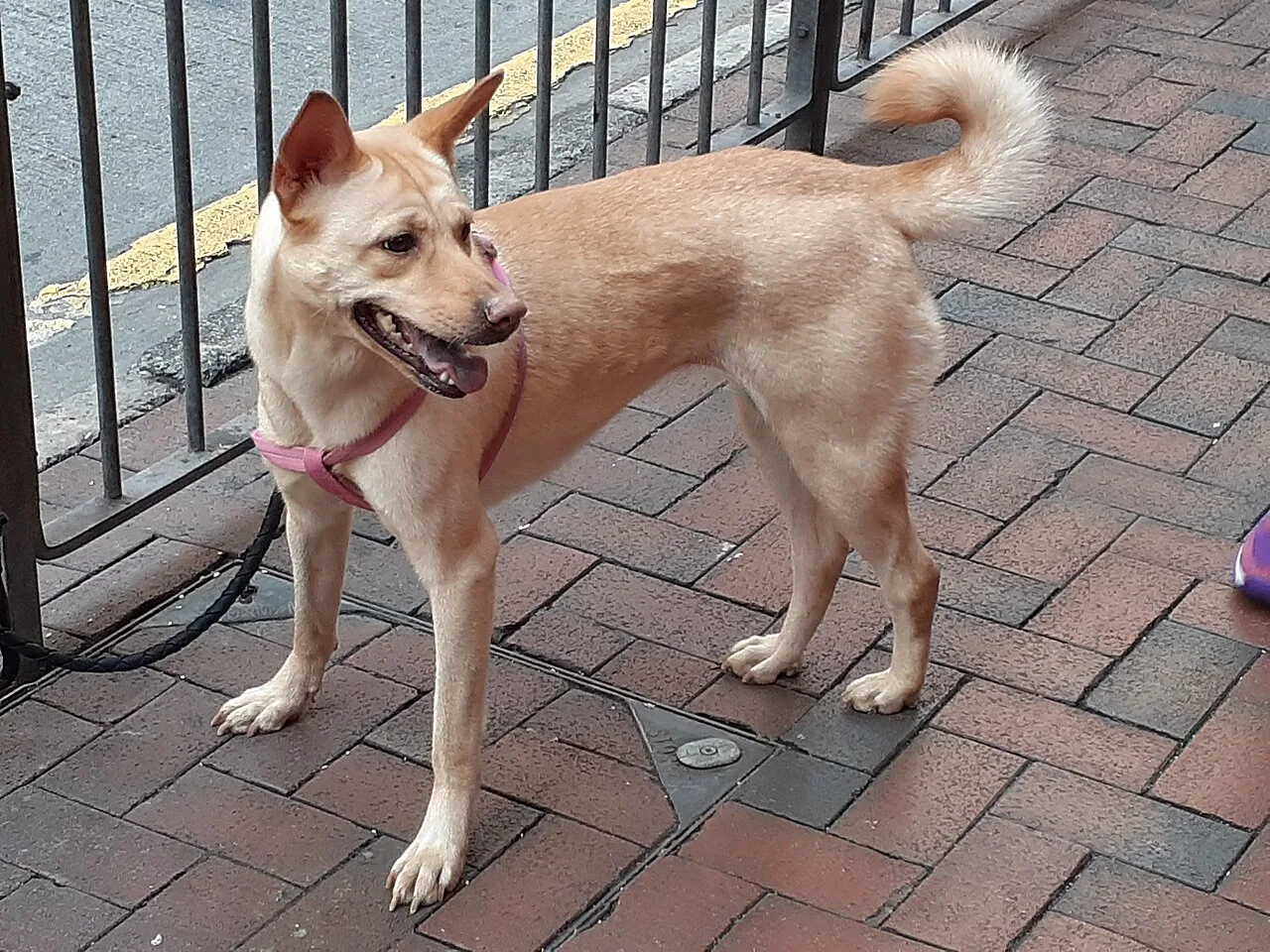
Overview
The Tang Dog is a medium-sized dog native to southern China, where it has lived alongside families for thousands of years. In Cantonese it is called Tong Gau, a name also used for the village dogs of Hong Kong.
It is prized mainly as a watchful guardian and a dependable household companion, though it has also been used for hunting in some places. Its name honours the Tang Dynasty, a period of great prosperity in Chinese history.
History
Tang Dogs come from southern China, where they served for countless generations as faithful gatekeepers of homes and villages. They were shaped by daily rural life rather than by a formal breeding programme.
In the 2000s a Tang Dog Association was founded in Hong Kong to raise awareness of these dogs and their heritage. In 2017 a Tang Dog won the championship at a World Dog Show event organised by the Chinese Kennel Union, bringing the dog new attention.
Appearance
The Tang Dog is compact and short in stature, with a rich coat and a body that is roughly as long as it is tall. The face has long, slightly sloping eyes and a large, broad nose.
A distinctive feature is the bluish-black tongue. The coat is always a solid colour, typically cream, red or black.
Temperament
Tang Dogs are known as loyal, alert guardians that stay close to their families. They tend to be watchful with strangers while devoted and steady at home, and they make a sensible companion for people who value a natural, hardy dog.
Care and exercise
As a hardy village dog, the Tang Dog is generally low-maintenance. It enjoys daily walks and having a job to do, such as watching over the home. Regular brushing keeps the coat tidy, and early socialisation helps its guarding instincts stay balanced.





