Overview
The Talbot, also called the St. Hubert Hound, was a hunting hound common in medieval England. Its exact role is uncertain: it may have been a scenthound, a sighthound, or a dog for digging out quarry.
It is believed to be an ancestor of the Beagle and Bloodhound, though that is debated.
History
Talbot was a common name for a single hound by 1400, and by the 17th century it clearly existed as a breed or type, with the milk-white dog seen as the true Talbot. The animal appears to have followed the heraldic Talbot of the Earls of Shrewsbury.
It seems to have lived on until the end of the 18th century and then disappeared. Early dog shows offered classes for Talbots but drew no entries.
Appearance
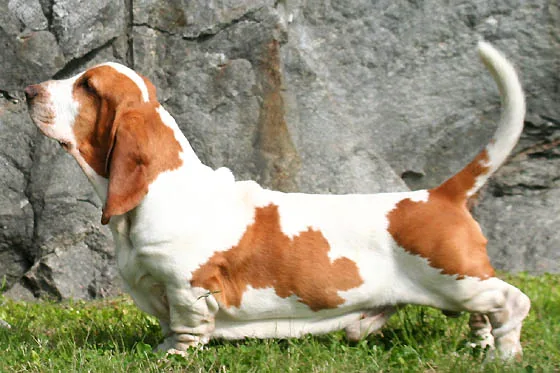
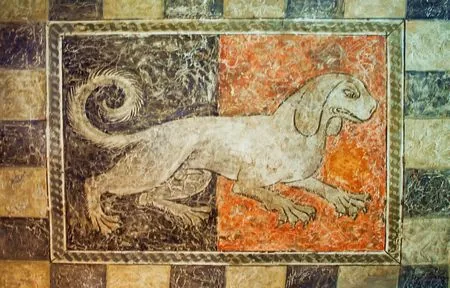
Art shows a small to medium white hound with short legs, large powerful feet, a deep chest, slender waist, long drooping ears and a very long curled tail. One carving at Haddon Hall gives it a fierce expression.
Temperament
Its temperament is not documented. Artwork suggests a bold, determined hound, but this is conjecture.
Care and exercise
The breed no longer exists, so there is no care guidance.