Overview
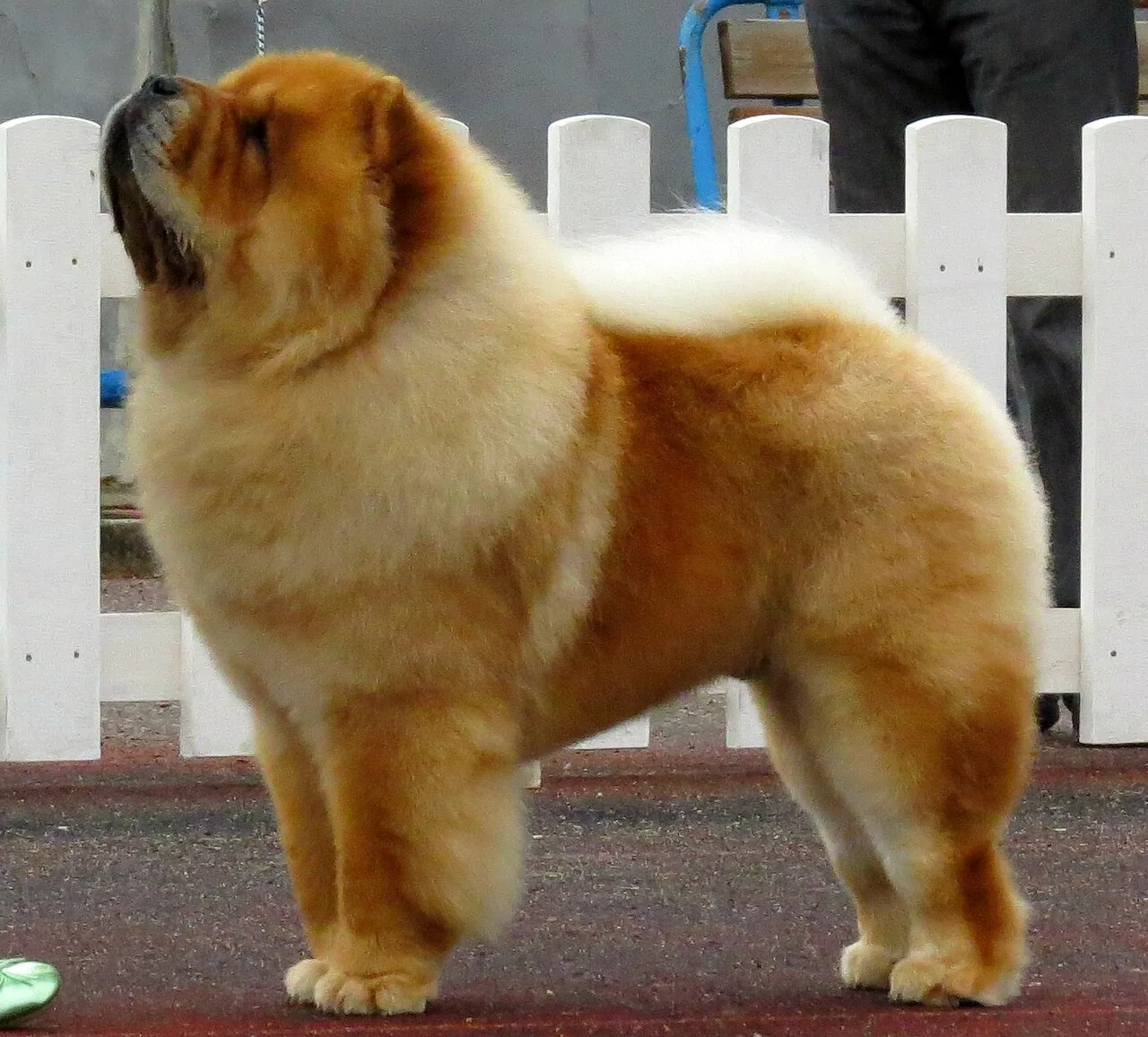
The Chow Chow is a sturdy, square spitz-type dog from northern China. It is famous for its dense double coat, its mane-like ruff and its unique blue-black tongue.
It is a calm, dignified and independent dog that tends to be devoted to its own family and wary of strangers. It suits experienced owners who value a cat-like, quiet companion.
History
The Chow Chow is one of the oldest dog types and a basal breed that predates the modern breeds of the 19th century. Genetic research suggests that it came from indigenous dogs in central China many thousands of years ago.
It was used in China for hunting, guarding and pulling. Its English name is of uncertain origin and is not tied to a Chinese name, though folk etymologies point to pidgin English. The Chinese call it the puffy lion dog.
Appearance
A compact, square dog with a broad skull, small triangular erect ears with rounded tips, deep-set almond eyes and a scowling expression. The tongue and the lining of the mouth are blue-black.
The very dense double coat can be smooth or rough and is thickest around the neck. The tail is thick and curls over the back. The hind legs are quite straight, giving a stilted gait.
Temperament
Chows are dignified, reserved and independent. They bond deeply with their own family but are aloof with strangers and may be protective.
They need early, thorough socialisation and calm, consistent handling. They are generally quiet and clean, and they suit owners who do not mind a dog with its own mind.
Care and exercise
Chows need moderate exercise, such as a daily walk, and they are sensitive to heat, so avoid exertion in warm weather. They do best with a family who is around.
The thick coat needs thorough brushing several times a week and more often during heavy seasonal moults. Keep the skin folds and ears clean.
Health
Elbow and hip dysplasia are common, and the breed is prone to glaucoma, entropion, autoimmune disease, skin conditions such as alopecia X, and stomach cancer. Their heavy coat and short muzzle make them vulnerable to heat stress.