Overview
The Ryukyu dog is a medium-sized Japanese breed native to Okinawa and Ishigaki Island. It was traditionally used in packs to track and bay wild boar.
It is endangered, with only about 400 dogs in 2015. It is protected by its own preservation society rather than by the Nihon Ken Hozonkai.
History
The breed was used in Okinawa's forests to hunt boar and occasionally birds. After World War II, food shortages and crossbreeding with Western dogs led many to think purebreds were gone, until a founder of the preservation society found pure dogs in Yanbaru in the early 1980s.
The club was founded in 1990 and the breed was named a natural monument of Okinawa Prefecture in 1995. Numbers peaked at about 1,500 in 2005 but fell to around 400 by 2015, and inbreeding is a serious concern.
Appearance
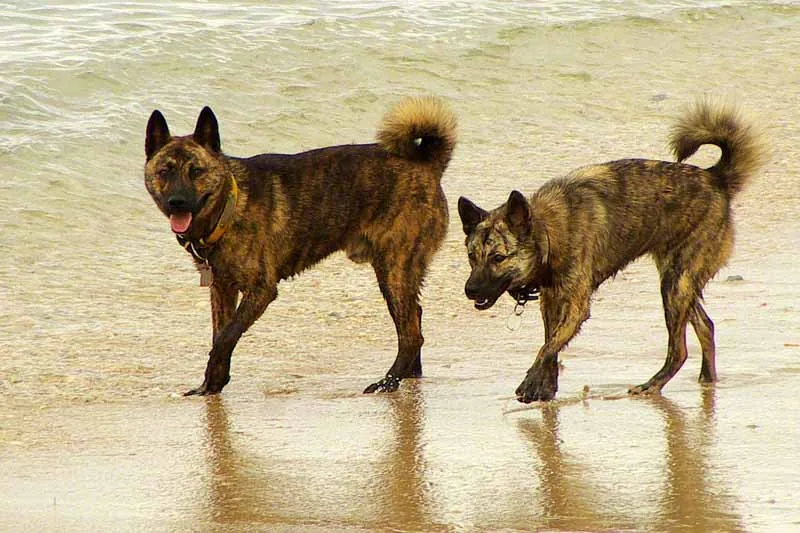
A medium-sized, lean dog resembling the Kai Ken, with a broad head, pricked triangular ears and a blade-shaped or curled tail. The coat is short, and colours include brindles, red and liver. Some have working rear dewclaws. Males stand about 46 to 50 cm, females slightly less.
Temperament
Quiet, alert and not sensitive, the Ryukyu dog is a natural hunter with a high prey drive and cannot be trusted with small animals. It is playful and good with children, and calm enough that its club considers it suitable for therapy work. It is clever, an escape artist and a talented climber.
Care and exercise
Needs plenty of physical and mental stimulation and a very secure, tall fence. Daily runs, walks and puzzle games suit it well. The short coat needs only occasional brushing.
Health
Generally healthy, but little is documented. Inbreeding is the main concern because of the tiny population. Western breeders are urged to screen hips, elbows, kneecaps, eyes and thyroid.





