Overview
The Norwegian Elkhound is a sturdy, medium-sized northern spitz and the national dog of Norway. It has served as hunter, guardian and herder, and is known for its courage with large game such as elk, bears and wolves.
Its grey coat, tightly curled tail and loud bark make it unmistakable, and it is a loyal companion for active families.
History
The breed was first shown at a dog exhibition in Norway in 1877. It was long prized as a hunting dog, especially in Sweden, and was rarely seen outside Scandinavia until it arrived in England in the nineteenth century. The Kennel Club recognised it in 1901.
Genetically it belongs to a northern Scandinavian group of dogs linked to the Sami people, and is very close to the Swedish Jämthund.
Appearance
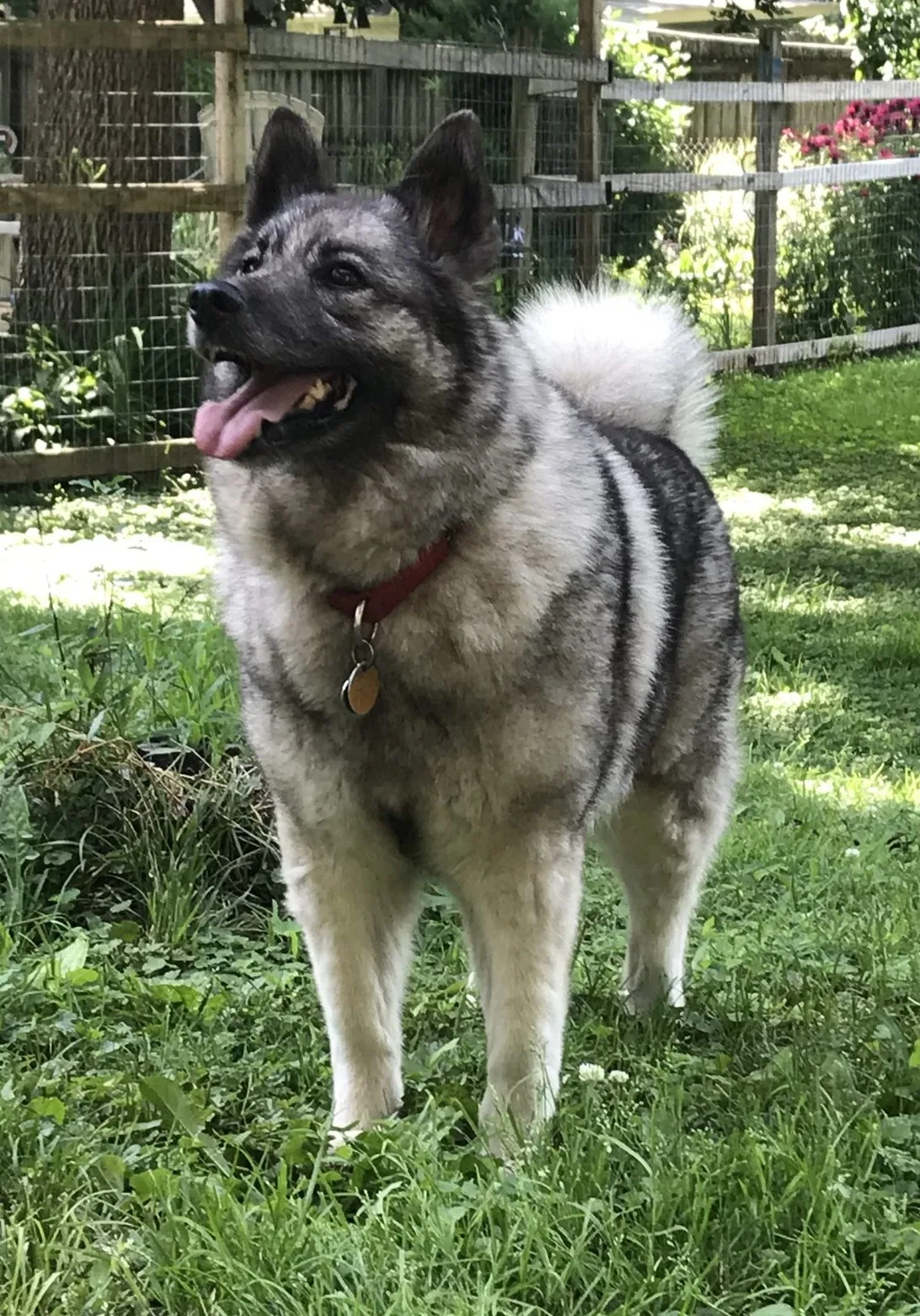
A compact, square, hardy dog standing about 50 to 52 cm and weighing up to about 23 kg. The dense double coat is grey, with a black-tipped guard coat over a smooth underlayer that is silvery on the legs, tail and underbody.
The muzzle, ears and tail tip are darker, and the tail is tightly curled over the back.
Temperament
Elkhounds are bold, playful, independent and very bright, with a strong bond to their family. They are alert watchdogs with a sharp, loud bark.
They can be boisterous and strong-willed, so patient, consistent training and early socialisation make them excellent family dogs.
Care and exercise
This is an energetic working dog that needs substantial daily exercise and mental activity. It copes very well with cold weather.
The thick coat sheds heavily, especially in seasonal moults, so brush several times a week and more often during shedding.
Health
Known inherited concerns include primary renal glucosuria, which predisposes to urinary infections, and progesterone-related diabetes in females. Chondrodysplasia and primary open-angle glaucoma also occur. A UK study put life expectancy at about 12.9 years.





