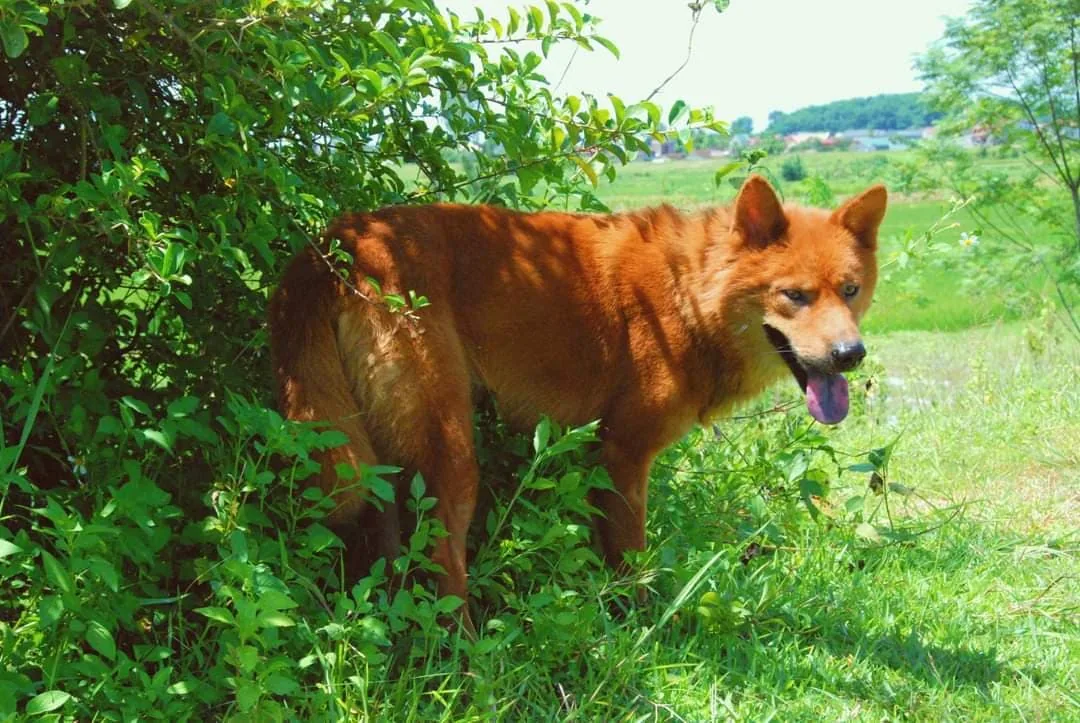
Overview
The Lài dog is a landrace of the northern mountains of Vietnam, especially the highlands along the Mã River. It is counted among the country's four great national dogs, yet it is the only one not recognised by the Vietnamese Kennel Club.
Traditionally it works as a farm dog, controlling pests, herding cattle and hunting in the forest. Only a few hundred are thought to remain.
History
The Lài is traced to ancient dogs found along China's Yangtze River, and its ancestors reached Vietnam several thousand years ago. Dog motifs appear on Đông Sơn drums and other ancient artefacts, and folk tales say the dogs descend from crosses with golden jackals or dholes.
Historical accounts credit Emperor Lê Lợi with breeding Lài dogs for military and hunting service, and they helped during the Lam Sơn uprising. The greatest modern threat is interbreeding with non-native dogs, since they roam freely. Sanctuary breeding efforts are underway.
Appearance
The body is long and wide, with a long triangular face, slanted red or amber eyes with dark rims and lance-shaped ears set on the sides of the skull. The bite is scissor-like and the tail hangs down like a reed or a wolf's tail.
It has a double coat, a rough outer layer over a soft insulating undercoat, and may be long- or short-haired. The round feet are webbed, and the forepaws turn with wrist-like flexibility, helping it climb and swim.
Temperament
Intelligent, quick-witted and loyal, the Lài protects its people boldly. It has strong drive and stamina, is aloof with strangers and makes an excellent watchdog.
It becomes deeply attached to its humans, which makes rehoming difficult.
Care and exercise
A working landrace, it needs plenty of activity, a secure fence and a task to do. It keeps good vermin-hunting instincts and may wander if allowed to roam.
The double coat needs only routine brushing, with more during seasonal shedding.
Health
The Lài is considered robust with few known health problems, and some are said to reach up to 20 years. Very little scientific research has been done on the population.





