Overview
The Karelo-Finnish Laika is a spitz-type hunting dog from the Karelia region, shared by Finland and north-western Russia. It looks much like the Finnish Spitz, with a foxy head, a dense protective coat and a curled tail.
It is a popular hunter at home but almost unknown elsewhere, and no kennel club recognises it as a separate breed. It suits an active owner who values a lively, willing working partner.
History
Before the early twentieth century, the Finnish Spitz and the Karelo-Finnish Laika were regarded as one population across Karelia. After the Russian Revolution, the Civil War and the Winter War, the region was divided and Russian enthusiasts began shaping their own line under the new name.
In the 1950s, Russian breeders brought in Finnish Spitzes and crossed them with red spitz dogs of southern Karelia, such as the Olonets Laika and Karelian Laika. The offspring were split into hunting lines and show lines.
Appearance
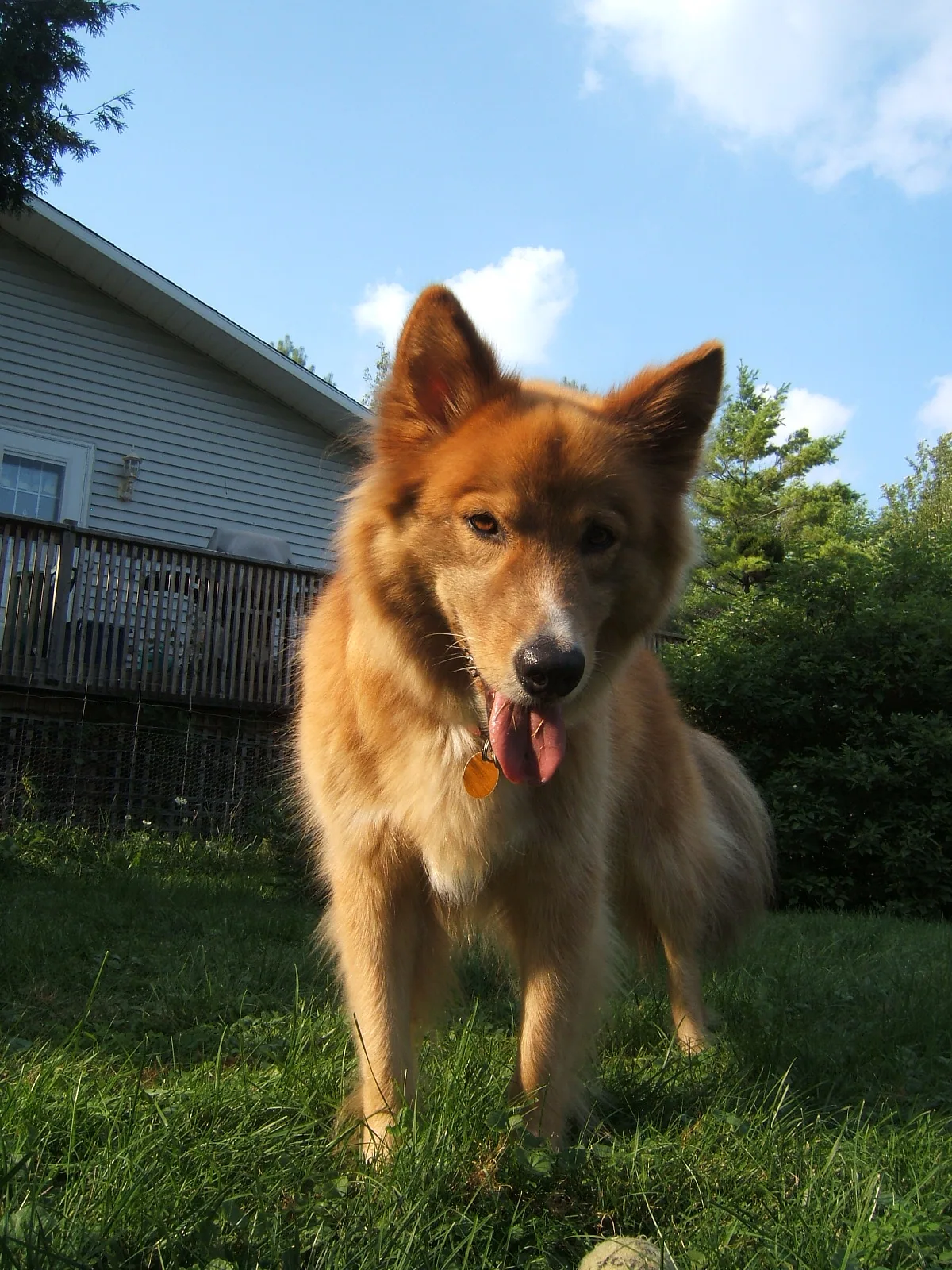
The Karelo-Finnish Laika has a fox-like head, a compact spitz build and a thick, protective coat. The tail curls over the back in typical spitz fashion.
While the Finnish Spitz is solid red, this dog may also be fawn or black, often with white markings on the head, chest, legs and tail.
Temperament
Cheerful, energetic and eager to please, this laika bonds readily with its handler. It is an enthusiastic hunter with plenty of drive, and it loves to be busy.
Like many spitz hunters it is likely to be alert and vocal, and it needs purposeful activity to stay content.
Care and exercise
This is a working dog that needs plenty of daily exercise and a job to do, such as tracking, hunting or active outdoor sports. Early socialisation and consistent, positive training help channel its drive.
The thick coat needs regular brushing, particularly during seasonal shedding, but the dog copes very well with cold weather.
Health
No breed-specific health problems are well documented. As a hardy working dog from a harsh climate, it is generally robust, but routine care of ears, teeth and coat still applies.





