Overview
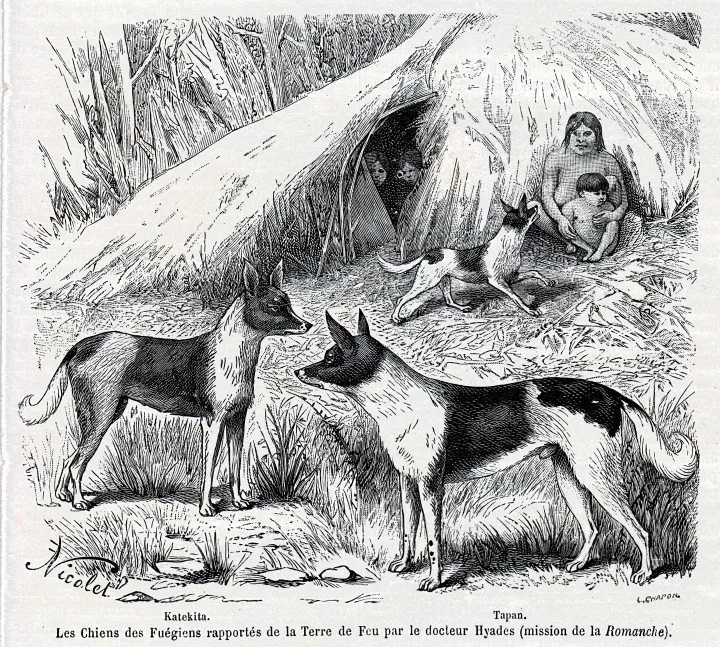
The Fuegian dog, also called the Yahgan or Patagonian dog, was a tawny, fox-like canid kept by Indigenous peoples at the southern tip of South America. It hunted otters, tuco-tucos and guanacos, and slept packed around people as a living blanket.
It is extinct, wiped out by European settlers in the early twentieth century. Scientists still debate its exact origins.
History
A 2013 genetic study of museum hair samples found the Fuegian dog to be closer to the culpeo fox than to domestic dogs, suggesting an unusual domestication of the culpeo by Patagonian hunter-gatherers. Some researchers argue it was not fully domesticated, and a 2023 review proposed two animals: a culpeo-derived Patagonian dog and a Fuegian dog descended from dogs that came with early people.
By 1919 a visiting missionary found that the dogs had gone. Settlers killed them during the persecution of the Selkʼnam people, partly because they were important for hunting and warmth, and they were said to endanger livestock.
Appearance
Fuegian dogs had erect ears, a sharp snout, longer straight fur and a thick tail. They were tawny or entirely white, and were roughly the size of the culpeo, about like a Shetland Sheepdog.
Observers described a smaller, paler dog used for hunting tuco-tucos and a larger, darker one used for guanacos. Travellers likened them to a fox or a stunted wolf-like shepherd.
Temperament
The dogs were closely tied to their people but are reported not to have been protective of them, and did not take an aggressive stance when their owners were in danger.
They were hardy, working animals that stayed close to people for warmth and to help in the hunt.
Care and exercise
The breed is extinct, so there is no modern care. Within Indigenous households they lived as hunting partners and living warmers, sharing shelters with their people.





