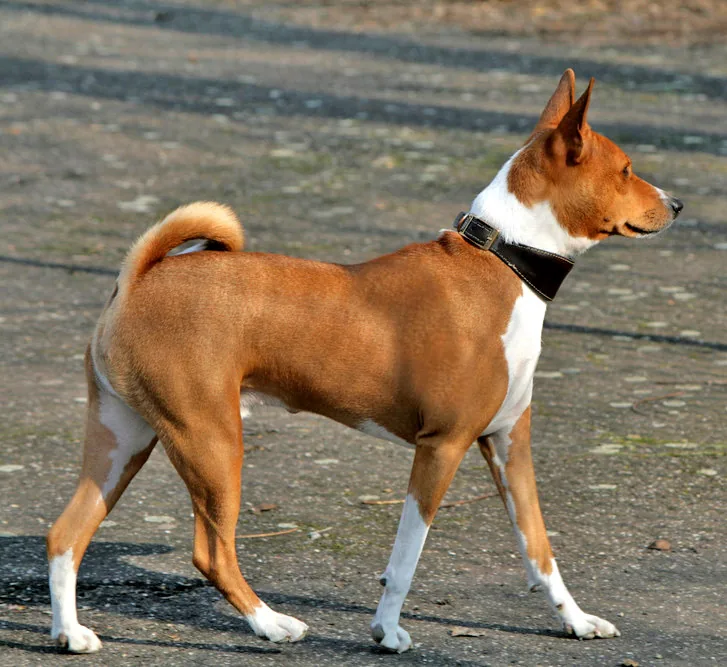
Basenji
Photo: fugzu, CC BY 2.0, via Wikimedia Commons

Basenji

Also known as Congo Dog, Barkless Dog, Congo Terrier, Ango Angari

Spitz & Primitive Small Democratic Republic of the Congo

A small, elegant African hunting dog known as the barkless dog because it yodels and chortles instead of barking. Cat-like, clean and independent, it is a clever but strong-willed companion.

Height
40–43 cm
Weight
9.5–11 kg
Life expectancy
12–14 years
Origin
Democratic Republic of the Congo
Coat
Short, fine and glossy
FCI
Group 5, standard no. 43
  • Alert
  • Independent
  • Curious
  • Playful
  • Reserved

At a glance

Overview

The Basenji comes from Central Africa, where it was used to hunt and flush game. It is a primitive-type breed that sits near the base of the domestic dog family tree.

It is small, short-coated and tidy, and it grooms itself much like a cat. It is lively and clever, but it follows its own mind and is better suited to experienced owners.

History

Dogs resembling the Basenji appear in Egyptian art thousands of years old, and the breed has long lived with people in Central Africa. A dog that looks like a Basenji appears in an 1843 painting owned by Queen Victoria.

Early imports to England died of disease, and the breed was only established there in the 1930s and then in the United States. Most Western dogs descend from few founders, so the stud book has been reopened to new imports several times.

Appearance

A small, fine-boned, square dog with erect ears, an arched neck and a tightly curled tail. The forehead wrinkles, especially in puppies or when the dog is excited. Males stand about 43 cm and weigh around 11 kg, females about 40 cm and 9.5 kg.

The coat is short and glossy in red, black, tricolour or brindle, always with white feet, chest and tail tip.

Temperament

Basenjis are alert, curious and affectionate with their family, but they are independent and can be aloof with strangers. They are playful and mischievous, and known for climbing and escaping.

They do not bark in the usual way, but they can yodel, whine and scream. They are not easy to train, as they tend to weigh up whether a command is worth following.

Care and exercise

Basenjis need plenty of daily exercise and play in a safe, fenced area, because their hunting instinct makes them poor off-lead. Puzzle toys and routine help keep a clever mind busy.

Grooming is easy: an occasional brush is enough, and they stay very clean. They dislike cold and wet weather.

Health

Fanconi syndrome, a kidney tubule disorder, is unusually common and should be screened for. Hereditary haemolytic anaemia also occurs and can be DNA tested. Dermatitis, bladder problems and hypothyroidism have been reported. A UK survey found a median lifespan of about 13.6 years.
More spitz & primitive breeds

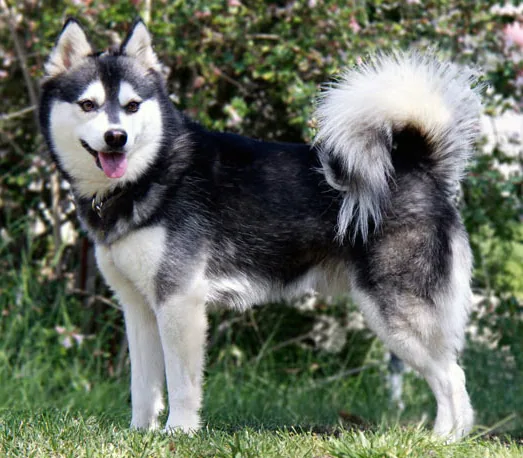
Alaskan Klee Kai

Alaskan Klee Kai

Spitz & Primitive

A companion-sized spitz that looks like a miniature Siberian Husky. Bred in three sizes, the Alaskan Klee Kai is clever, agile and busy, and tends to be reserved with strangers.

Small United States 12–16 years
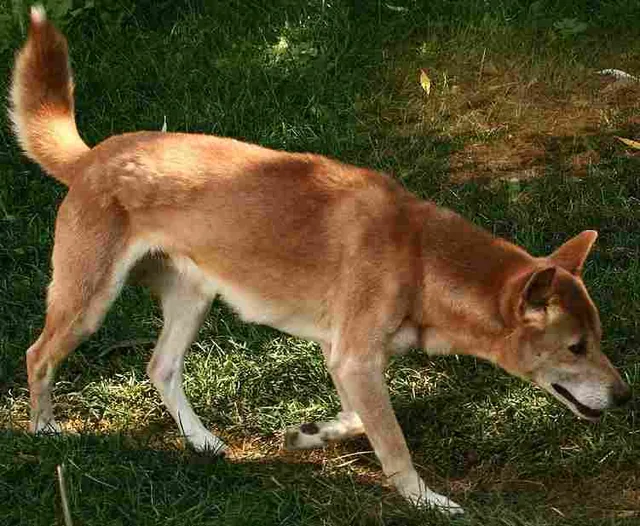
New Guinea Singing Dog

New Guinea Singing Dog

Spitz & Primitive

The New Guinea singing dog is an ancient primitive dog of the New Guinea Highlands, closely related to the dingo. It is famous for a melodic, yodel-like howl and for extraordinary agility.

Small Papua New Guinea 15–20 years
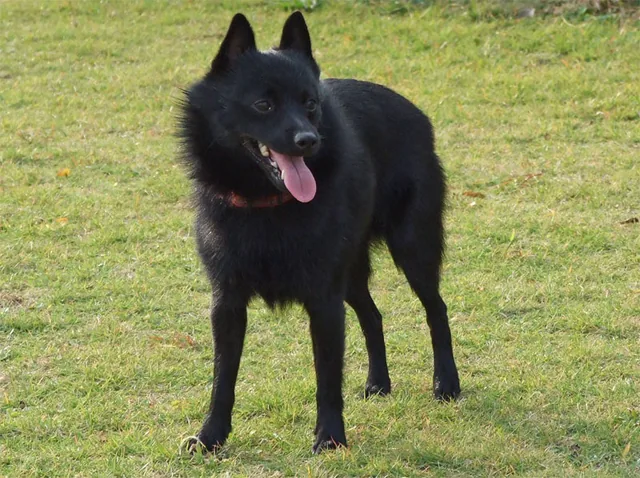
Schipperke

Schipperke

Spitz & Primitive

A small, black, fox-faced Belgian spitz with a thick ruff and a big personality. The Schipperke is a watchful, curious little guardian that was once a shepherd's and tradesman's helper in Flanders.

Small Belgium 13–15 years
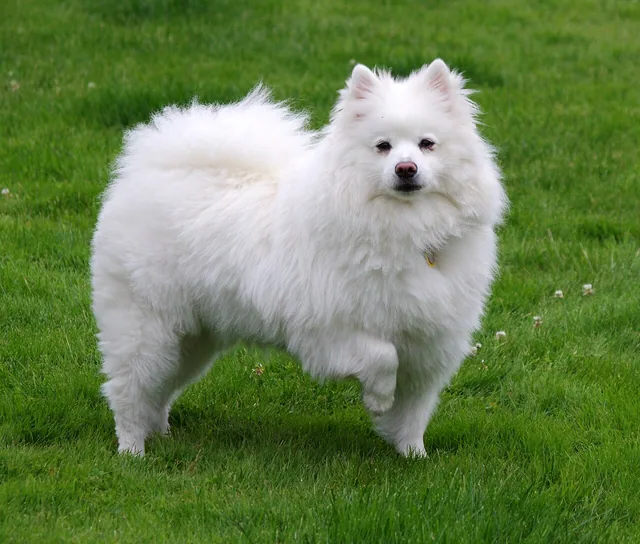
American Eskimo Dog

American Eskimo Dog

Spitz & Primitive

The American Eskimo Dog is a fluffy white Spitz companion that comes in toy, miniature and standard sizes. Despite its name it descends from German Spitz and once starred in American circuses.

Small United States 13–15 years
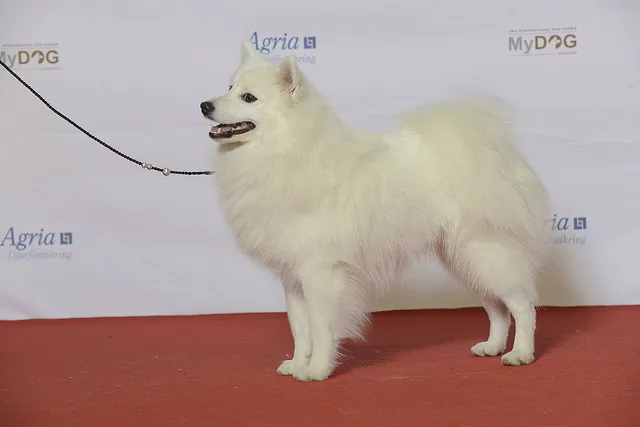
Japanese Spitz

Japanese Spitz

Spitz & Primitive

A cloud-like, pure white companion spitz from Japan, with a coat that stays clean almost by itself. Cheerful, devoted and a lively little watchdog, it thrives on being part of family life.

Small Japan 12–14 years
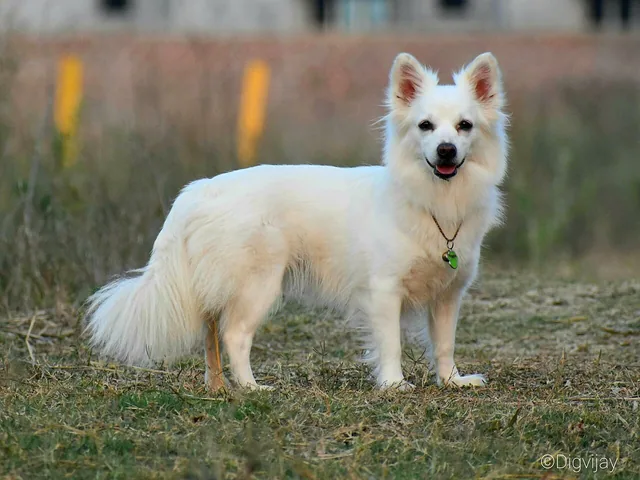
Indian Spitz

Indian Spitz

Spitz & Primitive

A fluffy, fox-faced white spitz that came to India with the British and became one of the country's best-loved family dogs, comfortable in both flats and houses.

Small India 12–14 years