Overview
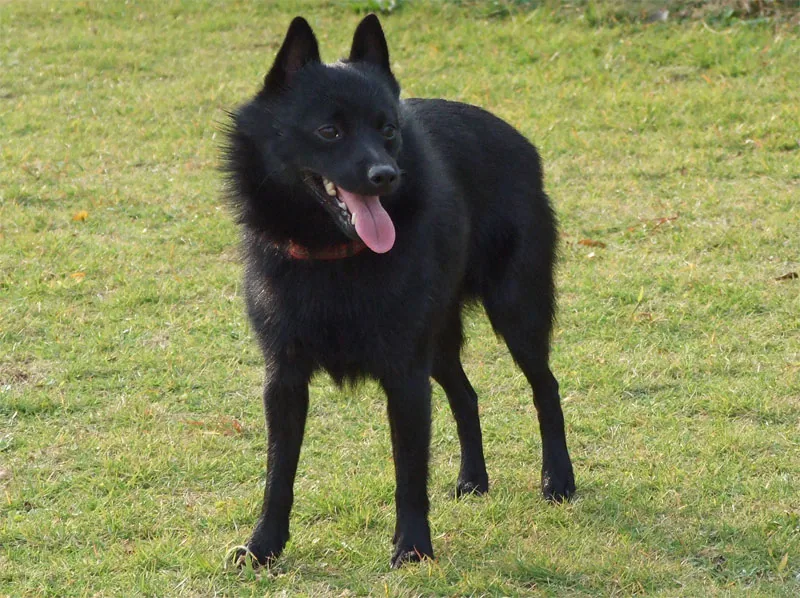
The Schipperke is a compact, sturdy spitz-type dog from Flanders, usually black and instantly recognisable by its ruff and pointed, upright ears. In Belgium it is regarded as a small shepherd, though it has long worked as a watchdog and ratter.
It is bold, inquisitive and always on the move, so it suits owners who enjoy a busy, clever companion rather than a quiet lap dog.
History
The breed is thought to descend from a black shepherd dog of the Leuven area, sometimes called the Leuvenaar, and to have taken shape in Flanders from around the 1600s. The same type also fed into the larger Groenendael.
It was formally recognised in the 1880s and its standard was written in 1889. The name is often translated as little boatman, though it may really come from the Flemish word for shepherd. DNA studies place it close to the spitz family, and during the Second World War the breed reportedly carried messages for the Belgian Resistance.
Appearance
A small, square, sturdy dog with a foxy face, dark almond eyes and erect pointed ears. A thick ruff frames the neck and a strip of longer hair runs back along the body, with fuller culottes on the hind legs. The tail is often docked or absent in some countries, but may be naturally short or long elsewhere.
Adults usually weigh between 3 and 9 kg.
Temperament
Schipperkes are confident, curious and endlessly inquisitive, with a talent for getting into everything. They are devoted to their family, wary of strangers and quick to announce anything unusual.
They are clever but independent, and can be stubborn. They do best with early socialisation, consistent and good-humoured training, and plenty to occupy their minds.
Care and exercise
This is an active little dog that needs daily walks, play and mental work, and it will happily join in with dog sports. A secure garden or lead is wise, as it can be a determined explorer and may chase small animals.
Brush weekly, and more often during the heavy seasonal moult when the thick undercoat is shed. Keep an eye on weight, since over-feeding and too little exercise are harmful.
Health
Generally a healthy, long-lived breed, with a median lifespan of about 13 years. Luxating patella and Legg-Perthes disease can occur, and some lines show a tendency to epilepsy. A breed-specific lysosomal storage disease, MPS IIIB, can be screened for with a DNA test. Inbreeding is rising, so choose breeders who health-test.