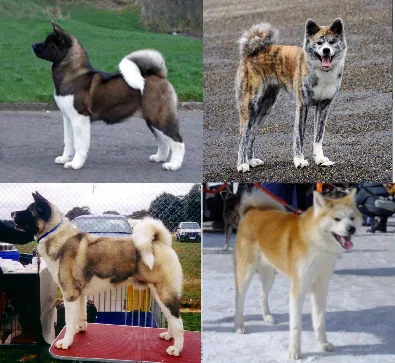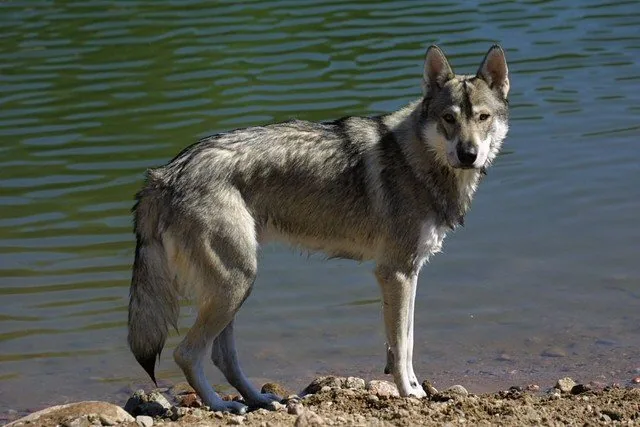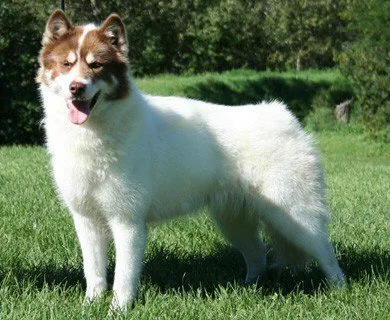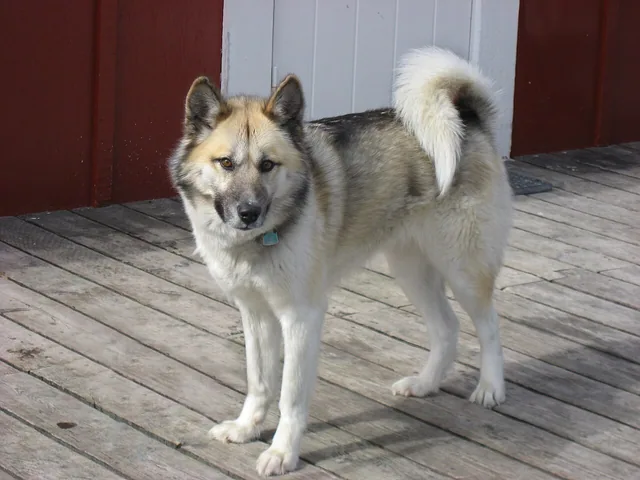
Overview
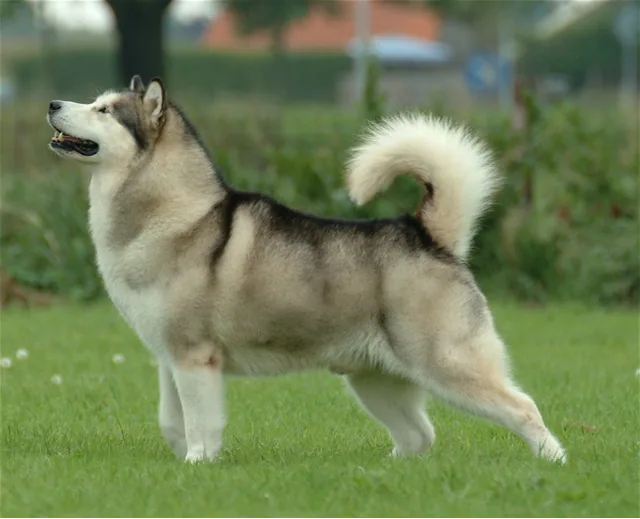
The Alaskan Malamute is a large spitz-type dog developed to haul heavy freight across snow and ice. It is bigger and more heavily built than its cousin the Siberian Husky, and it is made for power and stamina.
Today it is a devoted but demanding companion. It suits active, experienced owners who enjoy outdoor life and can offer firm, patient guidance.
History
The breed is linked to the Malimiut Inupiaq people of Alaska's Norton Sound region, who kept strong dogs for hauling, hunting and living alongside their families. They helped find seal breathing holes and were used against large predators such as bears.
Genetic studies place the Malamute among the old basal breeds with Siberian roots, close to the Siberian Husky and the Alaskan husky. During the Klondike Gold Rush many sled dogs were crossbred, but the Malamute went on to serve on polar expeditions and in World War II rescue and freight work. It became Alaska's official state dog in 2010.
Appearance
The Malamute is compact, deep-chested and strongly boned, with snowshoe feet and a plumed tail carried over the back. Males are usually around 64 cm and 39 kg, females somewhat smaller, though larger individuals are common.
The head is broad with small, erect, wedge-shaped ears and almond-shaped brown eyes. Blue eyes are not accepted in the breed. The dense double coat gives a robust, wolf-like look.
Temperament
Malamutes are friendly, affectionate and people-oriented, and they are usually not guard dogs. They are playful and can stay puppy-like for years.
They are intelligent but independent and strong-willed, so training needs consistency and humour. Many have a high prey drive, enjoy digging, and can be dominant with other dogs.
Care and exercise
This is a working breed that needs long daily exercise such as hiking, pulling or carting. A bored Malamute can become destructive, and a secure fence is important because they dig and roam.
The thick coat needs brushing several times a week and daily during the heavy seasonal moult. They cope poorly with heat, so provide shade, water and cool rest areas.
Health
Hip and elbow dysplasia, hereditary cataracts and progressive retinal atrophy are reported, along with hypothyroidism, epilepsy and polyneuropathy. Malamutes absorb zinc poorly, which can cause skin and coat problems, and diabetes may appear in middle age.