Overview
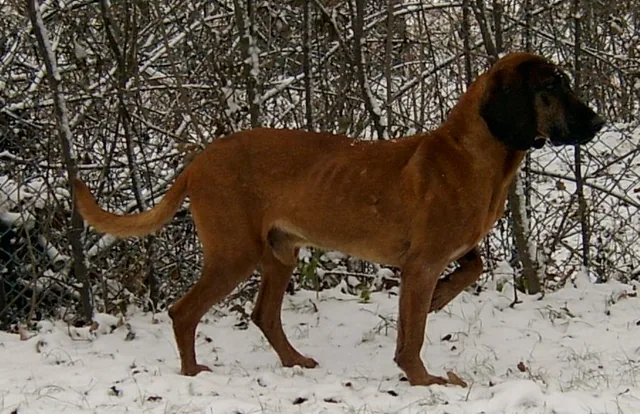
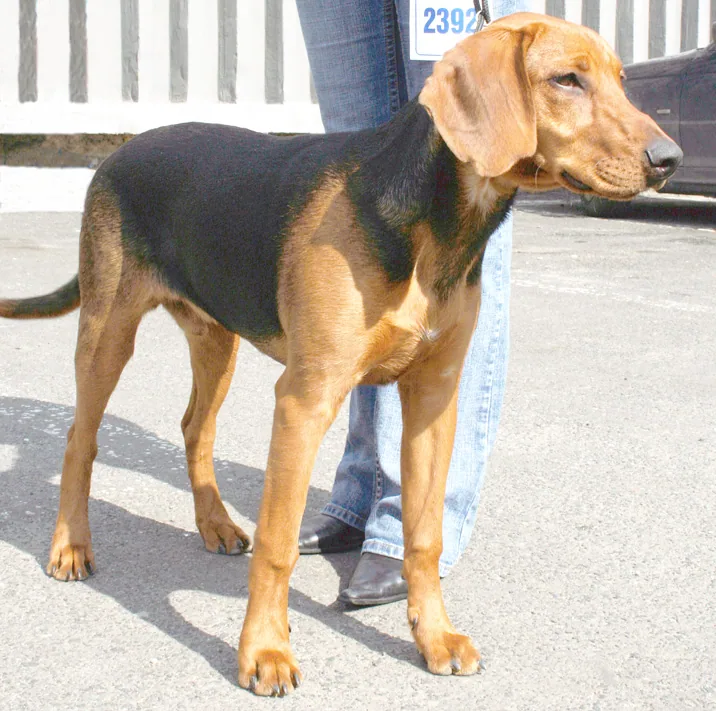
The Schillerstövare is a medium to large Swedish scenthound built for running down fox and hare. It is lean and athletic, with a harsh close-lying coat and a striking black and tan pattern.
It is still valued as a working hunting dog and is recognised by the FCI and several national and international kennel clubs.
History
The breed's roots lie in a mix of Swiss hounds and the Harrier. It carries the name of Per Schiller, a Swedish farmer who exhibited the dogs at the first Swedish dog show in 1886.
The Swedish Kennel Club recognised the breed in 1907, and the FCI lists it as breed number 131. The United Kennel Club in the United States followed in 2006.
Appearance
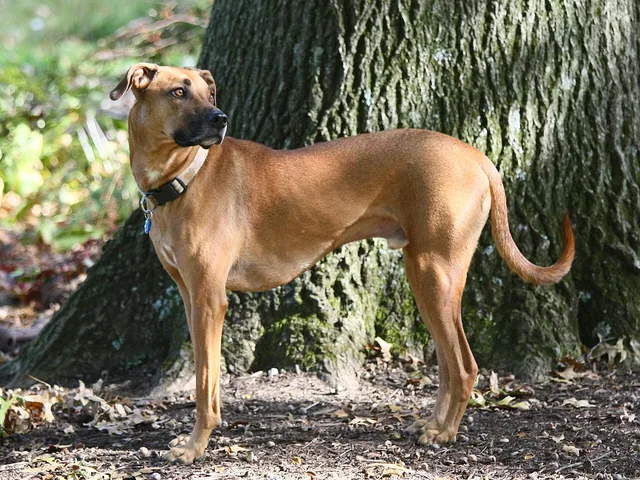
This is a medium to large hound with a sturdy but lean frame, standing roughly 53 to 61 cm at the withers. The coat is harsh, not too short and lies close to the body. The colour is tan with a black mantle across the back.
The drop ears are broad and not overly long, and the long tail is carried level with the back when the dog is running.
Temperament
The breed standard asks for a lively and attentive dog. Bred to work independently on a trail, it is keen, focused and driven when it picks up a scent.
It suits active hunters far better than a quiet home life.
Care and exercise
A working hound needs plenty of daily exercise and a chance to follow its nose in safe, open country. A secure fence and a recall that is reliable around scent trails are important.
The harsh, close coat needs only occasional brushing.
Health
No unusual health problems have been documented for the breed. As with other long-eared hounds, regular ear checks are sensible.