Overview
The Pharaoh Hound, called Kelb tal-Fenek in Malta, is a slim, graceful warren hound traditionally used for rabbit hunting among the island's rocky terrain. It is the only Maltese dog breed with international recognition.
It is athletic, affectionate and strongly attached to its family, with a hunter's instincts that should be respected.
History
The breed is a traditional dog of rural Malta. Despite its English name and the claims that it descends from dogs in Egyptian tomb paintings, DNA studies suggest a more recent development, becoming distinct from the Sicilian Cirneco dell'Etna within roughly the last two hundred years.
The first litter outside Malta was born in the United Kingdom in 1963, and the FCI accepted the breed under the name Pharaoh Hound that same year. The British Kennel Club approved a standard in 1974.
Appearance
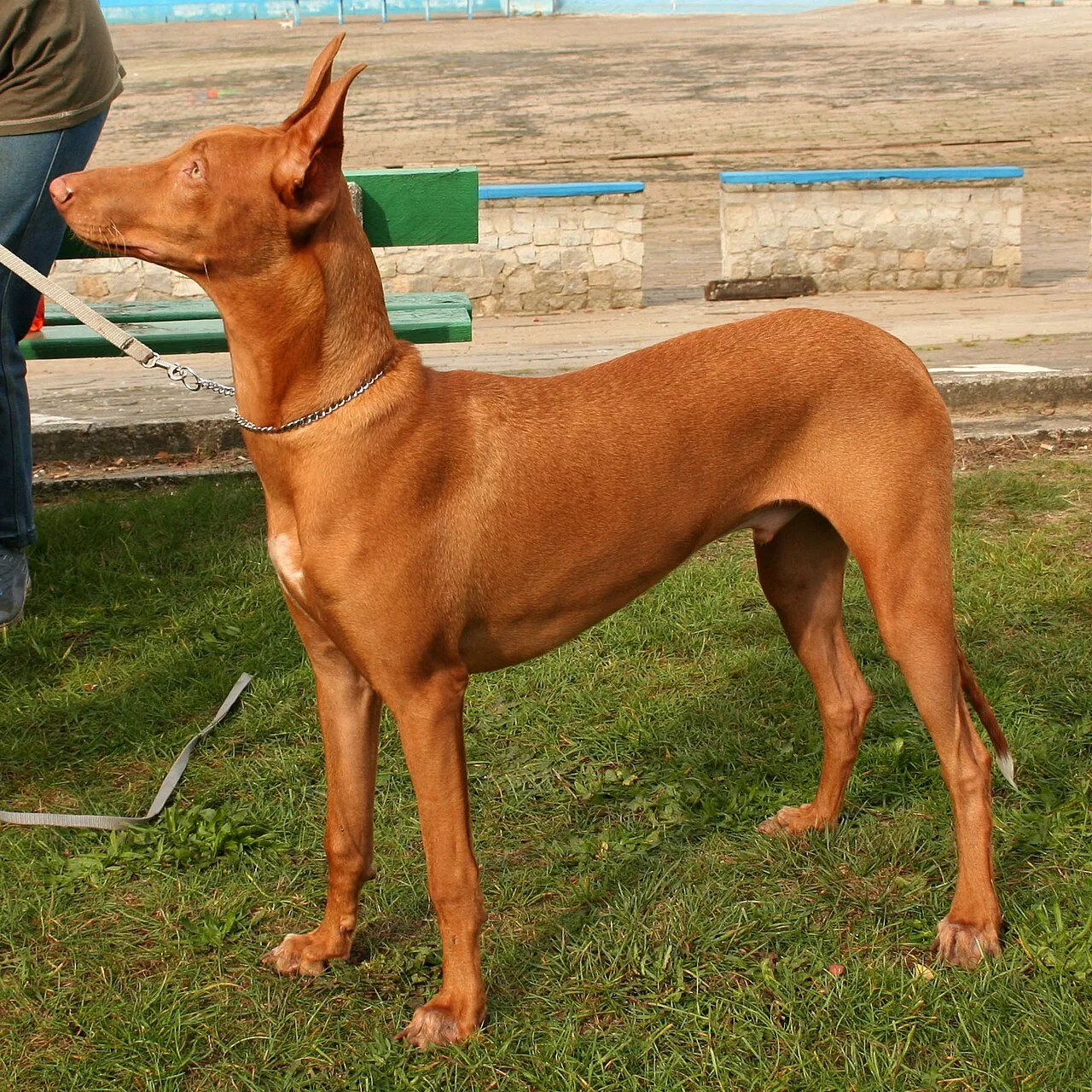
A slender, elegant hound with a long, finely chiselled head, amber eyes and large upright ears. The short, glossy coat is chestnut or tan, with white allowed only on the tail tip, and sometimes on the chest, toes and a thin line on the face. When happy or excited, the ears and nose flush bright pink.
Temperament
Pharaoh Hounds are playful, affectionate and quite sensitive, and they like to be near their people. They are alert and can be reserved with strangers. They have a strong prey drive and are fast, so they should not be trusted off lead outside secure areas.
Care and exercise
This hound needs daily exercise, including opportunities to run fast in a safe, fenced area. Training should be gentle and patient, since it can be independent. The short coat is easy to care for and needs only occasional brushing. It dislikes cold and wet weather and needs a warm place to rest.
Health
The breed has little genetic predisposition to disease and is generally healthy. Like other thin-skinned, lean dogs, it can be sensitive to anaesthetics. Life expectancy is typically 11 to 14 years.





