Overview
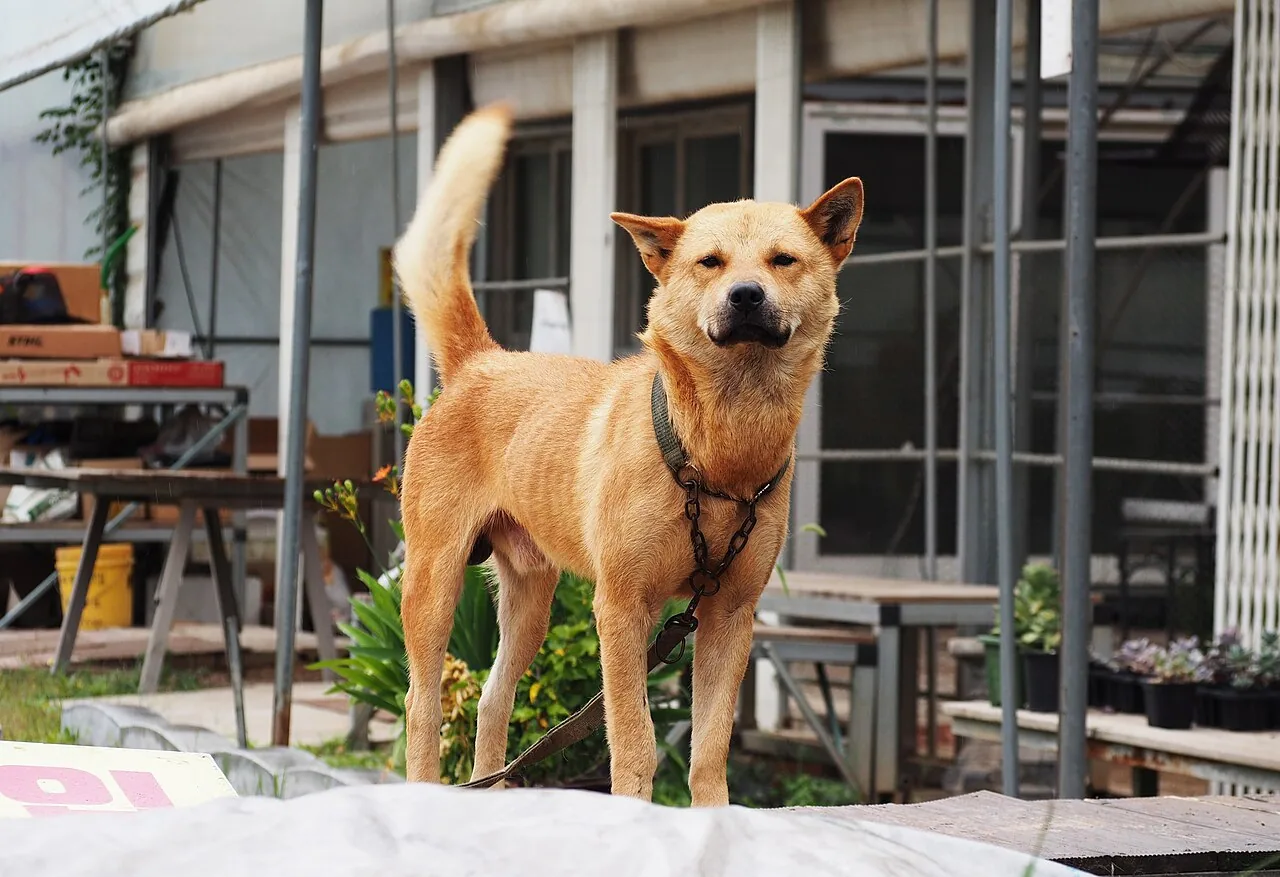
The Nureongi is a common spitz-type dog with a yellowish coat, found across the Korean peninsula. Its Korean name simply means yellow one, and it is also called Hwanggu, or yellow dog.
It is a village and farm dog rather than a pedigree breed, and it has no formal breed standard. In Korea it has also been the dog most often raised for meat, a practice that is now widely debated and increasingly restricted.
History
The Nureongi is an old native dog of Korea, shaped by life alongside farming families rather than by breeders or kennel clubs. Over generations it became the typical yellow dog seen in rural yards and villages.
It has long been the main dog raised for meat in Korea. Public attitudes there have been changing, and many of these dogs are now rescued and adopted as companions.
Appearance
A medium-sized spitz-type dog with a yellowish to tan coat, which gives it its name. Because it is a landrace, size and build vary from one dog to the next, though most show the typical spitz look with prick ears and a curled or carried tail.
Temperament
Nureongi are usually loyal to their families and watchful of strangers, which makes them natural guard dogs. Rescued dogs often bond deeply with their new owners once they feel safe, though some need patience and gentle socialisation first.
Care and exercise
They are hardy dogs that do well with regular walks and a secure garden. Early socialisation and calm, reward-based training help them settle into home life. Grooming is simple, with a weekly brush and extra attention during seasonal shedding.
Health
No breed-specific problems are well documented. As a robust, naturally selected type, they are generally healthy, but rescued dogs should have a full veterinary check, parasite control and vaccinations.





