Overview
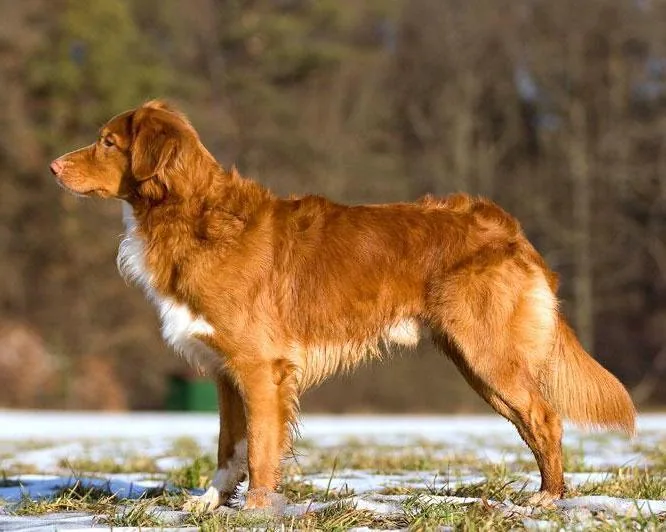
The Nova Scotia Duck Tolling Retriever, or Toller, is a medium-sized red gun dog from Yarmouth County, Nova Scotia. It is the smallest retriever and is sometimes mistaken for a small Golden Retriever.
It is bright, busy and affectionate, and thrives with active families who can give it both physical and mental work.
History
The breed was developed in the Acadian community of Little River Harbour around the early nineteenth century, from retrievers, spaniels, setters and possibly farm collies. It was first called the Little River Duck Dog.
The Canadian Kennel Club recognised it in 1945, and it was named the provincial dog of Nova Scotia in 1995.
Appearance
Tollers are compact, athletic and muscular, standing 43 to 53 cm and weighing 14 to 23 kg. The coat is a shade of red with lighter feathering and often white on the tail tip, feet or chest.
The head is clean and slightly wedge-shaped, the ears triangular, the feet webbed and the double coat water-repellent.
Temperament
Tollers are intelligent, curious, outgoing and full of energy. They are affectionate with family and generally good with children, but can be reserved around strangers.
They get bored and may become destructive if under-exercised. Some give a high-pitched excited cry known as the toller scream.
Care and exercise
This breed needs plenty of daily exercise and mental stimulation, such as retrieving, swimming, agility or dock diving. Brushing once or twice a week handles the coat, with heavier shedding seasonally.
Early socialisation helps, and cats and small animals should be introduced carefully given the breed's prey drive.
Health
Tollers are generally hardy but are prone to immune-related conditions such as Addison's disease, thyroiditis and steroid-responsive meningitis-arthritis, as well as progressive retinal atrophy, collie eye anomaly and hip dysplasia.