Overview
The Hällefors Elkhound is a medium-sized Swedish spitz built for hunting deer in forest country. Its thick, harsh yellow coat and curled tail give it the look of a classic northern hunting dog.
It is a lively, determined dog with a strong personality. It suits active owners who can offer plenty of work and outdoor time.
History
The breed was developed in Svealand in central Sweden. Despite its name, it is said to have been created not in Hällefors itself but in the village of Fredriksberg in neighbouring Ludvika Municipality.
It was used mainly to hunt deer, and its best-known ancestors are the Finnish Spitz and the Ostyak Laika. The Swedish Kennel Club recognised it in 2000, and it is now also accepted in other Nordic countries such as Finland and Norway.
Appearance
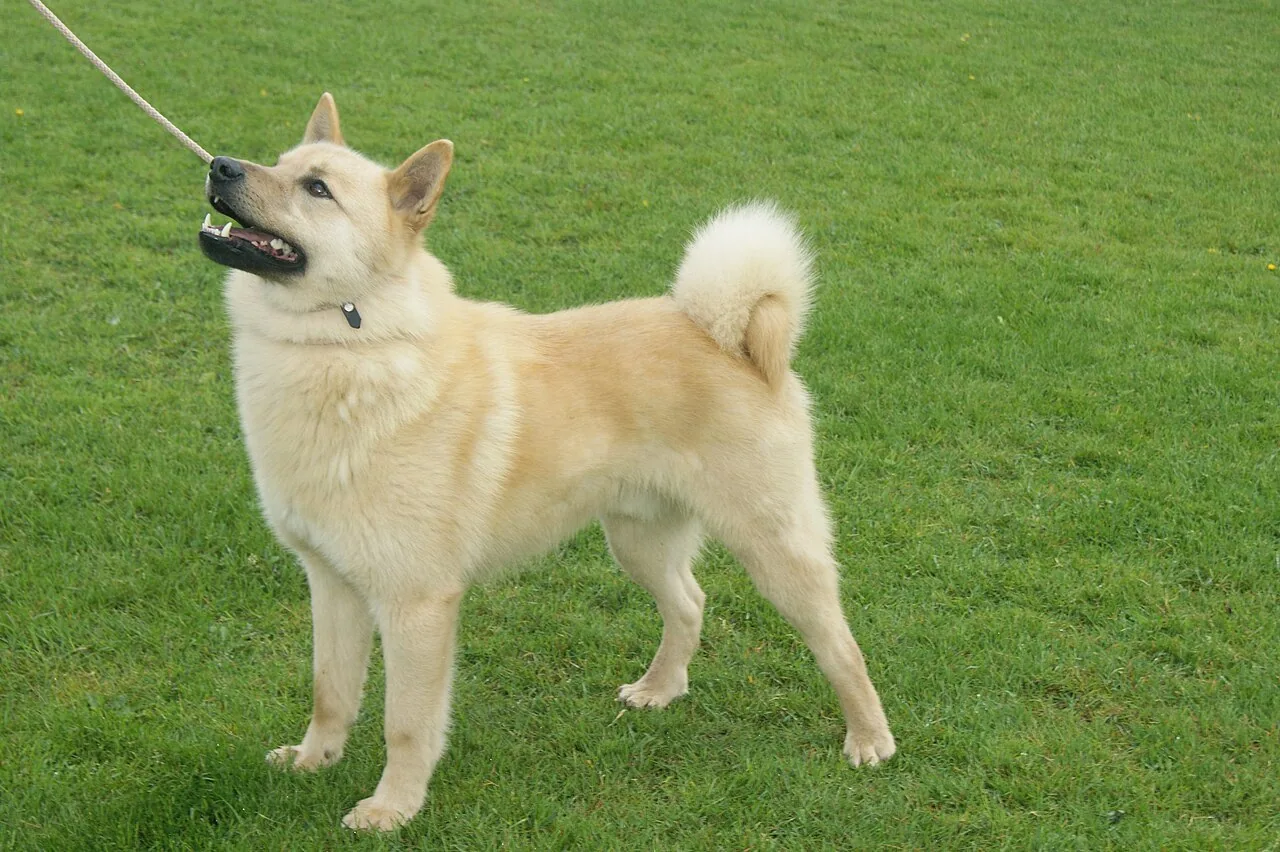
This is a medium-sized, rectangular spitz with a sickle-shaped or curly tail. The coat is thick, harsh and dense, always yellow in shades from fawn to reddish, with lighter colour on the chest, belly, legs and under the tail.
Males stand about 55 to 63 cm at the withers and females about 52 to 60 cm.
Temperament
The Hällefors Elkhound is energetic, courageous and persistent, with a strong character. Like many hunting spitz, it is independent and focused when on a track, and it thrives when it has a job to do.
Care and exercise
This dog needs plenty of daily exercise and mental work, ideally in forest or open country. Regular brushing keeps the dense coat in good order, with extra attention during the seasonal moult. Early socialisation and consistent, patient training help channel its strong will.





