Overview
The Finnish Spitz is a medium-sized spitz from Finland with a golden-red coat and a bright, fox-like look. It was bred to find game in the forest and announce it by barking, a style known as bark pointing.
At home it is a friendly, active companion that gets on well with families, though it is independent and very talkative. It suits owners who enjoy long walks and do not mind a vocal dog.
History
The breed is thought to descend from spitz-type dogs that travelled with settlers into Finland some 3,000 years ago, where woodsmen valued them for finding food in the forest.
By the late 1800s mixing with other dogs threatened the pure type. Hugo Roos, a sportsman from Helsinki, gathered unmixed dogs and spent about thirty years rebuilding the breed. In 1979 it was named Finland's national dog.
Appearance
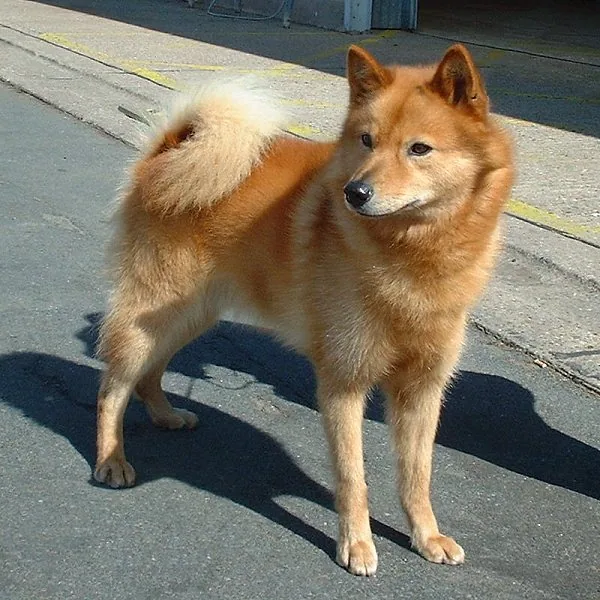
A square, well-balanced spitz with a pointed muzzle, small erect ears and a plumed tail curled over the back. Males stand roughly 45 to 51 cm and females 39 to 46 cm.
The double coat is golden-red, from pale honey to dark chestnut, shaded rather than solid and darkest along the back. The nose, lips and eye rims are black.
Temperament
Active, alert and lively, the Finnish Spitz is warm with its family and especially good with children. It is independent and a little aloof with strangers, and can be protective.
It is usually fine with other dogs but its hunting instincts make it unreliable with small pets such as birds, though some live happily with cats raised alongside them.
Care and exercise
Expect one or two long walks daily plus play with the family; it is calm indoors if exercised. It does not do well kept apart from people in a kennel.
Brush regularly and thoroughly during the twice-yearly coat blow so old undercoat does not cause skin trouble. Train with a soft voice and positive methods, as harsh handling backfires. Barking can be reduced with training but never disappears.
Health
Generally a healthy breed with few widespread problems. Responsible breeders screen breeding stock for the usual inherited conditions.





