Overview
The Eurasier is a medium-sized spitz-type dog created in Germany in the 1960s as a pure companion. It combines the dignity of the Chow Chow and Wolfspitz with the friendliness of the Samoyed.
It is calm and quiet indoors, lively outdoors, and bonds strongly with its family. It does not do well in kennels or alone for long periods.
History
The breed began in 1960 when Julius Wipfel and Charlotte Baldamus set out to combine the best qualities of the Chow Chow and the Wolfspitz, first producing the so-called Wolf-Chow. A later cross with the Samoyed led to the name Eurasier, and the FCI recognised it in 1973.
Nobel Prize winner Konrad Lorenz owned a Eurasier from Baldamus and praised her character as the best he had known in a dog.
Appearance
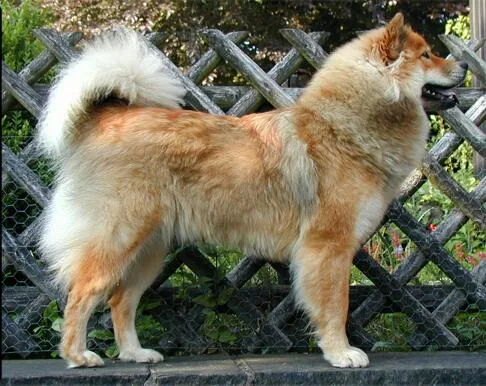
A balanced, well-built spitz with prick ears and a fox-like head. Males stand 52 to 60 cm and weigh 23 to 32 kg, while females stand 48 to 56 cm and weigh 18 to 26 kg.
The thick undercoat and medium-long guard hairs form a plush coat, with feathering on the tail, legs and breeches. The tongue may be pink, blue-black or spotted.
Temperament
Eurasiers are calm, watchful and even-tempered, reserved with strangers but not timid or aggressive. They form deep bonds with their families and are sensitive to harsh words, responding best to gentle, consistent training.
Indoors they are quiet and relaxed, and outdoors they enjoy activity, especially with their people. They suit family life and can work well as therapy dogs.
Care and exercise
A Eurasier needs close family contact and should never be left chained, kennelled or confined to a yard. Daily walks and activities with its owner keep it content.
The double coat should be brushed a couple of times a week, more during the seasonal shed. Avoid overheating in hot weather, and keep training positive and patient.
Health
Generally healthy, though a small early gene pool led to occasional hereditary problems. These include hip dysplasia, luxating patella, hypothyroidism and eyelid or eyelash disorders such as entropion. Responsible breeders test hips, elbows, patellas, eyes and thyroid function.





