Overview
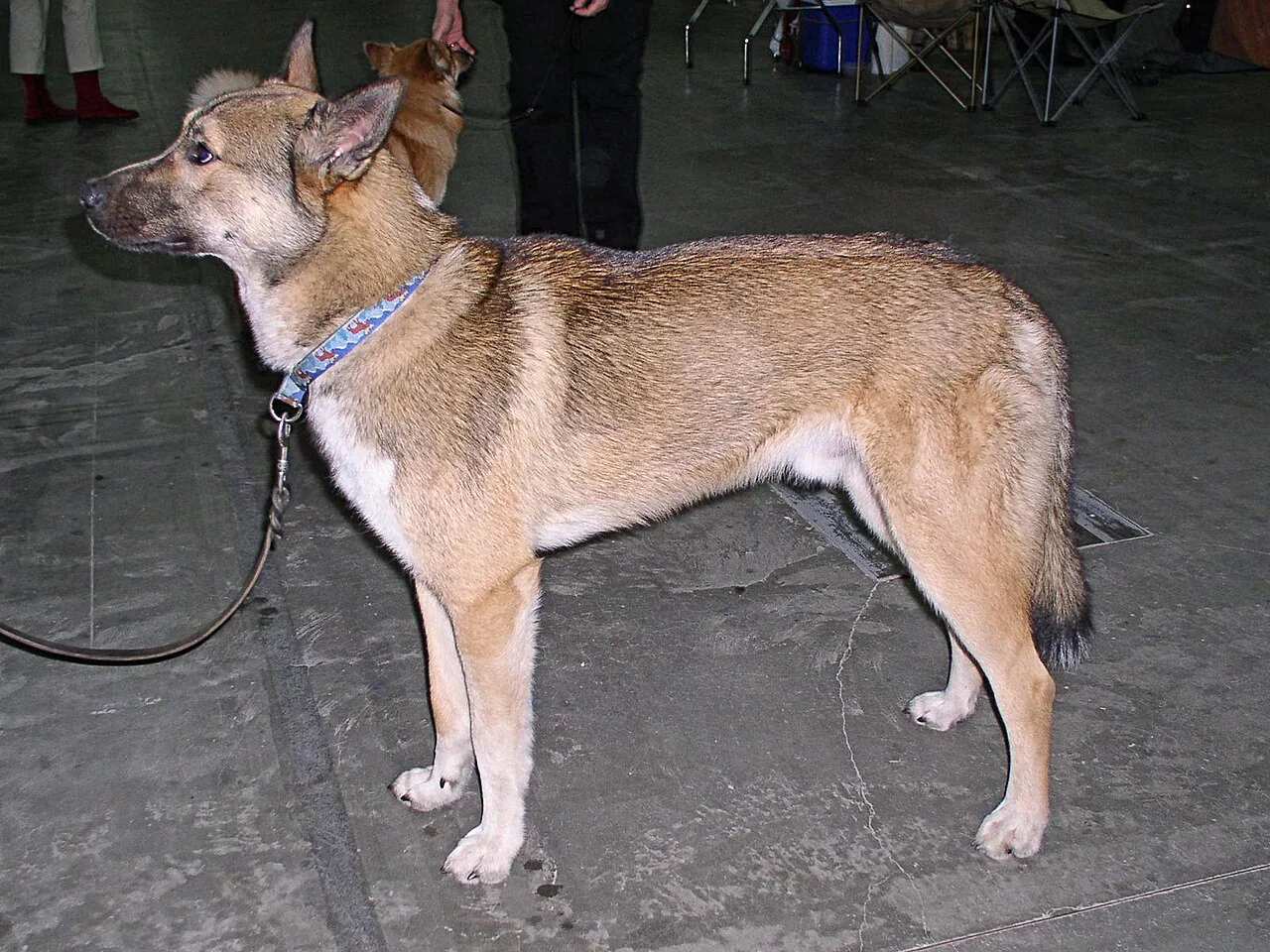
The East Siberian Laika is a Russian spitz-type hunting dog from the lands east of the Yenisei River. It is a versatile worker, used on small and large game and sometimes as a sled dog.
It is a varied breed, with regional types that differ in colour and build, but a friendly and balanced temperament.
History
Before the 1940s, several native laikas in eastern Siberia were used for sledding, hunting and reindeer herding. In the Soviet era they were merged into larger regional types and judged mainly as hunting dogs.
The breed was established in 1947 from dogs around Lake Baikal, Irkutsk, Evenki and the Amur basin, and a standard followed in 1949. Systematic breeding began in the 1970s.
Appearance
Males stand about 55 to 66 cm and females 51 to 60 cm. The dog is rangy, nearly square, with erect triangular ears and a tail carried over the back. The medium-long double coat has coarse guard hair and a soft undercoat.
The two main types are the Evenki and the Irkutsk, with others like Yakutia and Amur.
Temperament
Friendly towards people, with a strong hunting passion and a balanced character. Aggression to humans is not typical, though in its home areas it is sometimes used as a guard. It is well adapted to hard work in harsh mountain taiga.
Care and exercise
This is a working dog that needs a lot of daily exercise, a secure fence and a job to do. Early socialisation and firm, patient training help channel its independent hunting drive.
The double coat needs weekly brushing and more during heavy seasonal shedding.





