Overview
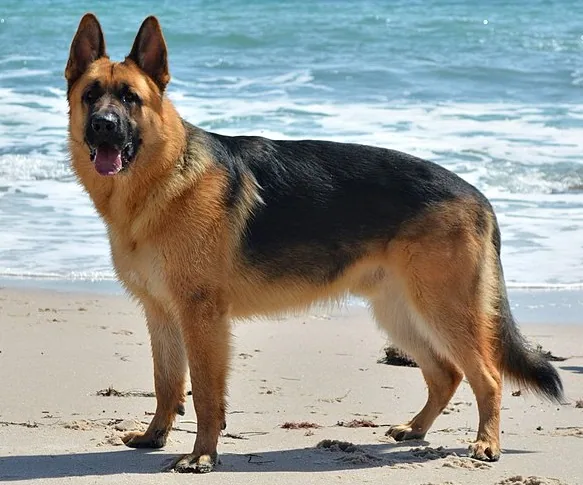
The East European Shepherd, or VEO, was developed from German Shepherds into a larger, hardier dog for harsh Soviet winters. It is now one of the most numerous breeds in Russia and several neighbouring countries.
It is a serious working dog, strong in body and mind, and best suited to experienced owners.
History
In the 1920s German Shepherds were imported into the Ukrainian SSR, where a breeding programme aimed to adapt them to the tougher climate. Over decades a distinct type emerged, named East European from 1950.
The military and police used it widely for guarding and sniffing work. Standards were approved in 1955 and 1964, and the Nordic Kennel Union recognised it from 2017.
Appearance
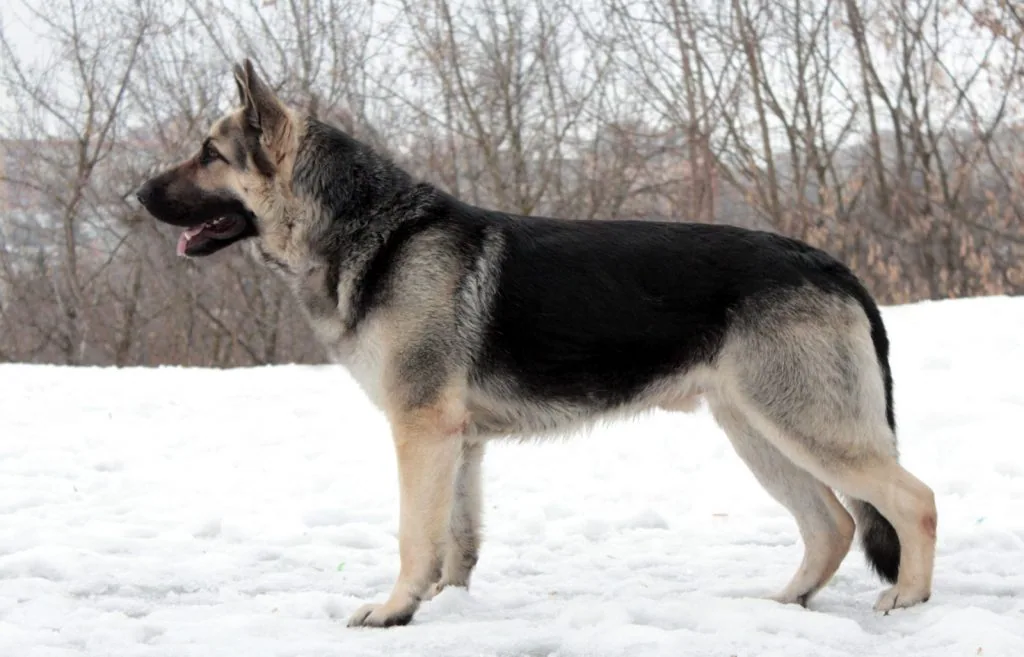
Noticeably bigger than a German Shepherd. Males stand about 67 to 72 cm and females 62 to 67 cm. The coat is dense and medium in length with a thick undercoat, often with longer hair on ears, neck, limbs and tail.
It may be black and tan, sable or solid black. Ears are long and upright, and large paws give a snowshoe look.
Temperament
Intelligent, courageous and determined, with a tough, steady nature. Owners often compare its temperament to that of a Dobermann.
It is devoted to its family but reserved and watchful with strangers.
Care and exercise
This dog needs generous daily exercise, firm and consistent training and early socialisation. It does best with a purpose, such as obedience, protection sport or tracking.
Brush weekly and more often during heavy seasonal shedding.