Overview
The Presa Canario is a large, robust and muscular dog from Gran Canaria and Tenerife in Spain's Canary Islands. Its broad, square head and strong frame make it an imposing guardian.
It is calm and devoted with its family but reserved and protective toward strangers. It is best suited to experienced owners who can provide training, space and firm, fair leadership.
History
The breed descends from the old Bardino Majorero and was crossed with molossoid dogs brought to the islands during the colonial period, plus dogs from Britain in the late nineteenth century. It worked as a guard dog, a cattle herder and, historically, a fighting dog.
By the 1960s it was close to extinction. A breed club formed in 1982, the Spanish kennel club approved a standard in 1989, and the FCI accepted it definitively in 2011. The name changed from Dogo Canario to Presa Canario in 2018.
Appearance
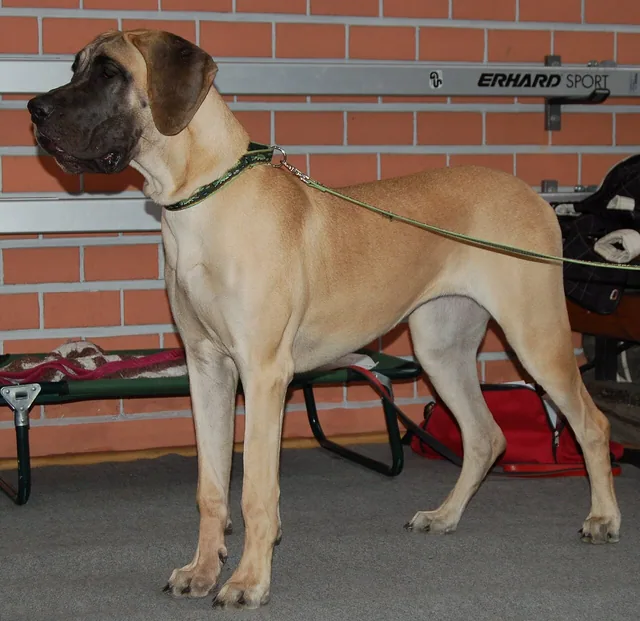
This is a large, muscular dog. Under the 2023 standard, males stand 61 to 66 cm and weigh about 45 to 57 kg, while females are 57 to 62 cm and 40 to 50 kg.
The head is broad and massive with a short muzzle and slightly pendulous lips. The ears are pendant or rose-shaped where cropping is banned.
Temperament
The Presa Canario is calm, confident and watchful. It bonds deeply with its family but is naturally wary of strangers and can be dominant with other dogs.
Early socialisation, consistent training and secure fencing are essential for this strong guardian.
Care and exercise
It needs daily walks and a secure garden, plus mental activity and firm, positive training. The short coat needs only occasional brushing.
The breed is not suited to first-time owners. Check local laws, as some countries restrict or ban it.
Health
A UK study found a median longevity of about 7.7 years, lower than average for dogs. Like other large molossers, it may be prone to joint problems, so buy from health-tested lines.