Overview
The Newfoundland is a giant working dog developed by fishermen on the island of Newfoundland. Its heavy muscles, thick water-resistant coat and webbed paws make it one of the finest water rescue dogs in the world.
At home it is a soft-hearted, patient companion that adores people. Its size, drool and love of mud and water mean it suits households with space and a relaxed attitude to mess.
History
The breed was shaped by fishermen in Newfoundland, who used the dogs to pull fishing nets, haul carts and retrieve from cold water. The name was in use by the 1760s, and explorers described a heavier dog, the Newfoundland, alongside a smaller water dog, the St. John's water dog, which became a forefather of modern retrievers.
The breed became popular in Britain and was painted by artists such as Sir Edwin Landseer, who gave the black-and-white pattern its name. Numbers were badly hit by the two world wars but have grown steadily since the 1950s.
Appearance
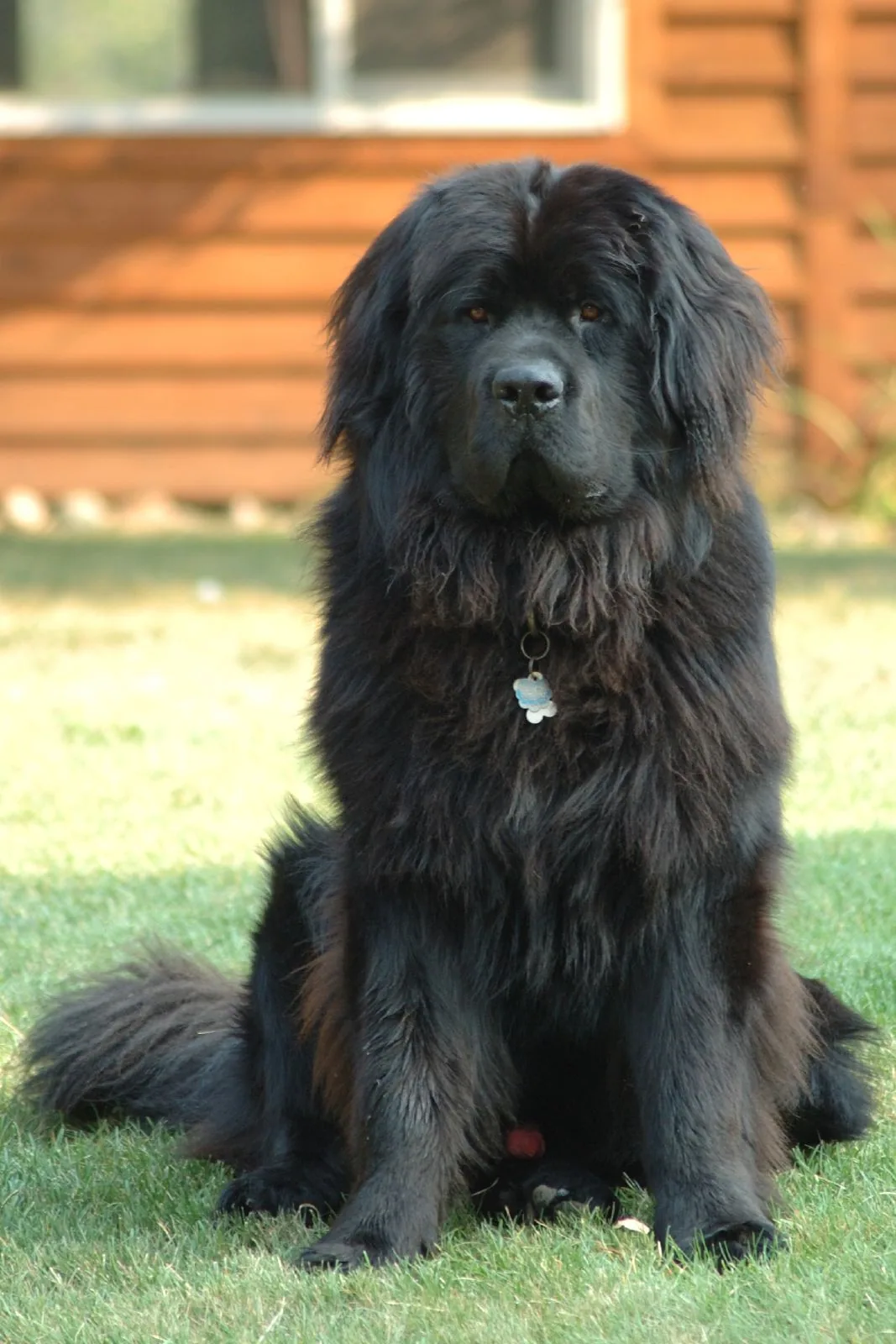
A giant, heavily boned dog with a broad head, a deep chest and a strong, slightly rolling build. Males commonly weigh 65 to 80 kg and females 55 to 65 kg, standing roughly 63 to 71 cm, though the source notes some reach 76 cm.
The double coat is dense and oily, with a soft undercoat and a coarse, moderately long outer coat. Webbed feet help it swim powerfully, and the thick tail works like a rudder.
Temperament
Newfoundlands are famously sweet, patient and gentle, often called nanny dogs for their tolerance with children. They are devoted to their people and want to be close to the family.
Most are eager to please and fairly easy to train when handled kindly. They tend to be quiet, but they love water and will happily turn any puddle into a swimming session.
Care and exercise
Daily walks and swimming are enough for this calm giant, but young dogs should avoid hard, repetitive exercise while they grow. They dislike heat, so shade and cool water are important.
Brush a few times a week and more during heavy seasonal shedding. Expect drool, wet beards and a lot of hair around the house. Early training and socialisation matter because of their sheer size.
Health
Life expectancy is around 10 to 11 years. The breed is prone to hip and elbow dysplasia, cranial cruciate ligament problems, dilated cardiomyopathy and gastric dilation volvulus (bloat). Skin conditions and hypothyroidism are also seen. Health-tested parents are strongly advised.