Overview
The Great Dane combines great size with a graceful, balanced build. It is among the tallest dog breeds, and the tallest dogs on record have been Danes.
Despite its size it is typically friendly and gentle, a calm housemate that wants to be with its family. It needs space, a hefty food budget and an owner prepared for health issues common in giants.
History
Descended from medieval hunting dogs used against bear, boar and deer, the breed grew from strong dogs of mastiff and greyhound type known in Germany as Englische Dogge. Favourites slept in noble bedchambers as guards.
In 1878 a Berlin committee renamed them Deutsche Dogge. English speakers came to call them Great Danes, from the French Grand Danois, though the breed has no link to Denmark. They were once called Reichshund because of Bismarck.
Appearance
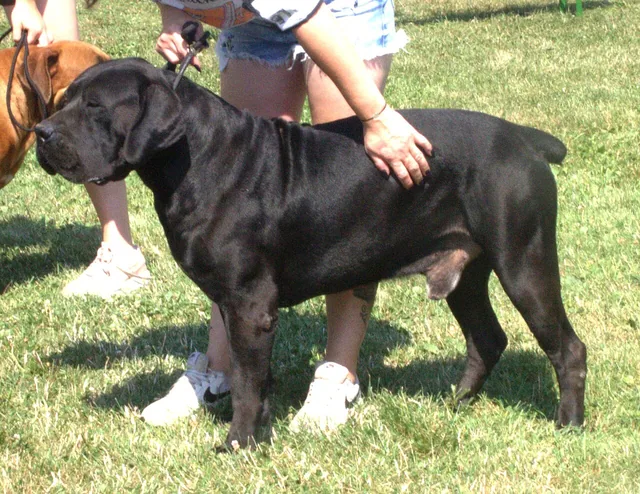
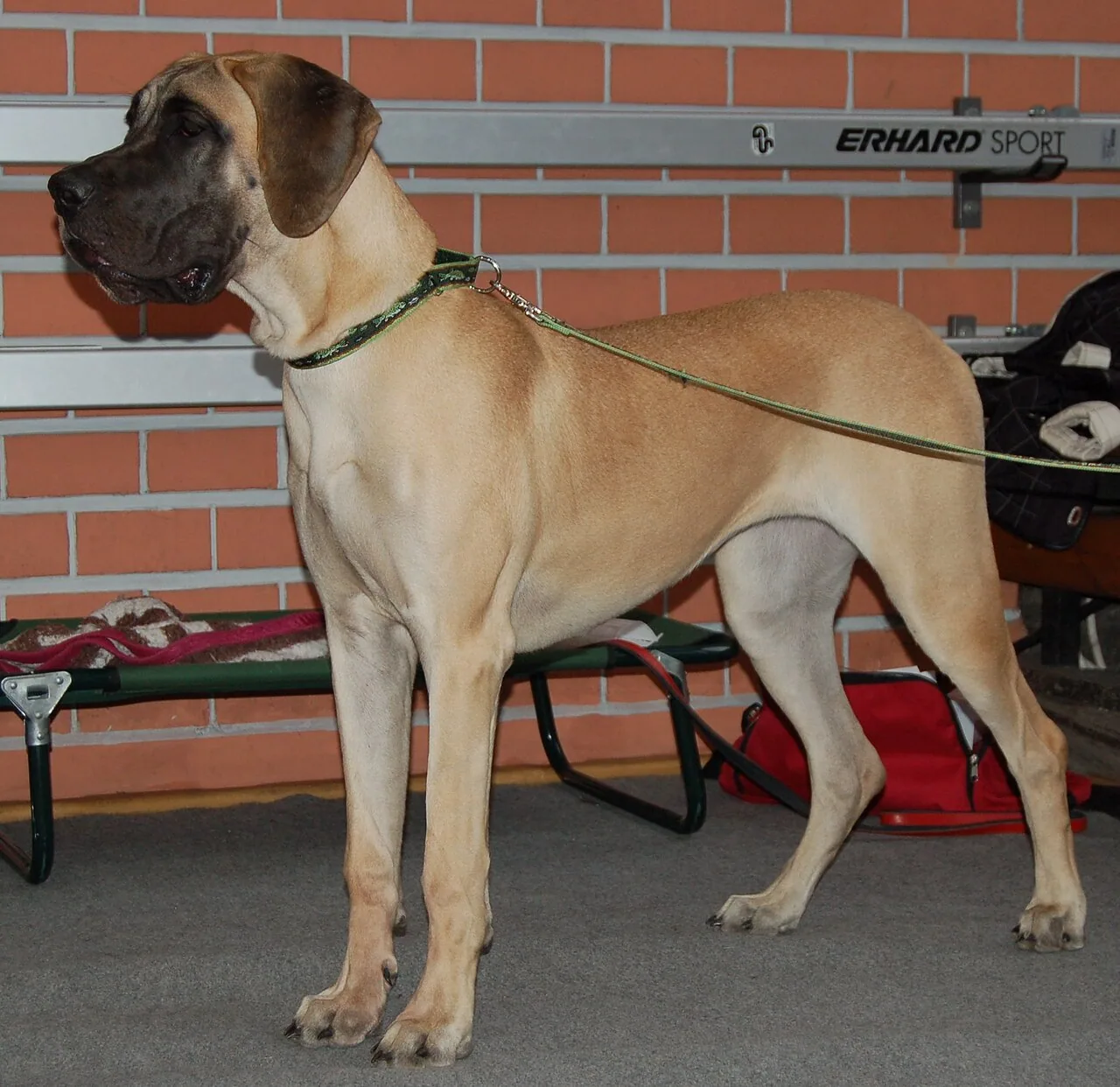
An extremely large, square-proportioned dog with a smooth, strong muscular body, long legs and a noble head. Males must be at least 76 cm at the shoulder and females 71 cm; record holders have exceeded 1 metre.
Ears are naturally floppy and triangular, though cropping is still done in some places and banned in many. Standards accept fawn, brindle, black, harlequin, mantle, blue and, under FCI rules, grey merle.
Temperament
Great Danes are friendly, affectionate and generally not aggressive towards people or other animals. They are calm indoors and often think they are lap dogs.
They are sensitive, benefit from early socialisation and gentle training while still manageable in size, and tend to be good with children, though their bulk requires supervision.
Care and exercise
They need moderate daily walks rather than intense exercise, and young dogs should not do hard exercise or jumping while growing. Allow a rest of up to an hour after meals to lower bloat risk.
The coat is easy to care for. They need a large bed, space and a quality diet suited to giant breeds.
Health
Bloat (gastric dilatation-volvulus) is the leading killer. Dilated cardiomyopathy and other heart diseases are common, earning the nickname heartbreak breed. Double merle dogs risk deafness and blindness. Average life expectancy is about 7 to 10 years.