Overview
The Pudelpointer is a versatile hunting dog from Germany, developed from the Poodle and the English Pointer. It was designed to do everything a hunter might need: search, point, track wounded game and retrieve from field or water.
It is still bred mainly for performance. Clubs in Germany and North America require breeding dogs to pass tests of their field, tracking and water skills before they may be bred.
History
In 1881 the German breeder Baron von Zedlitz, who wrote as Hegewald, set out to create his ideal hunting companion. He wanted the trainability and love of water of the Poodle, and the nose, pointing instinct and hunting drive of the Pointer.
The Poodle's genes proved strong, so many more Pointers were used to reach the right balance. Over the first thirty years, around eleven Poodles and eighty Pointers contributed. The breed reached North America in 1956, where breeders have deliberately avoided kennel club recognition to keep function ahead of looks.
Appearance
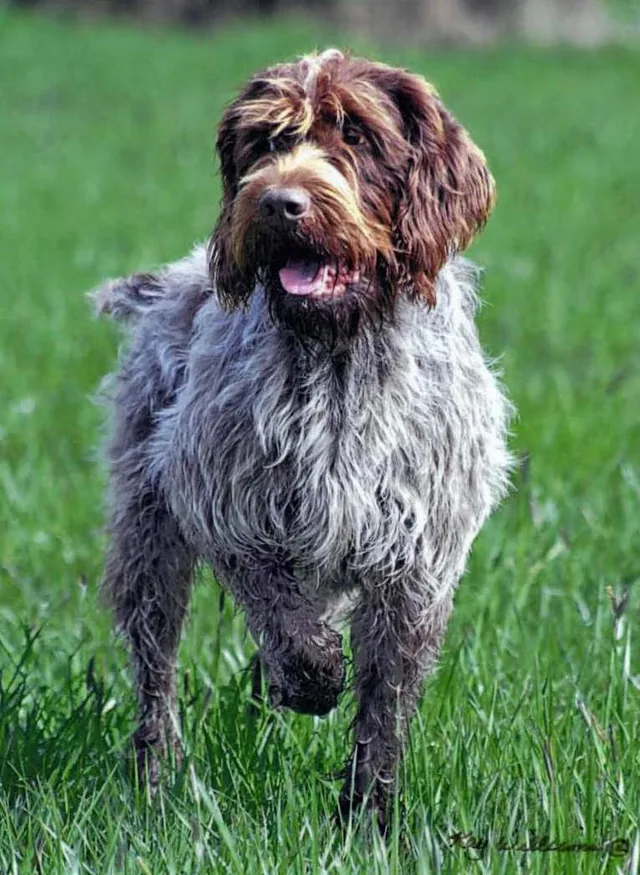
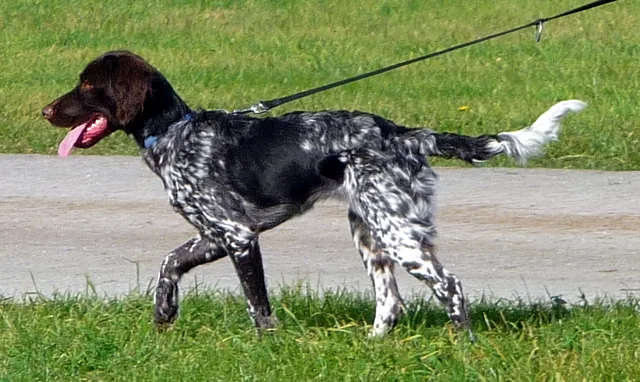
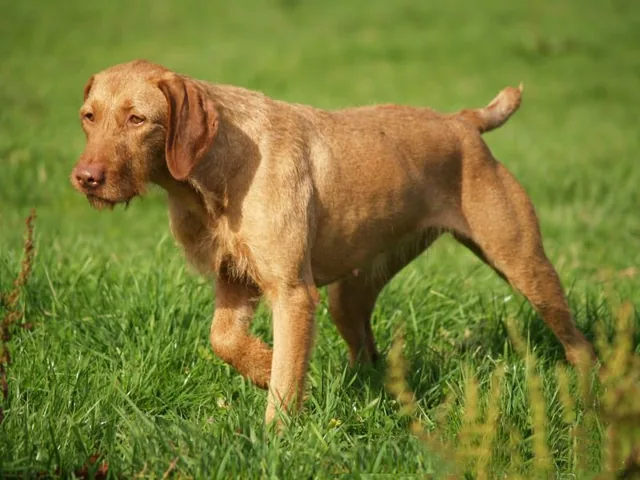
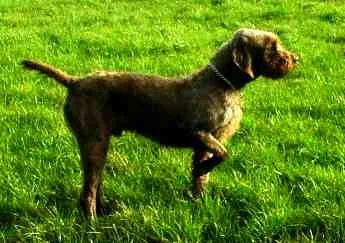
A medium to large, strongly built but athletic dog with a noble head and a dense, harsh, wiry coat that protects it from brush and cold water. It often has a moustache and eyebrows, giving a rugged expression.
It stands about 53 to 66 cm at the shoulder and weighs 20 to 30 kg. The coat comes in liver or chestnut, and occasionally black.
Temperament
The Pudelpointer is intelligent, eager to learn and devoted to its owner. It is usually gentle and steady at home when its needs are met, and it forms a close bond with its family.
It has a strong desire to hunt and a lot of stamina, so it is happiest with a job to do. It tends to be reserved with strangers but not unfriendly.
Care and exercise
This breed needs plenty of vigorous daily exercise and mental work such as tracking, retrieving and swimming. It is not well suited to a sedentary home or small flat life.
The wiry coat needs brushing once or twice a week and occasional hand stripping or tidying. Early socialisation and consistent, positive training help it become a calm companion.
Health
Generally a robust, healthy working breed. Like other medium to large gun dogs, it can be prone to hip dysplasia, and ears should be checked regularly, especially after swimming.