Overview
The Boerboel is a large South African mastiff-type dog bred to guard farms and homesteads. It has strong bones, well-developed muscle and a broad, short-muzzled head.
It is loyal and protective, but its size and guarding instinct mean it needs early socialisation, solid training and a handler who is confident and consistent.
History
The name comes from Afrikaans words for farmer and bulldog. The breed descends from old colonial crosses of mastiffs and bulldogs used by Boer settlers to guard remote farms and to hunt big game such as leopards and baboons.
Deliberate breeding in its modern form began in the 1950s. A breeders' association was founded in 1983, and the South African Boerboel Breeders' Society, formed in 2012, is the legally recognised registry. In South Africa the breed is regarded as a landrace under the Animal Improvement Act.
Appearance
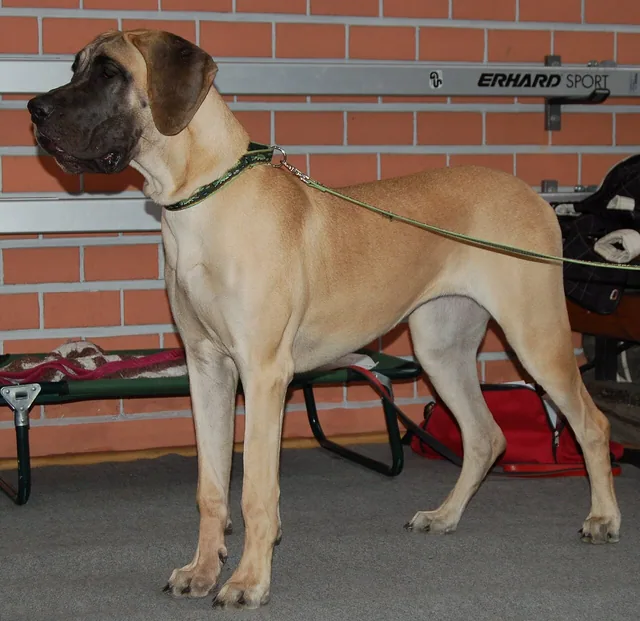
A large, heavily boned, muscular dog with a large head and a short muzzle. The coat is short, sleek and dense.
Recognised colours are brindle, fawn and brown, with or without a black mask. The two main standards differ slightly on black, which the breed society accepts but the Kennel Union of Southern Africa does not.
Temperament
Boerboels are brave, confident and devoted to their family, and they are often gentle with children they know. They are protective and may be aggressive toward other dogs or strangers if poorly socialised.
They are intelligent and willing but dominant, so they need calm, consistent leadership from the start.
Care and exercise
A Boerboel needs daily walks and play, plus a securely fenced yard, and should not be left to guard unsupervised. Mental and physical activity prevent boredom.
Grooming is easy with occasional brushing. Careful socialisation and training are essential, and owners should check local laws, as the breed is restricted or banned in several countries.
Health
The breed can develop hip and elbow dysplasia, eyelid problems such as entropion and ectropion, and vaginal hyperplasia. Juvenile epilepsy has been observed. Health-tested parents are recommended.