Overview
The Kromfohrländer is a medium-sized German companion dog with a white and brown coat, found in rough-haired and smooth-haired varieties.
It is a young breed and still uncommon, loved for its close attachment to family and its adaptable, cheerful character.
History
The breed began in the Siegerland region after the Second World War, when Ilsa Schleifenbaum took in a stray dog from France named Peter. A chance mating with a neighbour's Fox Terrier-type bitch produced unusually uniform puppies, and the litter was repeated.
Schleifenbaum then set about establishing a new breed. It gained German and FCI recognition in 1955. The name comes from a local dialect version of the 'crooked furrow' where the family had a summer home. Finland became a second centre of the breed.
Appearance
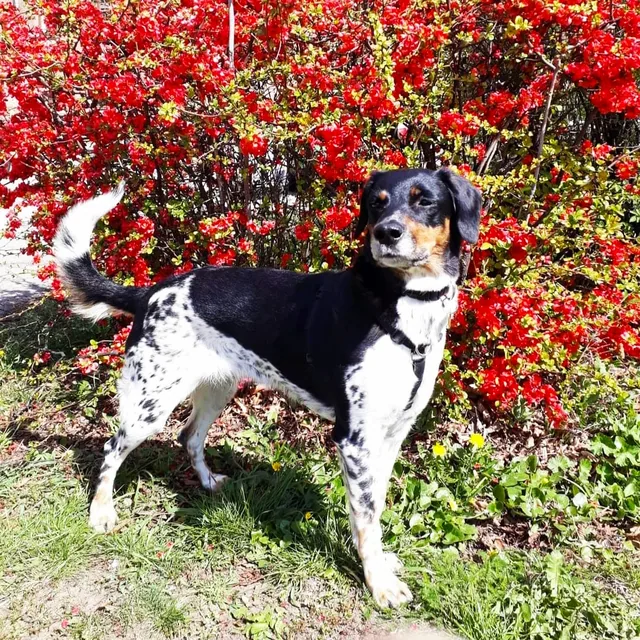
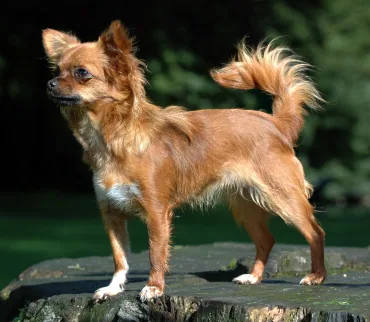
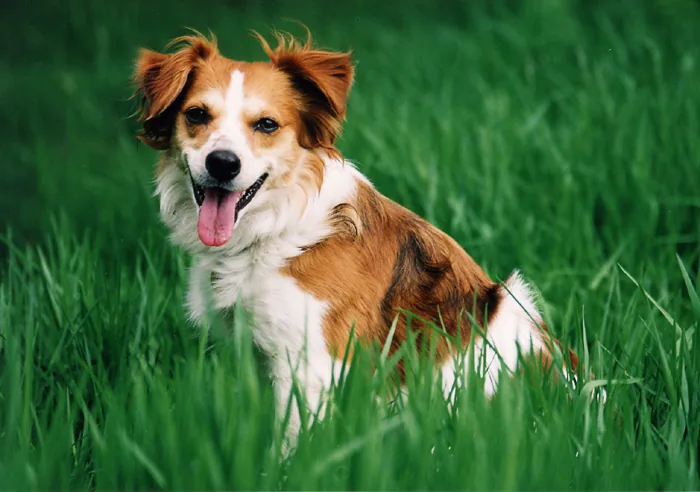
A medium, sturdy dog with a friendly expression. The coat is white with brown patches in shades from light brown to very dark, with symmetrical brown markings on the head covering the ears and eyes.
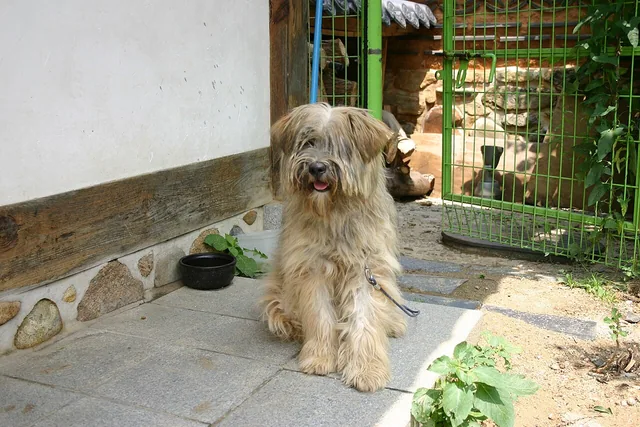
The rough variety has a coarse, bearded coat, while the smooth variety has a soft coat lying close to the body. Both have a thick undercoat.
Temperament
Affectionate, people-focused and sensitive, it bonds strongly with its family and can be reserved with strangers. It is alert without being aggressive.
It learns quickly with gentle, positive methods and adapts well to different homes, provided it is not left alone for long.
Care and exercise
It needs moderate daily exercise such as walks, play and dog sports, and enjoys joining family activities. It is happiest when it is included in daily life.
Brush weekly; the rough coat may need occasional tidying. Harsh training does not suit this sensitive dog.
Health
Generally healthy. The breed has a small gene pool, so choose breeders who test for hereditary conditions such as patella luxation, eye problems and certain inherited disorders.