Overview
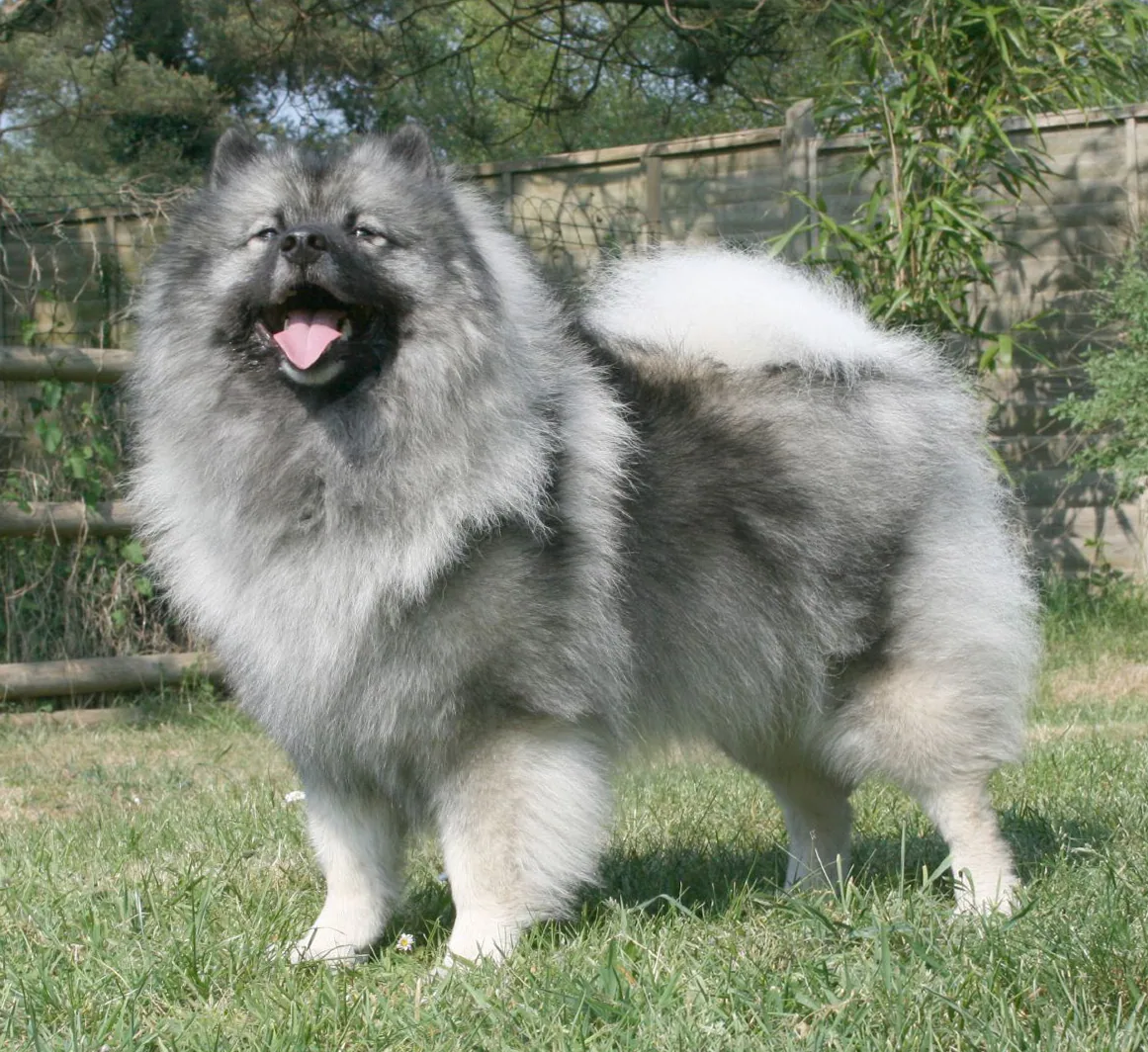
The Keeshond is a medium-sized spitz with a thick silver-grey and black coat, a ruff around the neck and a tail curled over its back. Its fox-like face is framed by distinctive dark 'spectacles'.
Long a watchdog on Dutch barges, it is now a cheerful family companion. It wants to be close to its people, and is clever, sociable and quick to learn.
History
The breed is named after Kees de Gyselaer, a leader of the eighteenth-century Dutch Patriot movement, whose faction adopted the dog as a symbol. After the House of Orange returned to power the breed nearly vanished.
It belongs to the German spitz family, and the FCI treats it as part of that group. It was developed in England in the late nineteenth century from imports from the Netherlands and Germany, and was first registered with the American Kennel Club in 1930.
Appearance
The Keeshond is sturdily built, with a wedge-shaped head, a medium muzzle, small pointed ears and an expressive face. It stands about 43 to 46 cm and weighs roughly 14 to 18 kg.
The double coat is thick, with a lighter ruff and trousers. Grey outer hairs are tipped in black over a pale cream undercoat, and the dark lines from eye to ear form the typical spectacles.
Temperament
Keeshonden are playful, affectionate and eager to please. They are often called shadows because they follow their people from room to room, and they dislike being left alone or kept apart from the family.
They are alert watchdogs with a loud bark, though not aggressive, and usually welcome visitors once the family has. They are good with children and other dogs, and have been used as therapy and comfort dogs.
Care and exercise
Keeshonden need daily walks and play, and enjoy agility and obedience. They do best when they live indoors with their family; a dog kept alone in a yard may become a nuisance barker.
Brush the thick coat regularly, more often during the heavy seasonal shedding. Never shave it, as the undercoat protects against both heat and cold.
Health
The breed is generally healthy, with a typical lifespan of around 12 years. Conditions that occasionally occur include hip dysplasia, luxating patella, epilepsy, hypothyroidism, diabetes and primary hyperparathyroidism, for which a genetic test exists.





