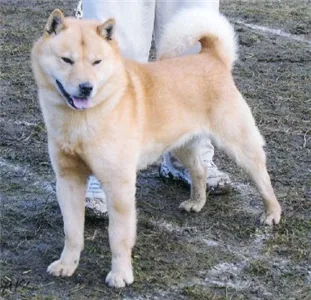
Overview
The Hokkaido is a medium-sized native Japanese breed named after the northern island where it developed. It is a sturdy, thick-coated spitz built for cold weather and rough ground.
Very rare outside Japan, it is devoted to its family, wary of strangers and best suited to experienced owners who enjoy an active life outdoors.
History
Like other native Japanese dogs, the Hokkaido is thought to descend from dogs that came to Japan in ancient times. It is believed to come from medium-sized dogs brought to Hokkaido from Honshu by settlers around the 1140s, and was long kept by the Ainu people for hunting.
An English zoologist gave the breed its name in 1869. It later helped in the search for soldiers lost in a heavy snowstorm in 1902. In 1937 it was designated a Japanese Natural Monument.
Appearance
A well-muscled, medium-sized dog with a broad head, small triangular upright ears and small, dark, slightly triangular eyes. Males usually stand around 50 cm and weigh about 20 kg or a little more, with females slightly smaller.
The double coat has a harsh, straight outer layer and a soft, dense undercoat. The tail curls over the back.
Temperament
Bold, loyal and alert, the Hokkaido is strongly attached to its family and wary with strangers. It is intelligent but independent and can be stubborn, with a strong hunting drive.
Early socialisation is important, and it may not get along with other dogs or small animals without careful introductions.
Care and exercise
It needs plenty of daily exercise and a secure, tall fence, as it is athletic and may chase wildlife. Firm, consistent, positive training from early on works best.
Brush regularly, and especially often during the heavy seasonal moult when it sheds its undercoat.
Health
Collie eye anomaly is unusually common in the breed, with around a third affected and many more carrying it. Eye screening and DNA testing of breeding dogs are important.





