Overview
The Cão de Gado Transmontano is a powerful mastiff-type guardian from the mountainous north-east of Portugal. It is still used chiefly to protect sheep and cattle from wolves, boar and foxes.
It is a rare breed, mostly found in its home region, though a few have been placed abroad in predator-control trials. The FCI gave it provisional recognition in 2020.
History
The breed shares its roots with the Iberian mastiffs and developed alongside the seasonal movement of livestock across the peninsula. It is closely related to the Rafeiro do Alentejo, and the two diverged as long migrations ended.
In its mountain homeland it adapted to steep pastures, hard climate and wolf pressure. More than 95 percent of the dogs still work with flocks. Some have been sent to the United States to test whether big guardians can reduce wolf predation on livestock.
Appearance
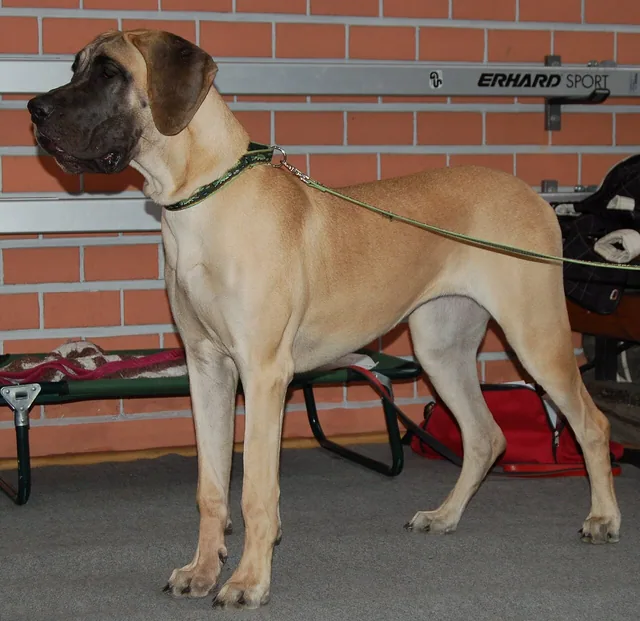
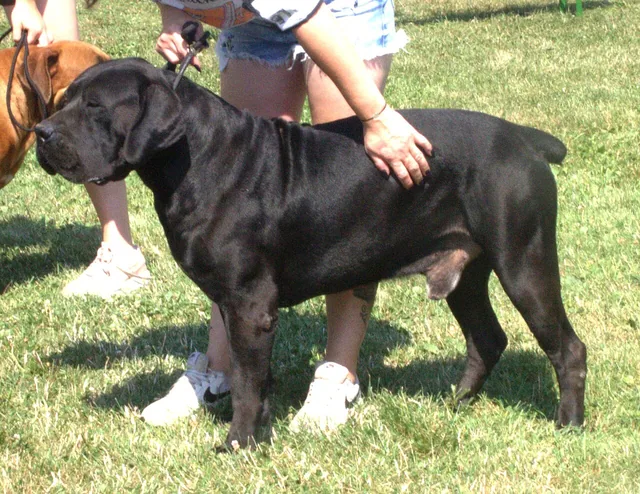
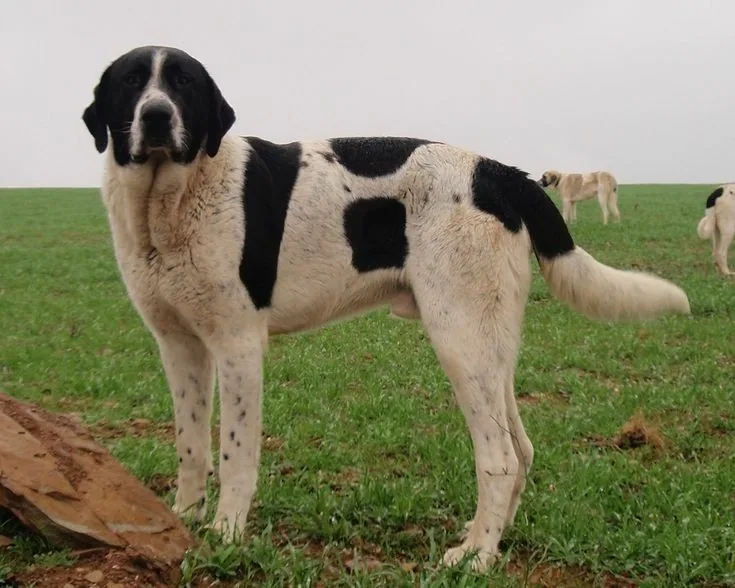
This is a large, muscular dog with a big head, broad muzzle, moderately loose jowls and a single dewlap. Males stand 75 to 85 cm and weigh 60 to 75 kg; females are 68 to 78 cm and 50 to 60 kg.
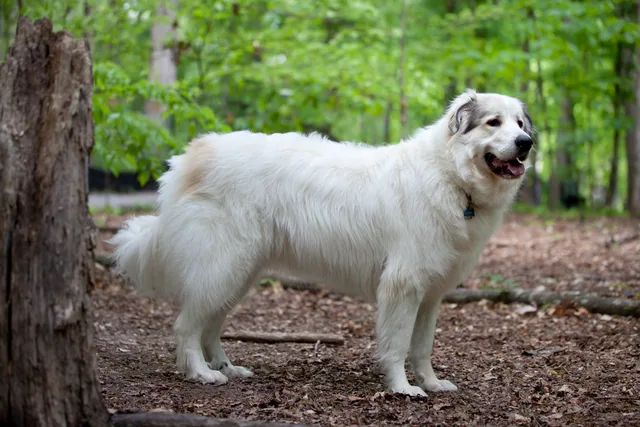
The coat is short to medium with a dense undercoat. It is usually white with large patches of black, yellow, fawn, brindle or wolf grey, or may be solid fawn, yellow, wolf grey or brindle.
Temperament
A working guardian first and foremost, it reacts to threats calmly and with reserve, and is curious and intelligent. It bonds closely with its flock and thinks independently.
It can be dominant, possessive of food and toys, and devoted mainly to one owner, so early socialisation and firm, positive training are essential. It responds poorly to harsh punishment.
Care and exercise
It needs large spaces and the freedom to roam, and is unsuited to apartments or life on a chain. Expect it to dig dens and to try to extend its territory, so secure fencing is important.
The short coat needs only weekly brushing. Daily activity, a job to do and early training keep it balanced.