Overview
The Welsh Terrier is a compact, wiry-coated terrier from Wales, once used to hunt fox, badger and rodents. Today it is mostly a show and companion dog, yet it keeps the spirit and independence of a working terrier.
It is happy, lively and usually friendly with people. It suits both town and country life, as long as it gets plenty of activity and something to occupy its clever, busy mind.
History
The Welsh Terrier is believed to have developed in Wales in the 1700s, hunting fox, badger and otter-sized vermin in rough northern country. Some call it the oldest surviving British dog breed.
It came late to the show ring and was registered as a breed in the 19th century. It has won Best in Show at Crufts four times, but registrations are low and the UK Kennel Club lists it as a vulnerable native breed.
Appearance
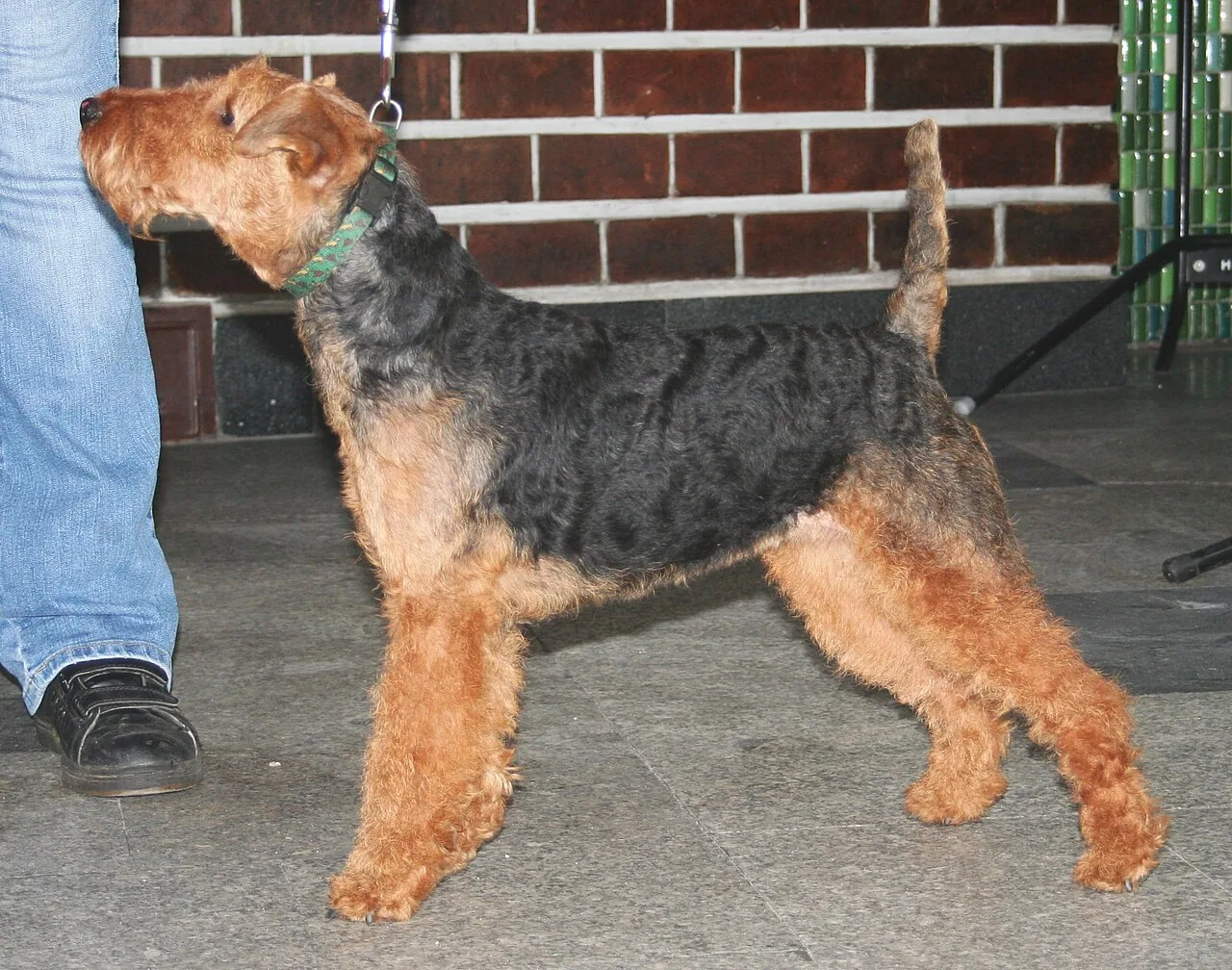
This is a sturdy, squarish terrier, about as tall as it is long, with a rectangular body and a brick-shaped face framed by whiskers and beard. The coat is tan on the head, legs and underside with a black or grizzle saddle. Puppies are born mostly black and gain their tan markings during the first year.
The tail was traditionally docked, though docking is now banned in the UK.
Temperament
The Welsh Terrier is spirited, bold and seldom shy. It is generally friendly toward people and dogs but will not back down from a challenge. It was bred to work independently, so it makes its own decisions and training needs patience and steady repetition.
It gets on well with children and loves games, though it may tug trouser legs and knock small ones over. It can bark a lot and loves to dig.
Care and exercise
This is an energetic dog that needs more than a quick run in the yard. Daily walks, play, toys and puzzles keep it out of mischief, and many enjoy swimming. Start socialisation early.
The wiry coat barely sheds but needs regular brushing and hand stripping to stay in good condition. Left ungroomed, it fades and thins.
Health
The Welsh Terrier is generally sound and robust. Some lines are prone to primary lens luxation, which can lead to secondary glaucoma, so eye checks are worthwhile. Onychodystrophy, a nail disorder causing weak, brittle nails, is fairly common in the breed.