Overview
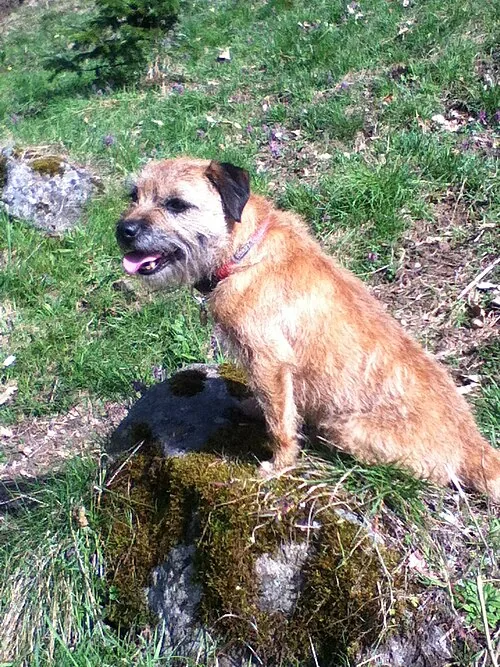
The Border Terrier is a small, rough-coated terrier with an otter-like head and a keen, good-humoured expression. It is lean and long-legged enough to keep pace with a horse yet narrow enough to follow a fox underground.
It is one of the easier terriers to live with: affectionate, adaptable and usually happy with children and other dogs. It still needs a good walk and a secure garden.
History
The breed developed in the border country between England and Scotland, where farmers needed a terrier that could bolt foxes threatening their lambs. It was first known as the Coquetdale or Redesdale Terrier and shares ancestry with the Bedlington and Dandie Dinmont Terriers.
The Kennel Club in Britain recognised it in 1920, and the American Kennel Club in 1930. It has remained a working type as well as a popular companion.
Appearance
A narrow, well-proportioned dog with a broad skull, a short muzzle with strong teeth and small V-shaped ears that fold forward. The tail is short, thick at the base and tapering.
The weatherproof double coat has a soft undercoat and a harsh, wiry outer coat that lies close with no curl.
Temperament
Border Terriers are cheerful, even-tempered and eager to be part of family life. They are less feisty than many terriers and are generally sociable with people and other dogs.
They keep a strong prey drive and love to dig and chase, so a secure fence and a lead near small animals are sensible. They are intelligent and fairly easy to train with positive methods.
Care and exercise
Expect at least an hour of exercise a day, plus games and mental work. The wiry coat should be hand-stripped a couple of times a year and brushed weekly to stay tidy and weather-resistant.
They can be escape artists, so check fences. They enjoy company and can become destructive if bored.
Health
A healthy breed with a long average lifespan. Known conditions include canine epileptoid cramping syndrome, and a notable tendency to gall bladder disease, including mucocele, and to cholangitis. Heart and eye problems are less common.