Overview
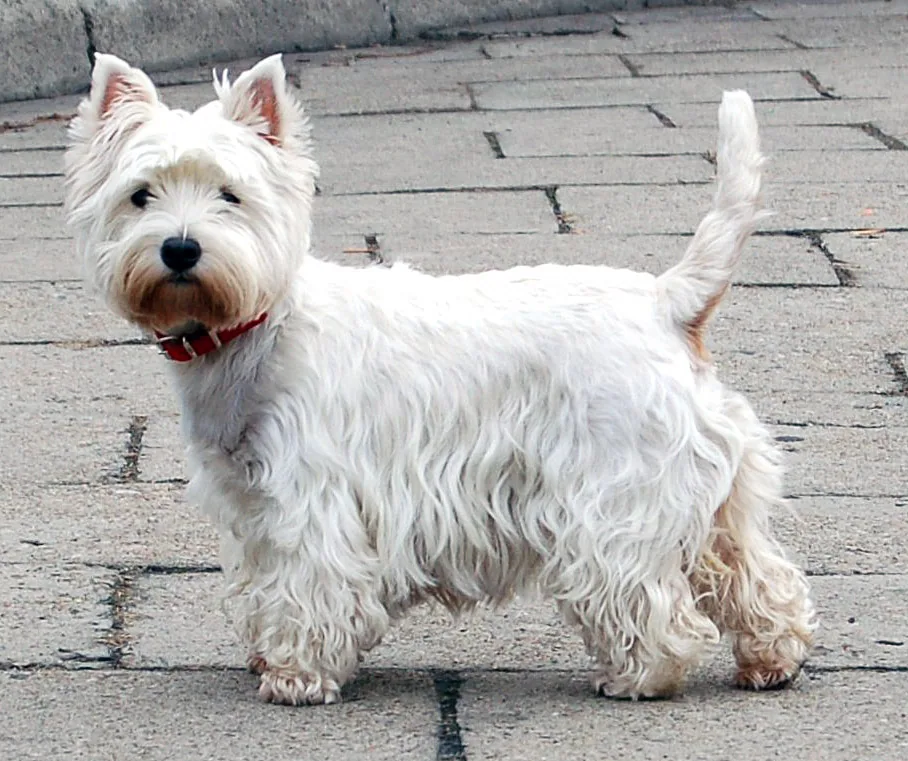
The West Highland White Terrier, or Westie, is a compact Scottish terrier with a harsh white outer coat, a soft undercoat and dark, bright eyes. It has somewhat longer legs than other Scottish terriers and a distinctive rounded look to the head.
Bred to hunt small vermin on farms, the Westie is lively, self-assured and sociable. It suits active households that enjoy a daily walk and a bit of play, and it remains hugely popular in Britain and beyond.
History
The modern Westie descends from several white terrier lines kept in Scotland before the twentieth century. Edward Donald Malcolm of Poltalloch is often credited with fixing the type from his Poltalloch Terriers, although he preferred not to be known as the breed's creator.
The breed is a cousin of the Cairn Terrier and related to the Roseneath and Pittenweem terriers. It received its present name in 1908, and kennel clubs recognised it around the same time.
Appearance
A small, strong terrier standing roughly 25 to 28 cm tall and weighing about 7 to 9 kg. The body is slightly shorter than the height at the shoulder, with a deep chest, muscular legs and a short, sturdy tail.
The head has dark almond-shaped eyes, small pointed upright ears, a black nose and a scissor bite. The harsh white coat frames the face and gives it a round, teddy-like outline. Puppies have pink nose and pad markings that darken with age.
Temperament
Westies are intelligent, confident and cheerful, and they bond closely with their people. They are sociable and can be good with children, but they dislike rough handling and may be possessive of food and toys, so early, consistent training matters.
They are independent and can be stubborn. They retain true earth-dog instincts: they bark, dig, chase and investigate everything, and they love a ball. They make good watchdogs.
Care and exercise
Plan on about an hour of exercise a day, plus play and mental stimulation. A secure garden is helpful, as a Westie's urge to dig and chase may lead it astray.
The wiry coat needs regular brushing and is traditionally hand-stripped or clipped every few months. Keep up with ear, teeth and skin care. Short, regularly refreshed training sessions work best with this independent little dog.
Health
Westies can suffer from craniomandibular osteopathy ("Westie jaw") in young dogs and from skin problems, including atopic dermatitis and the rare hyperplastic dermatosis. Other conditions include globoid cell leukodystrophy, white dog shaker syndrome and liver disease. Typical lifespan is about 12 to 13 years.