Overview
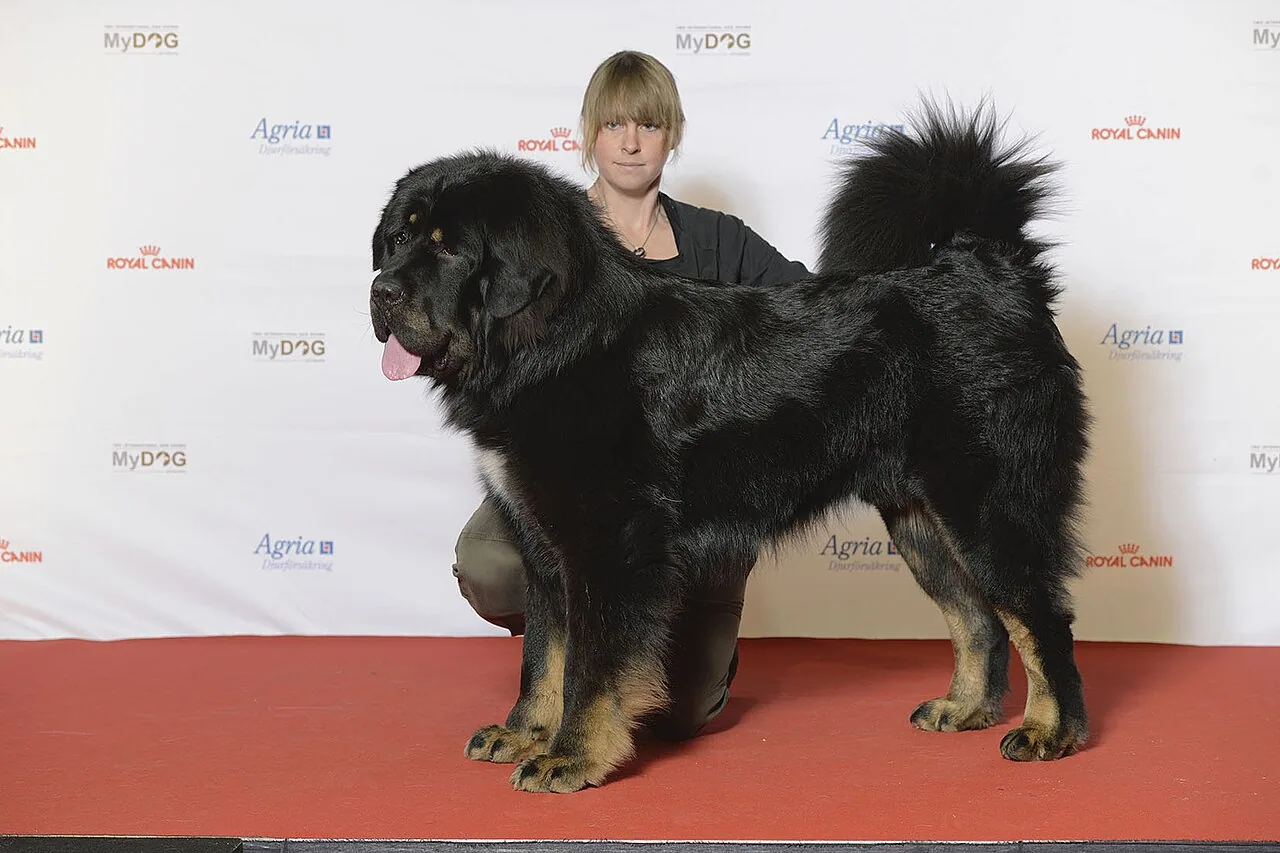
The Tibetan Mastiff is a large mountain guardian dog from Tibet and the surrounding Himalayan regions. Its heavy double coat, lion-like ruff and imposing frame make it one of the most striking of all breeds.
It is a serious, nocturnal watchdog that is reserved with strangers and devoted to its family. It needs room, firm and consistent leadership, and plenty of early socialisation, so it is not a breed for beginners or apartment life.
History
For centuries these dogs protected flocks, villages and Buddhist monasteries on the Tibetan Plateau and in neighbouring Himalayan lands, guarding against wolves, bears and snow leopards. They were often kept chained by day and loosed at night.
European travellers called them mastiffs simply because the word described any large dog. A pair reached Britain in the early twentieth century, but the breed nearly vanished there during the war years. Interest has grown steadily since about 1980, and the breed is now recognised by the FCI and the American Kennel Club. Studies suggest it contributed to several other large European breeds and carries a gene variant that helps it cope with thin mountain air.
Appearance
A powerful, heavily built dog with a broad head, deep chest and a tail carried curled over the back. Males are noticeably larger than females.
The double coat is long and dense, with a mane around the neck and shoulders, especially on males. The Indian standard separates a smaller, longer-maned Lion Head type from a larger, shorter-haired Tiger Head type.
Temperament
Calm and dignified indoors, but intensely protective of home and family. It is aloof with strangers and may bark through the night at unfamiliar sounds, as its working ancestors did.
It is intelligent but stubborn, and training takes patience, consistency and a good grasp of dog behaviour. With proper socialisation it can be a gentle, devoted family companion.
Care and exercise
Needs a large, securely fenced yard and a cool environment; it is not suited to apartments. Moderate daily exercise is enough, though it enjoys time outdoors.
Brush a couple of times a week and more during the heavy seasonal moult in late winter or spring. Early socialisation and steady training are essential, and the owner must manage its guarding instincts around visitors.
Health
Generally sturdier than many large breeds, but hip and elbow dysplasia, hypothyroidism, eye problems such as entropion, ear infections and skin allergies occur. An inherited nerve disorder, CIDN, has been traced in some lines. Choose breeders who test their dogs.