Overview
The South Russian Ovcharka is a large, long-haired livestock guardian from the steppe regions of today's Ukraine and southern Russia. It is a serious working dog with a strong protective drive.
The breed suits experienced owners who understand guardian dogs and can offer space, structure and firm, fair leadership.
History
The breed is thought to come from local steppe dogs, both guardian and sighthound types, crossed with long-haired shepherd dogs brought from Spain in the late eighteenth century alongside Merino sheep. Those Spanish dogs may have resembled the Catalan Sheepdog.
Much of the selective breeding took place in the early twentieth century on the estates of Friedrich von Falz-Fein at Askania-Nova. A standard was approved in the early 1930s, and the FCI accepted the breed in 1983.
Appearance
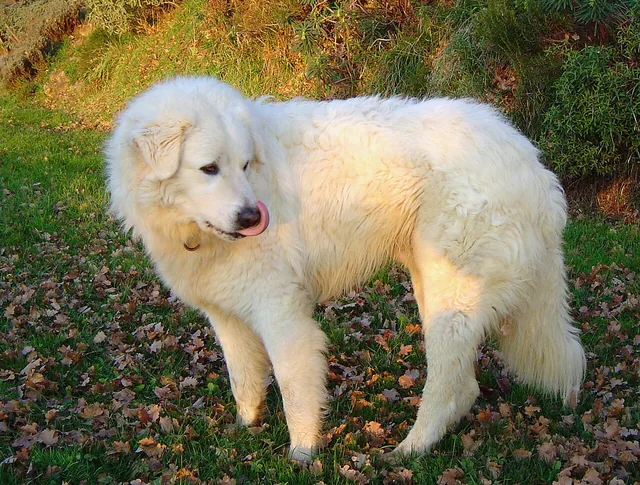
This is a large, powerful dog. Males stand at least 66 cm at the withers and weigh at least 35 kg, females being a little smaller, and some individuals are much heavier. The head is long and wedge-shaped with triangular drop ears.
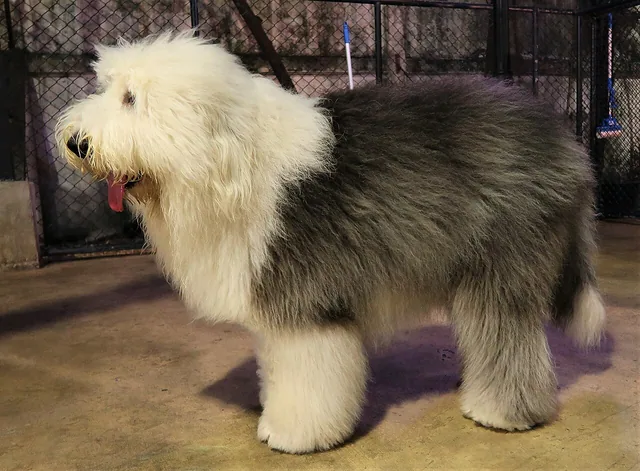
The coat is long, coarse and thick, falling over the face and body. It is white, grey or pale ivory, or white with yellowish, grey, ivory or wheat patches.
Temperament
A confident and watchful guardian, it is wary of strangers and quick to defend its home and family. It can be independent and strong-willed.
Early, thorough socialisation and calm, consistent handling are essential. It is not a dog for first-time owners.
Care and exercise
It needs space, a secure fence and regular exercise, plus a role that engages its guarding instincts. It is best kept as a companion with a purpose rather than left alone for long periods.
The thick coat needs regular brushing, with extra attention during seasonal moulting, to prevent matting.
Health
Large size brings a risk of joint problems such as hip and elbow dysplasia. Keep weight lean and avoid overexertion while growing.