Overview
The German Shepherd is a confident, athletic working dog created in Germany at the end of the nineteenth century. It began as a sheep herder and quickly proved itself in almost every kind of work.
It is among the most popular breeds worldwide. It does best with an active owner who offers training, a job to do and plenty of time together.
History
Local German shepherds bred their dogs for work, so herding dogs differed from region to region. From 1899 Max von Stephanitz, a former cavalry officer, set out to build one ideal working dog, starting with a dog called Hektor Linksrhein, renamed Horand von Grafrath.
He founded the society for the breed that year. After the First World War soldiers' tales and film stars like Rin Tin Tin spread its fame. In Britain it was called the Alsatian until 1977 to avoid anti-German feeling.
Appearance
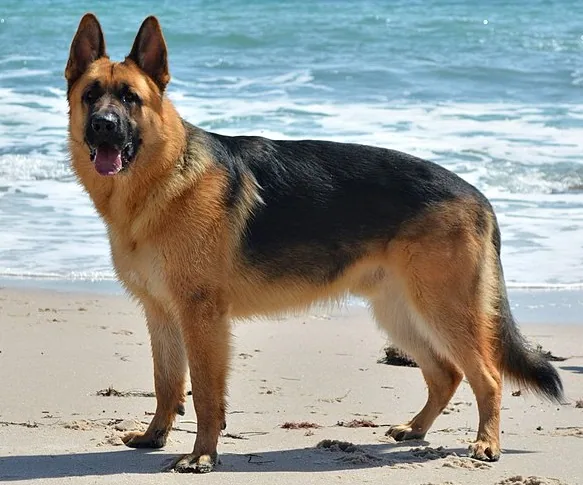
A medium to large, slightly longer-than-tall dog with a domed forehead, a long square muzzle, dark eyes and large erect ears. The body is strong and athletic, with a bushy tail.
Males stand about 60 to 65 cm and females 55 to 60 cm. The double coat may be short or longer.
Temperament
German Shepherds are intelligent, loyal and eager to work. They bond deeply with their family, are protective, and can be aloof with strangers, which makes socialisation vital.
They learn quickly and need purpose, whether obedience, tracking or sport. Without enough activity and guidance they can become anxious, bark a lot or develop unwanted habits.
Care and exercise
Plan for at least an hour or more of daily exercise plus training and mental challenges. Start socialisation early and keep training consistent and positive.
The double coat sheds all year and heavily twice a year, so brush a few times weekly. Feed in measured portions to keep a healthy weight and reduce strain on the joints.
Health
The breed is prone to hip and elbow dysplasia, degenerative myelopathy, bloat and some skin and digestive problems. Choose a breeder who screens joints and health records, and keep the dog fit and lean.