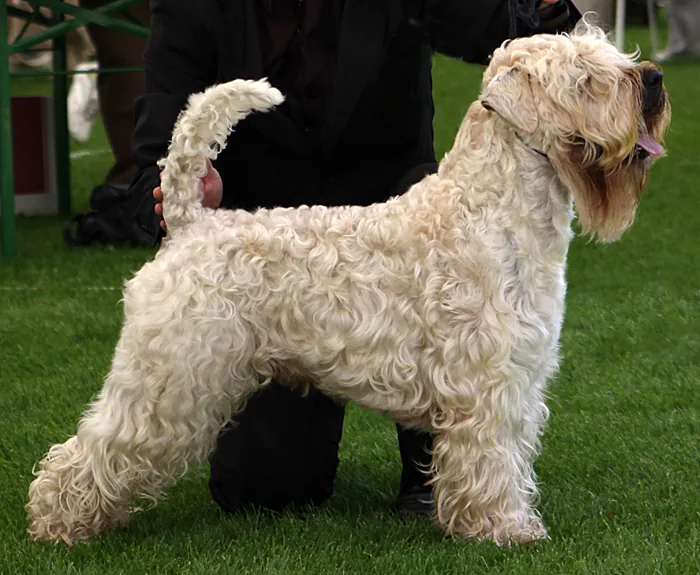
Overview
The Soft-coated Wheaten Terrier is a medium-sized, square Irish terrier with a soft, wavy coat the colour of ripe wheat. It is cheerful, affectionate and generally easier-going than many terriers.
It is lively and loves company, and it needs regular exercise and daily coat care.
History
The Wheaten was bred in Ireland for more than two centuries as an all-purpose farm dog that herded, guarded stock and killed vermin. It shares ancestry with the Kerry Blue and Irish Terriers and was known as the 'Poor Man's Wolfhound', as ordinary people were barred from owning hunting hounds.
The Irish Kennel Club recognised it in 1937 and the British Kennel Club in 1943. It reached the United States in the 1940s and was accepted by the AKC in 1973.
Appearance
A well-built, square dog, usually 43 to 51 cm tall and 14 to 20 kg. Puppies are born dark and the coat clears to wheaten over about three years.
The soft, silky coat is wavy or curly and grows like human hair. The Irish type is thinner and silkier, while the American type is fuller and thicker.
Temperament
Wheatens are playful, affectionate and people-loving, and are famed for leaping up to greet visitors. They are generally good with children and other dogs when socialised.
They are intelligent but headstrong, so they need patient, positive training. They bark in alert at strangers, make good watch dogs rather than guard dogs, and have a strong prey drive.
Care and exercise
Daily brushing and combing is needed to prevent mats, along with regular trimming. The breed needs steady exercise and enjoys games and training, but can overheat in hot weather.
Use positive, consistent training, since harsh methods can cause fearfulness. A secure garden is important, as curious Wheatens tend to wander.
Health
The breed is long-lived but prone to protein-losing nephropathy and protein-losing enteropathy, both potentially serious. Renal dysplasia, inflammatory bowel disease, Addison's disease, cancer and allergies or atopic dermatitis also occur. Talk to breeders about testing.