Overview
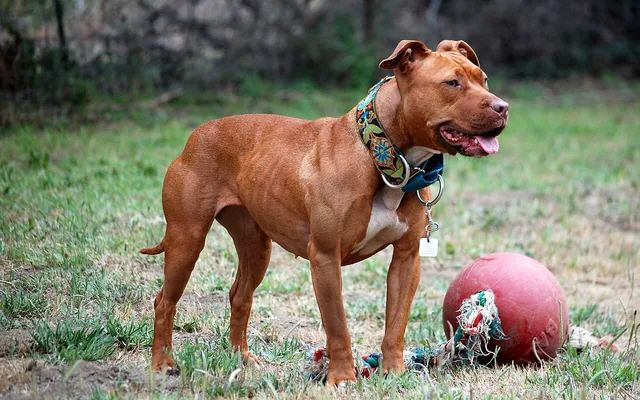
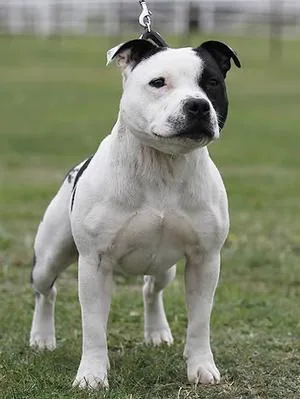
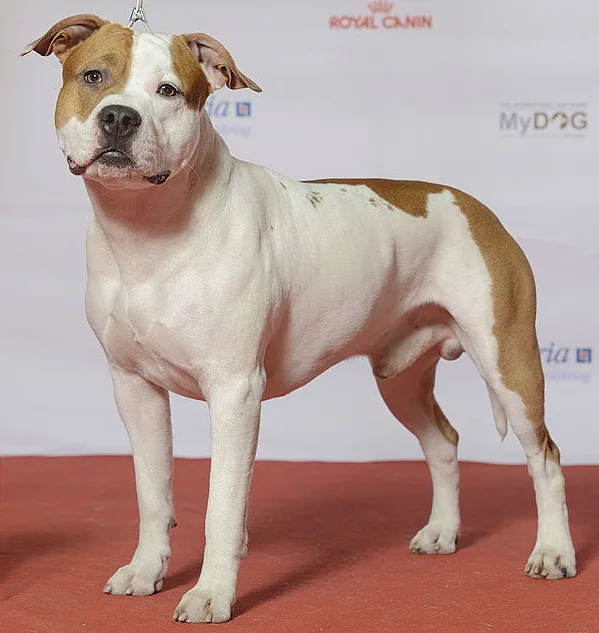
The American Staffordshire Terrier, often called the AmStaff, is a medium-sized, short-coated dog that gives an impression of great strength for its size. It is muscular yet agile, and stocky rather than racy.
It is a devoted family companion when well bred and well socialised, but it is a strong dog that suits experienced, committed owners. Breed-specific laws in many countries affect where it can be kept.
History
Bull-and-terrier dogs from the British Isles began arriving in America around 1850. Their descendants were recognised as the American Pit Bull Terrier by the United Kennel Club in 1898.
In 1936 the American Kennel Club registered the breed as the Staffordshire Terrier, renaming it American Staffordshire Terrier in 1969 to separate it from the British Staffordshire Bull Terrier. Since the 1970s only AKC-registered parents can produce registered puppies, and selection has focused on conformation and standard.
Appearance
A well-put-together, muscular dog with a medium-length head, broad skull, distinct stop and pronounced cheek muscles. The ears are set high and may be cropped or natural, with natural preferred. Males stand about 46 to 48 cm and females 43 to 46 cm.
The nose is always black, and the coat is short and glossy.
Temperament
Smart, confident and good-natured, with proverbial courage. A well-socialised AmStaff is a loyal and affectionate friend to its family and often loves people.
Dog aggression can appear even in well-socialised individuals, so it should not be left unsupervised with other dogs.
Care and exercise
It needs daily vigorous exercise, play and mental work to stay balanced. Early socialisation and consistent, reward-based training are essential, as is secure fencing and leash control.
The short coat needs only occasional brushing and bathing.
Health
Prone to allergic skin disease and demodicosis, especially in young dogs. Hip and elbow dysplasia are reported fairly often. A 2024 UK study found a life expectancy of about 12.5 years.