Overview
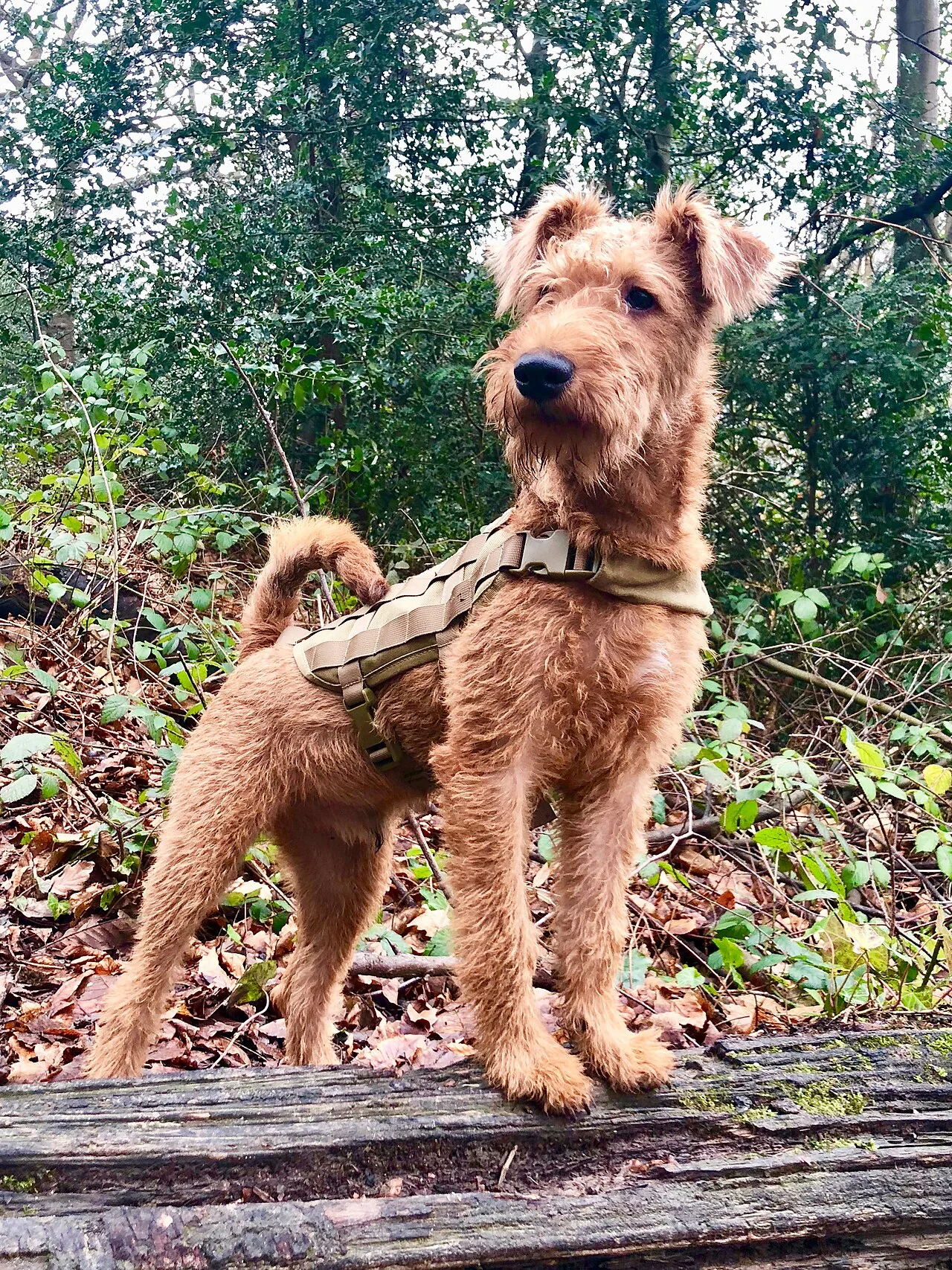
The Irish Terrier is one of the oldest terrier breeds and was once known as the poor man's sentinel and the farmer's friend. It is a lean, athletic dog with a deep chest and a weatherproof red coat.
It is full of life yet able to settle indoors, and it bonds closely with its family. It suits active owners who enjoy walks, training and a clever, sometimes strong-willed companion.
History
The exact origin of the breed is unknown, but it is thought to descend from black-and-tan terrier types found across Britain and Ireland. Early dogs came in many colours and shapes and were valued for toughness and skill at killing vermin rather than for looks.
Selective breeding began in the late nineteenth century. Dublin staged a separate class for the breed in 1873, a breed club formed there in 1879, and by the 1880s it was one of the most popular breeds in Britain and Ireland. It reached the United States soon afterwards.
Appearance
The ideal Irish Terrier is often described as racy, red and rectangular. The body is longer than that of a Fox Terrier, with a deep chest and a powerful but not heavy build. Small ears fold forward, the eyes are small, dark and fiery, and a modest beard sharpens the head.
The tail was traditionally docked, though this is banned in many countries. Males stand around 48 cm at the withers, and most dogs weigh roughly 12 to 15 kg.
Temperament
Irish Terriers are devoted, courageous and good with people, and many love children and tolerate lively play. They enjoy puzzles and learn fast, but they are less eager to please than some breeds and respond best to calm, consistent, reward-based training.
They can be dominant with other dogs, so early socialisation matters. Strong guarding instincts make them alert watchdogs.
Care and exercise
The wiry coat is best stripped by hand or with a non-cutting knife, usually once or twice a year for a pet, to keep its colour and weather resistance. Clipping makes it softer and paler. Wash only when needed.
They need daily walks and mental challenges, and do well at agility, tracking and other dog sports. Some puppies need their ears trained to fold properly.
Health
The breed is generally robust. A 2024 UK study found an average life expectancy of about 13.5 years, a little above the average for purebred dogs.