Overview
The English Mastiff is a British giant breed famed for its enormous size, broad head and black mask. Despite its fearsome history as a guard and fighting dog, today it is known for a sweet, steady temperament.
It is a devoted family companion for owners with space, patience and the means to care for a very large dog.
History
Mastiff-type dogs have lived in Britain since ancient times, and Roman writers praised the courage of British dogs. Over the centuries they served as guards, hunters, war dogs and baiting dogs, until baiting was banned in 1835.
Modern breeding began in the nineteenth century, with Alpine Mastiff blood and dedicated breeders such as Thompson and Lukey shaping the type, which was stabilised in the 1880s. Numbers fell sharply in the twentieth century, and the breed is still considered vulnerable in the UK.
Appearance
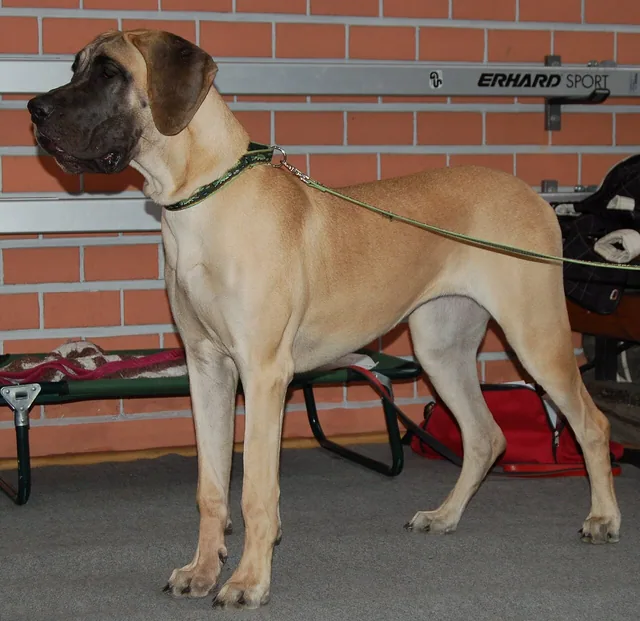
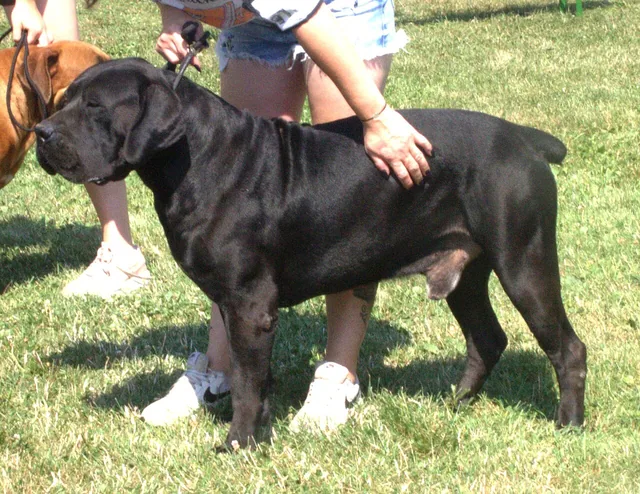
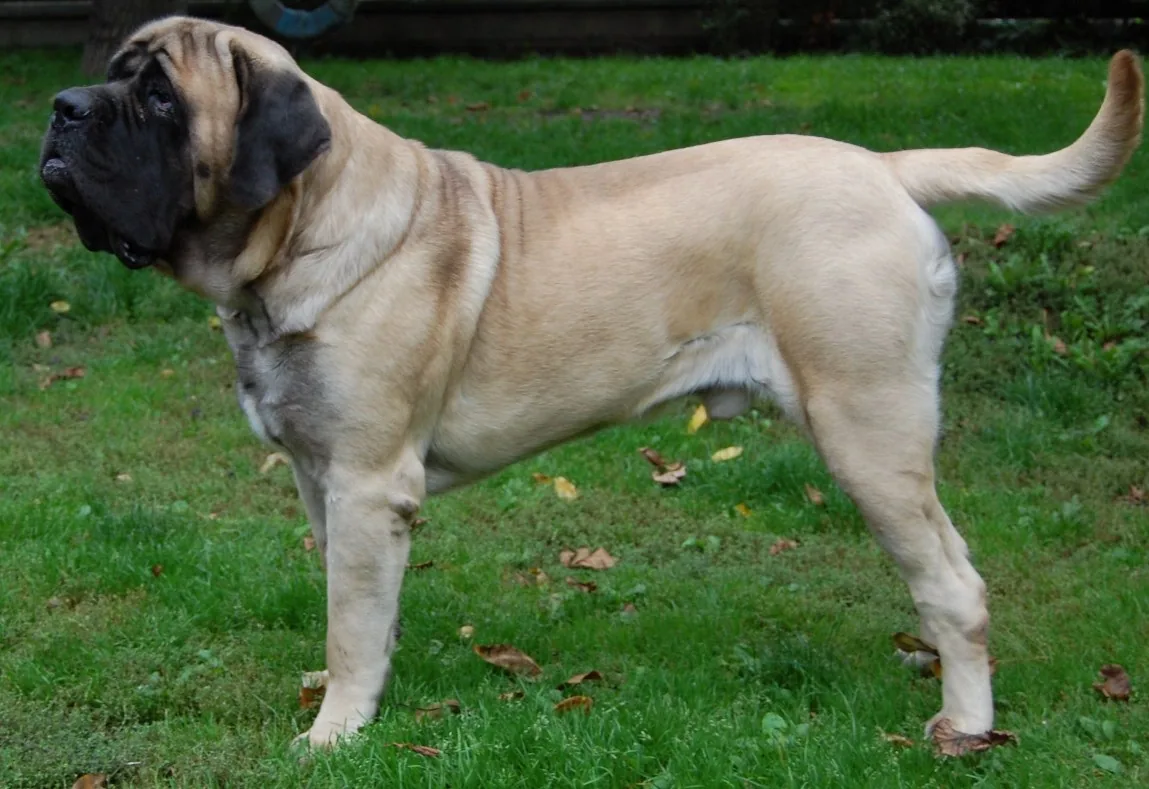
The Mastiff is huge and powerfully built, with a massive, broad head, a short muzzle and a black mask covering the face. Males often stand 76 cm or more at the shoulder, and weights can well exceed 70 kg.
The coat is short and close, in apricot, fawn or brindle, always with dark ears and muzzle. The overall look is of bulk, balance and quiet strength.
Temperament
Mastiffs are gentle, loyal and affectionate with their families, and are usually patient with children. They are calm indoors and watchful rather than noisy, with a natural protective instinct that makes them effective deterrents.
Early socialisation matters, because an unruly dog of this size is hard to manage. They respond best to calm, kind, consistent training.
Care and exercise
Mastiffs need moderate daily exercise, such as steady walks, and should not be over-exercised while growing. They are happiest living indoors with their family and need room to stretch out.
Coat care is easy, but their size means higher costs for food, bedding and veterinary care. Wiping facial folds and managing drool are part of daily life.
Health
Like many giant breeds, Mastiffs are prone to hip and elbow dysplasia, bloat, heart disease, eye problems such as entropion, and bone cancer. Their lifespan is relatively short, often around 6 to 10 years.