Overview
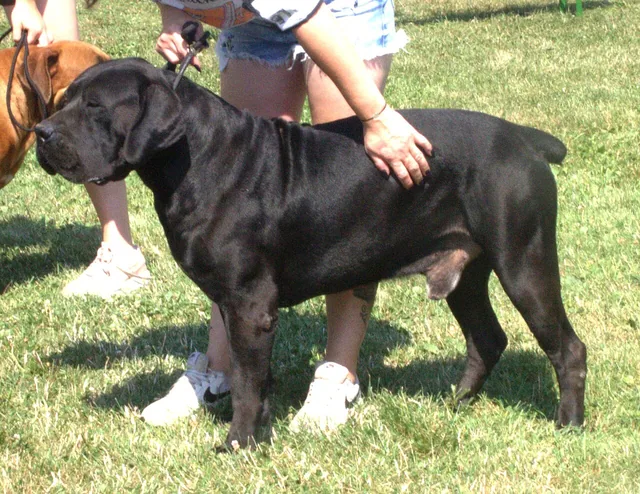
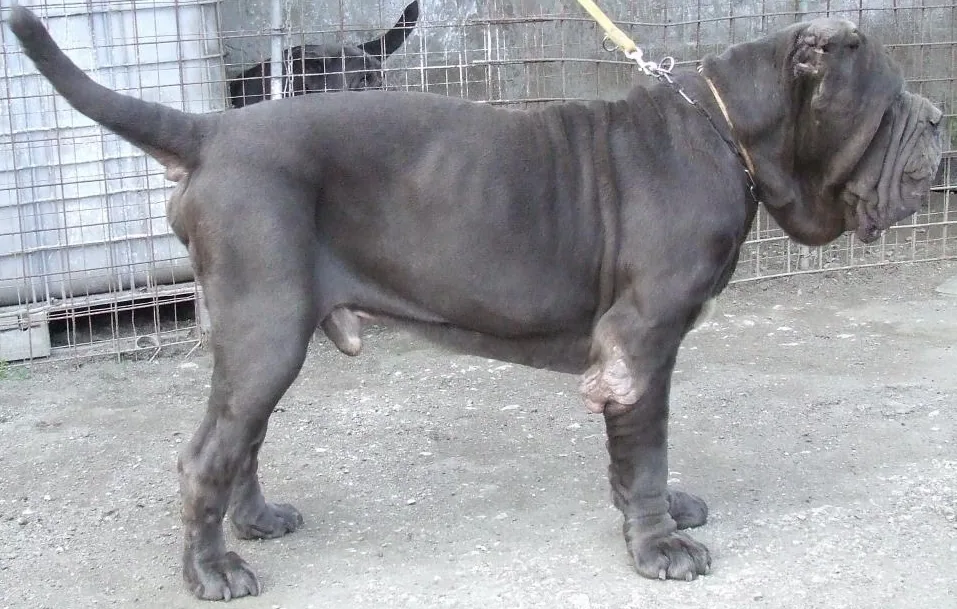
The Neapolitan Mastiff is a huge, heavy Italian guard dog, instantly known by its abundant loose skin, deep wrinkles and drooping jowls. It looks dramatic but is usually a steady, quiet presence at home.
It is a serious protector rather than a casual pet, so it suits experienced owners who can provide early socialisation, training and space.
History
The breed descends from the traditional catch and guard dogs of southern Italy and is closely related to the Cane Corso. Its modern form was shaped by Piero Scanziani, who saw one at a show in Naples in 1946 and began selecting for a standard.
The Italian kennel club recognised the breed in 1949, and the FCI accepted it in 1956.
Appearance
Large, massive and powerful, standing about 60 to 75 cm and weighing 50 to 70 kg, with a body somewhat longer than tall. The skin is abundant and loose, especially on the head, where it hangs in heavy folds.
The coat is short and dense. Preferred colours are black, grey and lead, though mahogany, fawn and others are accepted, and brindling is allowed.
Temperament
Neapolitan Mastiffs are devoted to their family and naturally suspicious of strangers. They are usually calm and quiet indoors but will act decisively if they sense a threat.
Early socialisation and firm, fair training are important because of their size and guarding instinct. They are best supervised around small children and unfamiliar dogs.
Care and exercise
They need moderate exercise, with daily walks and a secure yard, and should avoid hard exercise in heat or while still growing. Their size makes them expensive to feed and house.
Grooming is easy, but facial folds should be wiped clean and dried to avoid irritation, and drooling is to be expected.
Health
The breed is short-lived, with a reported median of about 9 years. Heavy build and loose skin bring joint problems, heart disease, skin fold infections and eye issues such as cherry eye.