Overview
The Irish Water Spaniel is Ireland's tallest spaniel and one of the country's native breeds. Bred to work in marshes and water, it combines the skills of a retriever, spaniel and pointer in one dog.
It is active, intelligent and playful, with a reputation as the clown of the spaniel family. Today it is a rare breed, loved by hunters and sporting enthusiasts alike.
History
The modern breed took shape in Ireland in the 1830s, largely thanks to Justin McCarthy of Dublin, who left no breeding records. Its exact ancestry is therefore unclear, with Poodle, Portuguese Water Dog, Barbet and old water spaniels all suggested.
It was kept by landowners and minor gentry who needed a single dog able to flush, point and retrieve game. Irish folklore even links it to the mythical Dobhar-chú.
Appearance
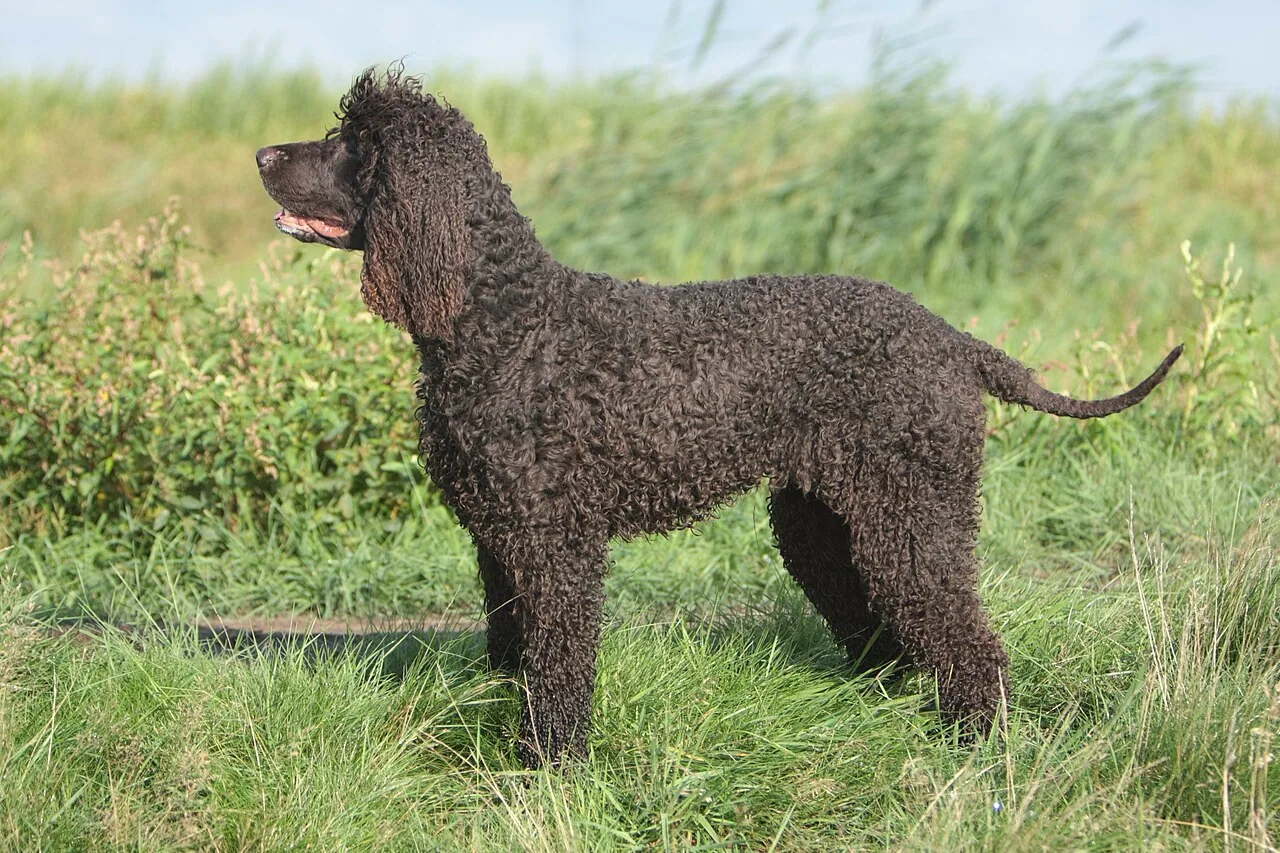
This is a sturdy, cobby dog covered in dense curls of a liver colour with a purplish tint. A topknot of loose curls falls over the head, the face is smooth, and a beard and sideburns frame the throat. The tail is the standout feature: smooth and tapering, like a rat's, with curls only at the base.
The feet are naturally webbed and the eyes are deep hazel, giving an alert, quizzical expression.
Temperament
Irish Water Spaniels are keen team players that love to please and learn quickly. They are lively, inquisitive and funny, often finding unusual ways to do ordinary things. They are usually excellent with respectful children and other pets, though some are wary of strangers and may not suit homes with cats or small pets. Early socialisation is a must.
Care and exercise
They need walks and activity two or three times a day, ideally with a job such as hunting, obedience, agility, swimming or dock jumping. A bored dog can turn mischievous.
The coat sheds little but needs a thorough comb to the skin every one to two weeks and scissoring every six to eight weeks. Ears, teeth and nails also need regular attention.
Health
Breed clubs recommend health testing in line with CHIC protocols, including hips and eyes. Like other dogs with heavy, hanging ears, they can be prone to ear problems, so keep ears clean and dry, especially after swimming.