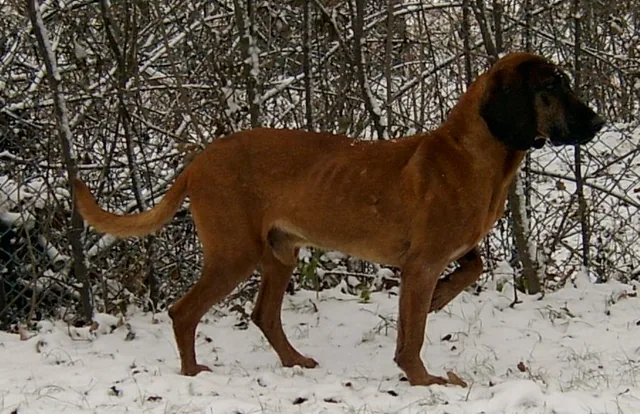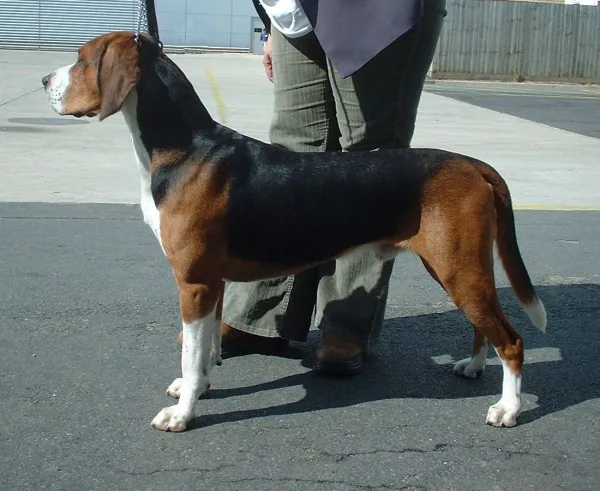
Overview
The Hamiltonstövare is a medium-sized, tricolour Swedish scenthound bred to track hare and fox over forest, field and mountain. It is a skilled, independent worker with a keen nose.
Away from the hunt it is friendly, sociable and attached to its family. It is popular in Sweden but rare elsewhere.
History
Swedish hunters had used scenthounds since at least the 1500s. In the late 19th century Count Adolf Patrick Hamilton, the first president of the Swedish Kennel Club, set out to create a first-class tracking hound, drawing on German hounds, English Foxhounds and Harriers.
He showed the first two dogs of the breed in 1886. It was first known as the Swedish Hound and renamed in his honour in 1921. The FCI recognised it in 1955.
Appearance
A well-balanced, muscular medium-sized hound. Males stand about 53 to 61 cm and females 49 to 57 cm, and most weigh 23 to 27 kg.
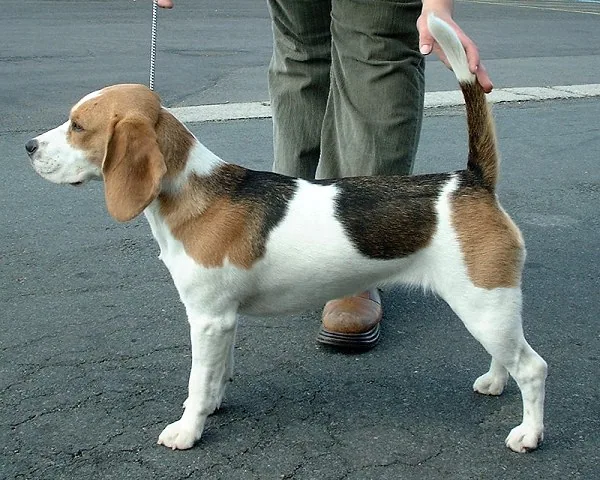
The coat is short, dense and tricolour, with black, tan and white markings, and the gait is elegant and efficient.
Temperament
Friendly, sociable and affectionate, the Hamiltonstövare bonds closely with its family and is generally good with children. It has a strong hunting drive and a stubborn streak.
It was bred to work alone, so it can be independent. Bred to ignore deer, it is dedicated to its quarry once on a scent.
Care and exercise
This is an active scenthound that needs good daily exercise and mental work such as tracking games. Keep it on a lead or in a secure area, since its nose can lead it far away.
Training should be patient and reward-based. The short coat is easy to look after with weekly brushing.