Overview
The Basset Hound is a short-legged scent hound with a long body and a nose second only to the Bloodhound. It was bred to follow trails slowly on foot.
It is a mellow, sociable pet that is happiest with company and a good sniffing walk.
History
The basset type originated in France, from hounds descended from those of St Hubert. Short legs were prized because hunters on foot could follow the dog and take rabbit and hare without horses. The name comes from the French word bas, meaning low.
French bassets reached England in the 1870s. Everett Millais used a Bloodhound cross in the 1890s to create the heavier type that became the modern breed, and the first standard was written in Britain.
Appearance
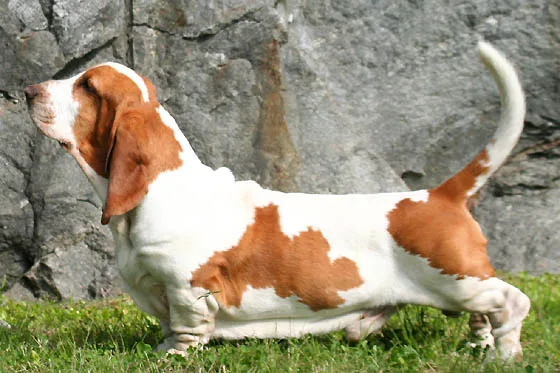
The Basset is a large dog on short, slightly crooked legs, with a long back and a high, slightly curved tail. It is more heavily boned for its size than almost any other breed.
Loose, wrinkled skin, a dewlap and long ears give the sad look. The coat is short and smooth, in hound colours such as tricolour and red and white.
Temperament
Bassets are friendly, outgoing and playful, tolerant of children and other pets. They are mild, devoted and not timid.
They follow their nose and can be stubborn in training, so patience and treats help. They enjoy company and may howl or bay when left alone.
Care and exercise
Bassets need regular moderate walks on a lead, as they will follow a scent and ignore calls. Keep them lean, as extra weight strains the back and legs.
Brush weekly, clean the ears and skin folds often, and wipe the drooly face. Avoid long stairs and jumping.
Health
Short legs come from osteochondrodysplasia, which affects movement. The breed is prone to ear and skin infections, glaucoma, bloat, a platelet disorder called thrombopathy and back problems.