Overview
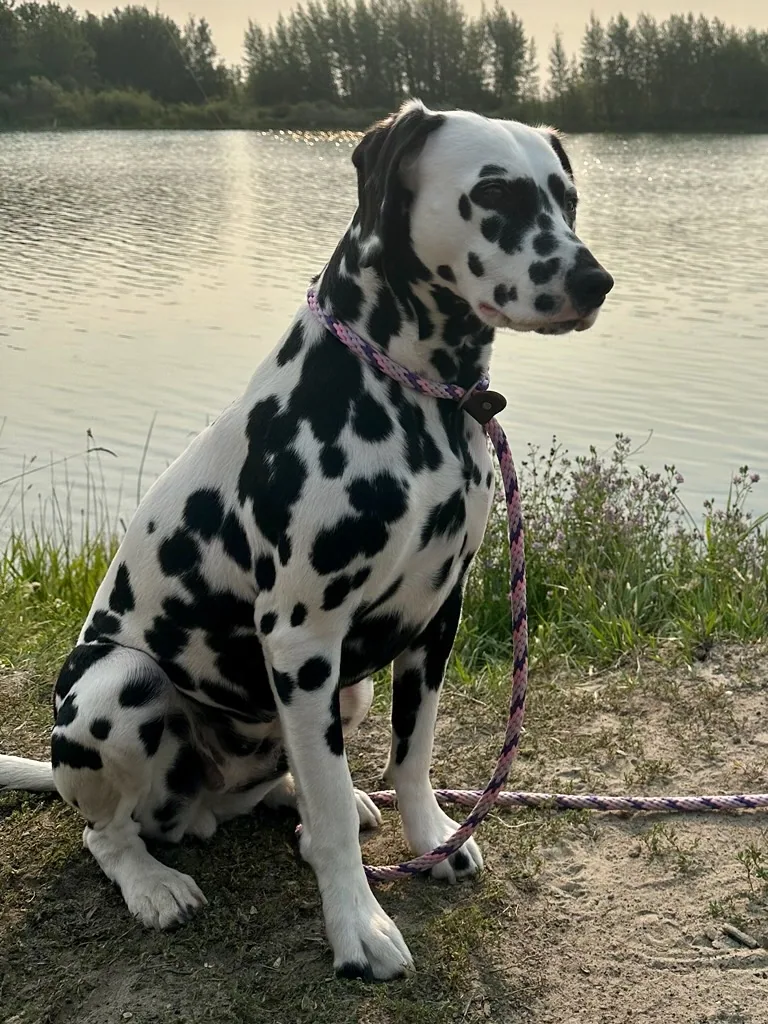
The Dalmatian is a muscular, elegant dog with a white coat marked by dark spots. It has excellent stamina and was bred to keep up with horses and carriages over long distances.
It is a bright, active companion that thrives with owners who offer plenty of exercise and company.
History
The breed is traced to Croatia and the historical region of Dalmatia. Early ancestors are thought to include pointer-type dogs and a spotted Great Dane. The Dalmatian worked as a hunting dog and became famous as a carriage dog, running beside horse-drawn coaches and firefighters' wagons.
Today it is mainly a companion and show dog, recognised by the FCI and other kennel clubs.
Appearance
The Dalmatian is a well-balanced, muscular dog standing about 48 to 58 cm tall. The short, dense coat is pure white with round spots, usually black or liver.
Puppies are born plain white and the spots appear in the first weeks, continuing to develop until about 18 months. Lemon, orange or other colours occur occasionally but vary in acceptance.
Temperament
Dalmatians are lively, loyal and outgoing, often reserved with strangers. They love being part of the family and can be sensitive to harsh handling.
They are intelligent and playful but can be boisterous when young. Without enough activity and company they may become restless or destructive.
Care and exercise
A Dalmatian needs vigorous daily exercise such as running, hiking or cycling alongside you. Early socialisation and positive training help channel its energy.
Grooming is easy, with a weekly rub with a hound mitt, but the short bristly hairs shed year-round and weave into fabric. The coat has little oil and little doggy odour. Owners should limit purine-rich foods.
Health
Deafness is notable, with roughly one in five dogs deaf in one or both ears, so BAER hearing testing is advised. The breed can develop hyperuricemia leading to urinary stones and gout, as well as skin allergies, sun-related skin problems and autoimmune thyroiditis.