Overview
The Greyhound is one of the oldest and most elegant sighthounds, developed to chase game by sight and speed. Its deep chest, long legs and flexible spine make it a superb sprinter, with racing speeds above 60 km/h.
Today it is kept for coursing, racing and showing, and increasingly as a calm family pet, especially retired racers looking for homes.
History
The exact origin of the Greyhound is uncertain, but dog images resembling it appear in artefacts from Turkey, Iran and North Africa thousands of years old, making it one of the oldest breeds known. For centuries it was prized in Western literature, heraldry and art as the noble hunting companion.
In modern times the breed has been shaped by organised coursing and racing industry. Adoption programmes now re-home many retired track dogs as pets.
Appearance
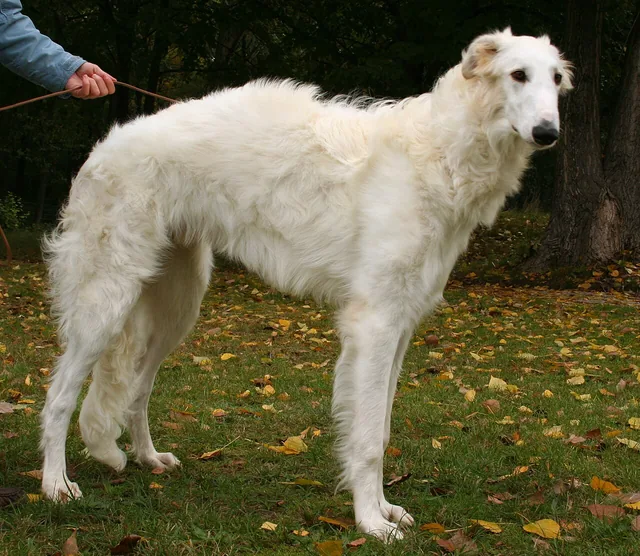
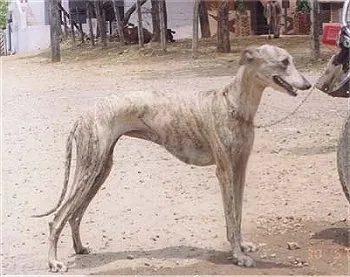
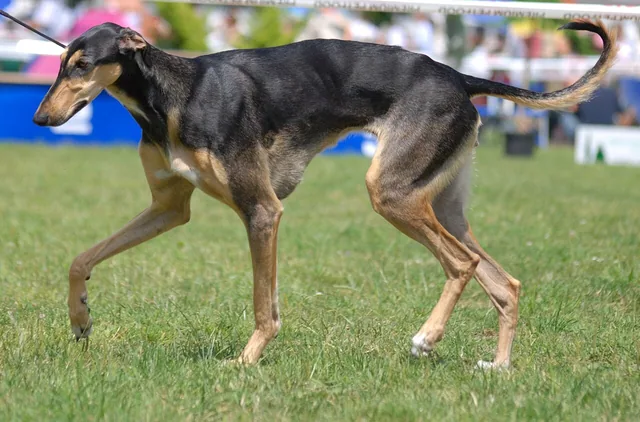
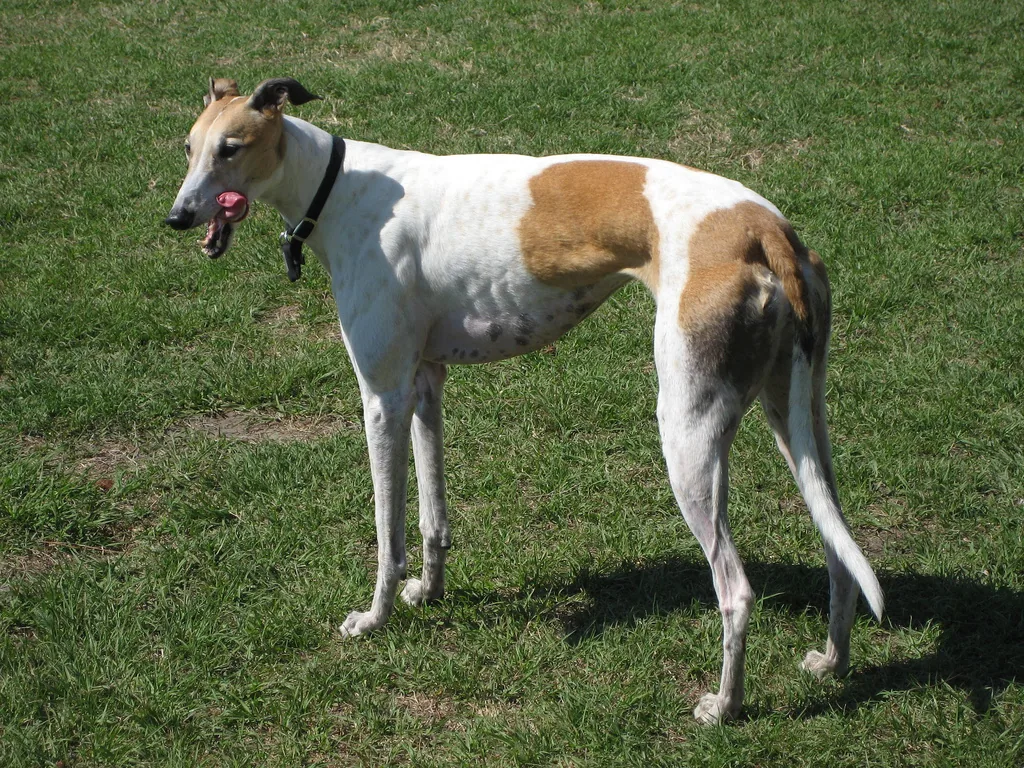
The Greyhound is tall, muscular and slim, with a deep chest, tucked-up waist, long neck and a long tail. Its outline is the typical flexible S-shape of a sighthound, and the head is long and narrow with a elongated muzzle.
Males stand roughly 71 to 76 cm and females 66 to 71 cm at the shoulder. The coat is very short and smooth.
Temperament
Greyhounds are gentle, affectionate and sensitive, often following their people from room to room like a shadow. They are usually friendly with strangers, rarely bark and are among the least aggressive breeds toward people and other dogs.
The strong prey drive is real, though: small animals such as cats may be treated as quarry, and recall is often poor. A sleeping Greyhound can startle when woken suddenly, so let them rest undisturbed.
Care and exercise
Greyhounds enjoy a daily walk and the chance for a safe sprint in a fully fenced area, but are otherwise calm indoor dogs that sleep a great deal. They should be kept on a lead in open areas because of their chase instinct and the danger of traffic and wire fences.
With little body fat and no undercoat they feel cold and heat easily, so they need to live indoors and wear a coat in cold weather. Grooming is minimal. Gentle training works best.
Health
Greyhounds have unusual blood chemistry and sensitivity to some anaesthetics and insecticides, so a vet familiar with the breed is valuable. They can suffer delayed bleeding after surgery (a fibrinolytic syndrome), corns on the paw pads, and are prone to cold. Typical lifespan is around 11 to 12 years.