Overview
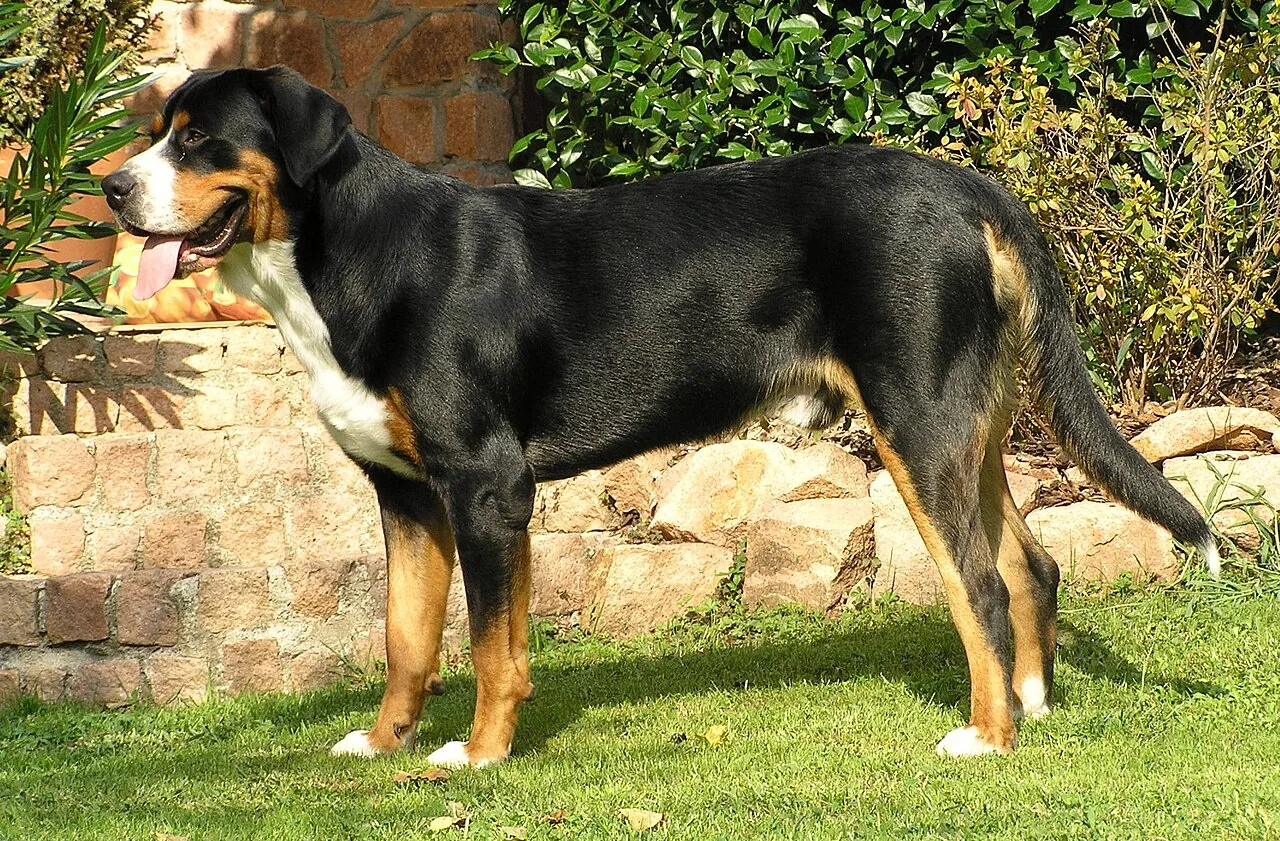
The Greater Swiss Mountain Dog is a big, strong draft and drover dog from the Swiss Alps. Its black, white and rust coat makes it easy to recognise, and it is the largest of the four Sennenhund breeds.
In the home it is an affectionate, easygoing companion that likes to stay close to its people. It needs regular exercise but not a huge amount of space, and it suits families who have room for a large, shedding dog.
History
The exact origins are unknown, but the breed is thought to come from local Alpine farm dogs mixed with large mastiff-type dogs brought by settlers. For centuries it pulled carts, drove cattle and guarded farms, earning the name the poor man's horse.
As machines and other breeds took over its work, it nearly vanished by the late 1800s. Around 1908 geology professor Albert Heim recognised it as a separate breed and encouraged breeders. A breed club followed in 1912, the FCI published a standard in 1939, and the first dogs reached the United States in 1968.
Appearance
A heavy-boned, muscular dog, slightly longer than tall, with a broad head, almond-shaped dark eyes and a deep chest. Males stand about 65 to 72 cm and females 60 to 69 cm at the shoulder, and weights run from roughly 36 to 64 kg.
The coat is black with rust markings on the cheeks, over the eyes and on the legs, plus white on the muzzle, chest, feet and tail tip. Symmetry matters less than working ability.
Temperament
Greater Swissies are enthusiastic, sociable and devoted to their families, and they usually do very well with children. They are calm and dignified indoors, and tend to check in with their owner rather than wander far away.
They are strong dogs, so early training and socialisation are important, and they do best when they live close to their people rather than alone outdoors.
Care and exercise
Daily walks and some free movement keep this breed fit, and it enjoys carting and other draft-style activities. It does not need a large garden, but it needs a home with space for its size and a comfortable place to rest.
The double coat sheds all year with a heavier shed once or twice a year, so weekly brushing, and more during the shed, is wise. Feed carefully and avoid hard exercise right after meals.
Health
Generally healthy for such a large breed, but it shares giant-breed risks. Bloat and splenic torsion are serious abdominal emergencies, and joint problems are possible. Like other large dogs its lifespan is relatively short, often around 8 to 11 years.