Overview
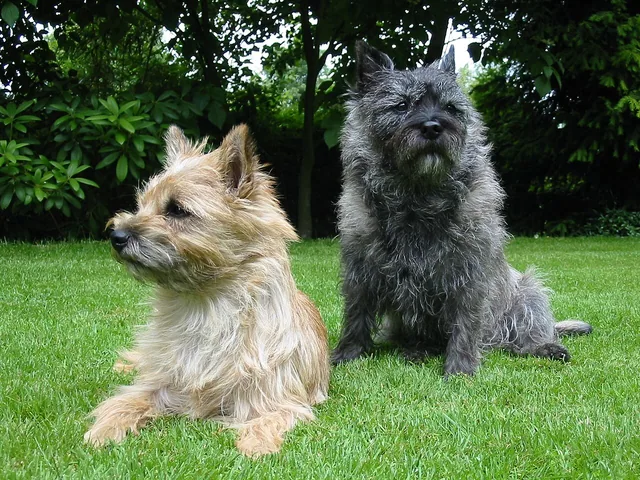
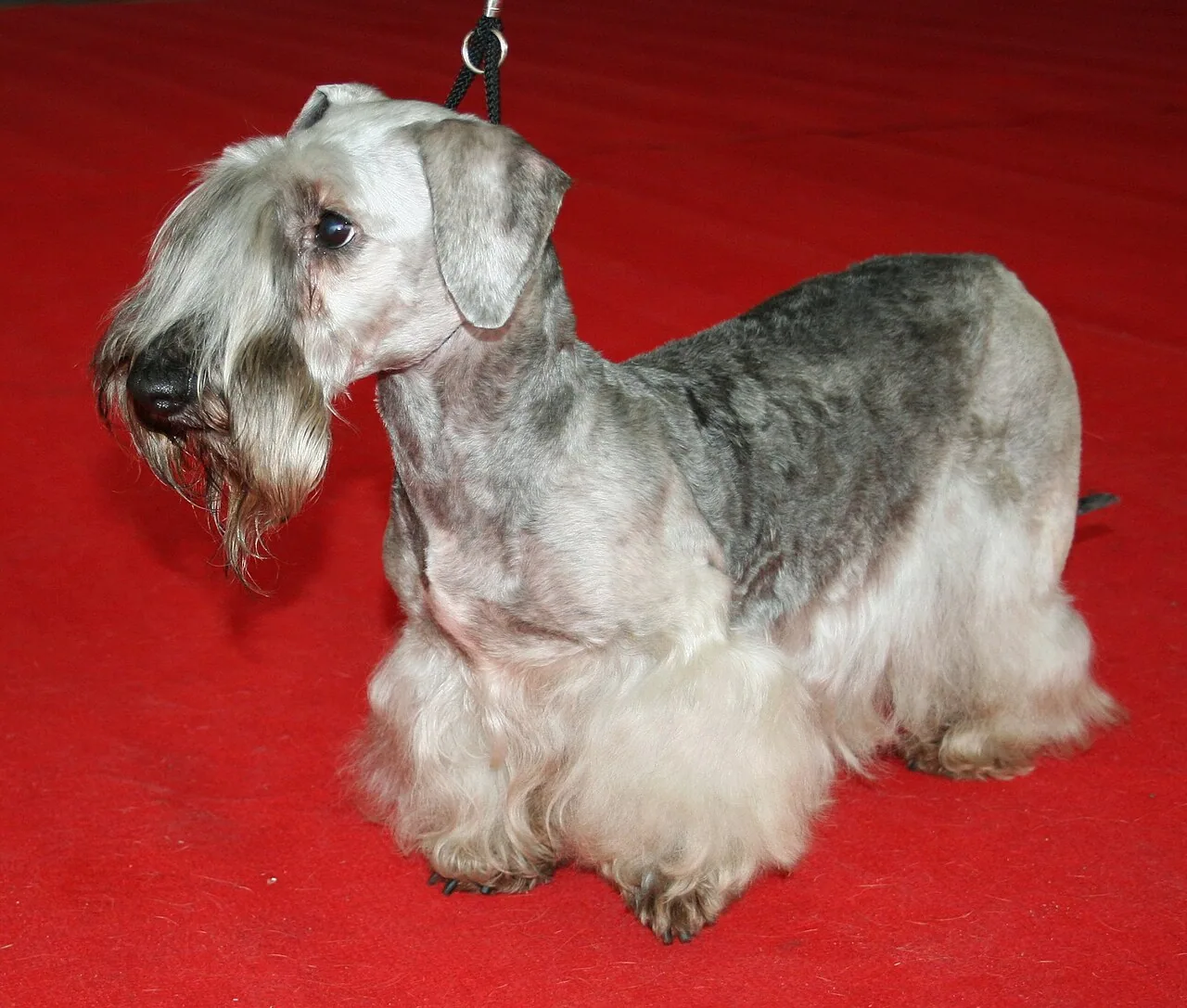
The Cesky Terrier is a small, long-bodied terrier from the Czech lands, known for its soft, wavy grey coat and calm expression.
It is quieter and less excitable than many terriers, which makes it a pleasant companion, though it is still a capable hunter at heart and a rare breed.
History
The breed was created in 1948 by Czech breeder František Horák, who crossed the Sealyham Terrier with the Scottish Terrier to produce a terrier suited to hunting in the forests of Bohemia. He worked at the Czechoslovak Academy of Sciences, and the communist authorities watched him closely as foreign interest in his dogs grew.
The FCI recognised the breed in 1963. It reached the United States in the 1980s and the United Kingdom in 1989, and it is now one of the rarest breeds in the world.
Appearance
A well-muscled, short-legged terrier that is longer than it is tall, with drop ears, a natural tail and a long, blunt wedge-shaped head with beard and brows. It stands around 25 to 32 cm and weighs roughly 6 to 10 kg.
The long, fine coat is slightly wavy with a silky gloss, in shades of grey from charcoal to platinum, or rarely coffee brown.
Temperament
Cesky Terriers are calm, gentle and friendly, and are considered less active and noisy than other terriers. Aggression is a fault under the breed standard.
They bond closely with their families and usually adapt well to different homes, though supervision around young children is sensible.
Care and exercise
Moderate daily exercise and play are enough for most of these dogs. The coat is clipped rather than stripped, into the traditional saddle pattern, and the longer hair should be brushed daily to prevent tangles.
The beard and furnishings also need regular cleaning and combing.
Health
The breed can occasionally show Scotty cramp, a minor movement disorder. Breeding dogs should be screened for hip dysplasia, patellar luxation, heart and eye problems including lens luxation and cataracts, thyroid disease and von Willebrand disease.