Overview
The Chesapeake Bay Retriever is a large retriever developed in the Chesapeake Bay area in the 19th century. It was used by market hunters to retrieve waterfowl, pull nets and even help rescue fishermen.
Today it is a family companion and hunting partner with a bright, happy disposition, a love of water and great stamina.
History
The breed traces to two Newfoundland-type pups, Sailor and Canton, rescued from a sinking ship off Maryland in 1807. They were bred with local dogs, chosen for ability rather than breed, and spaniels and hounds were among them.
Chesapeake dogs from both shores were recognised as ducking dogs in 1877, and in 1918 the American Kennel Club recognised one type under the name Chesapeake Bay Retriever. The standard has changed little since.
Appearance
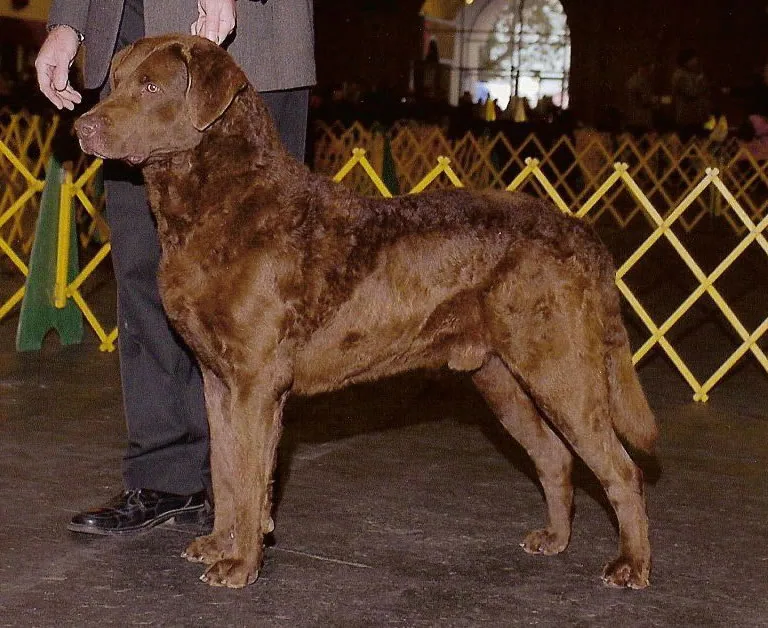
A medium to large, strongly built dog with a round, broad head, small ears, and clear yellowish or amber eyes. The hindquarters are strong and the toes are webbed, and the deep chest can break through ice.
The thick double coat is short, harsh and oily, with a wave on the shoulders, neck, back and loins. Colours are brown, sedge or deadgrass, matching the working surroundings.
Temperament
The Chessie is bright, affectionate and protective, with a happy disposition and quiet good sense. Some are vocal when excited and may 'smile' by baring their front teeth, which is a sign of joy, not a threat.
It can be assertive, willful and reserved with strangers. With good socialisation it makes an excellent family dog, and consistent training with plenty of play suits it far better than harsh discipline.
Care and exercise
This is an active retriever that needs vigorous daily exercise, ideally including swimming, and a job or sport to keep it busy. Early socialisation and consistent obedience training matter.
The coat is low maintenance: a weekly brush is enough, with a mild bath only every three to four months, since too much washing strips the protective oil. It has a slight musky odour.
Health
Known issues include hip dysplasia, progressive retinal atrophy, cataracts, exercise-induced collapse, type 3 von Willebrand disease, regional alopecia and degenerative myelopathy. Surveys put average lifespan at around 9 to 11 years.