Overview
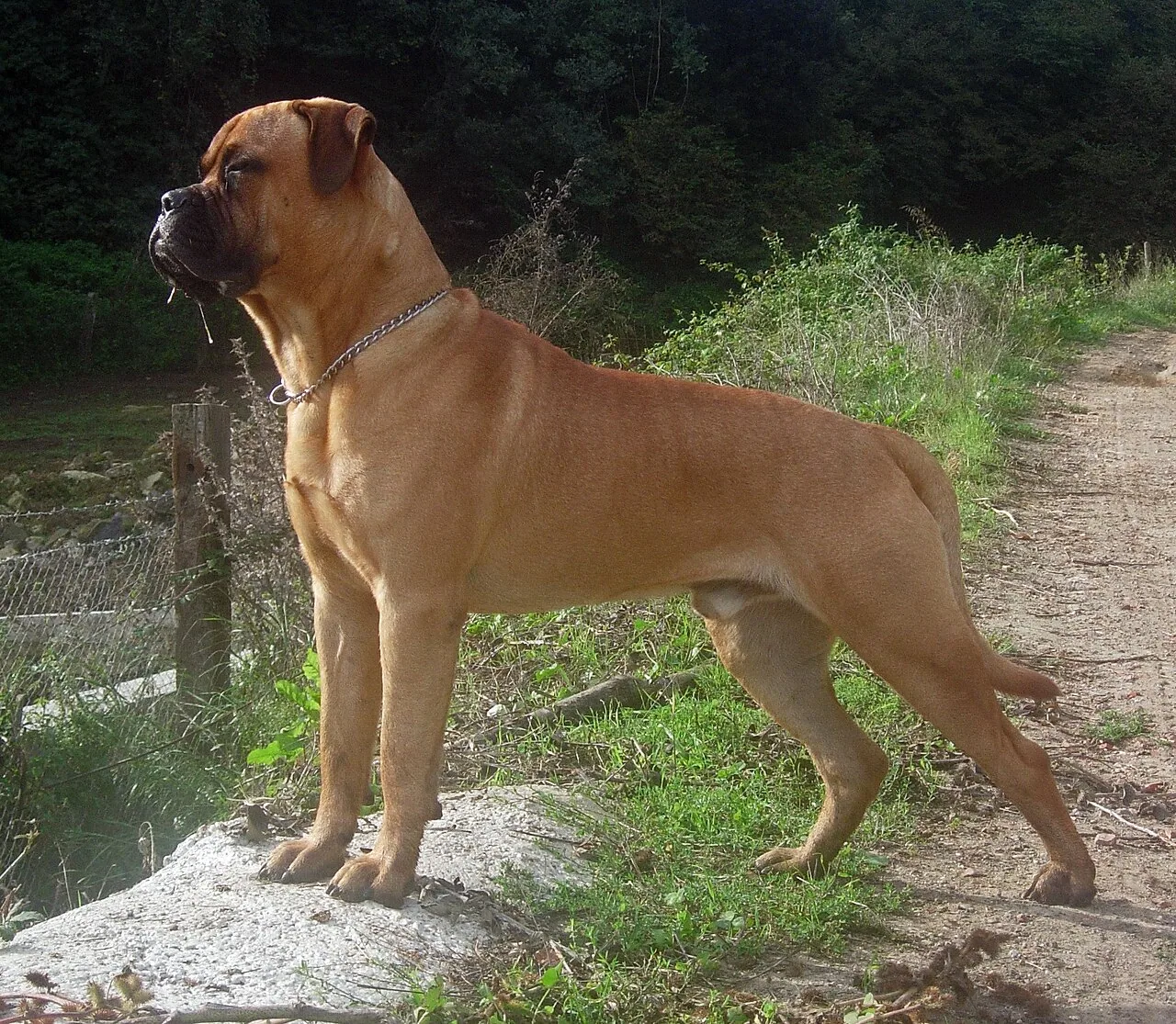
The Bullmastiff is a large, solidly built English mastiff-type dog with a broad head and short muzzle. It was created in the nineteenth century as a guard dog, and it still carries that watchful, dependable character.
At home it is usually a quiet, affectionate companion that bonds closely with its family. It needs early socialisation and a confident owner, but rewards them with deep loyalty.
History
The breed's exact origins are unclear, but in parts of England the Mastiff and the Old English Bulldog were commonly crossed to produce dogs that could guard people and property. Gamekeepers later relied on the cross to deter poachers, which earned the Bullmastiff its nickname, the Gamekeeper's Night Dog.
The Kennel Club recognised the breed in 1924, the American Kennel Club in 1934 and the FCI in 1955. In 1928 the De Beers company imported Bullmastiffs to South Africa to guard its diamond mines.
Appearance
A large, heavily muscled dog with a broad skull, a short, dark muzzle and a sturdy, square-ish body. Females stand about 61 to 66 cm at the withers and weigh roughly 41 to 50 kg, while males are a few centimetres taller and around 9 kg heavier.
The breed is flat-faced but is not known for breathing trouble in the way some other short-muzzled dogs are. The expression is calm and alert.
Temperament
Bullmastiffs are loyal, composed and watchful. They are typically gentle with their own family, including children, yet naturally wary of strangers and ready to stand their ground.
They can be stubborn and may be dominant with other dogs, especially of the same sex, so firm, kind training and early socialisation matter. Most are happy to be a large couch companion between walks.
Care and exercise
Moderate daily exercise suits the breed: a couple of steady walks and some play, without hard impact while young and growing. They do not do well left alone for long periods and should live indoors with their people.
Grooming is easy with a weekly brush. Watch food intake to keep a lean body weight, and expect some drooling. Feed in smaller meals to help lower the risk of bloat.
Health
Hip and elbow dysplasia, progressive retinal atrophy, bloat and cancers such as lymphoma and mast cell tumours are the main concerns. Entropion, hypothyroidism and ear infections also occur. A 2024 UK study found a life expectancy of about 10 years.