Overview
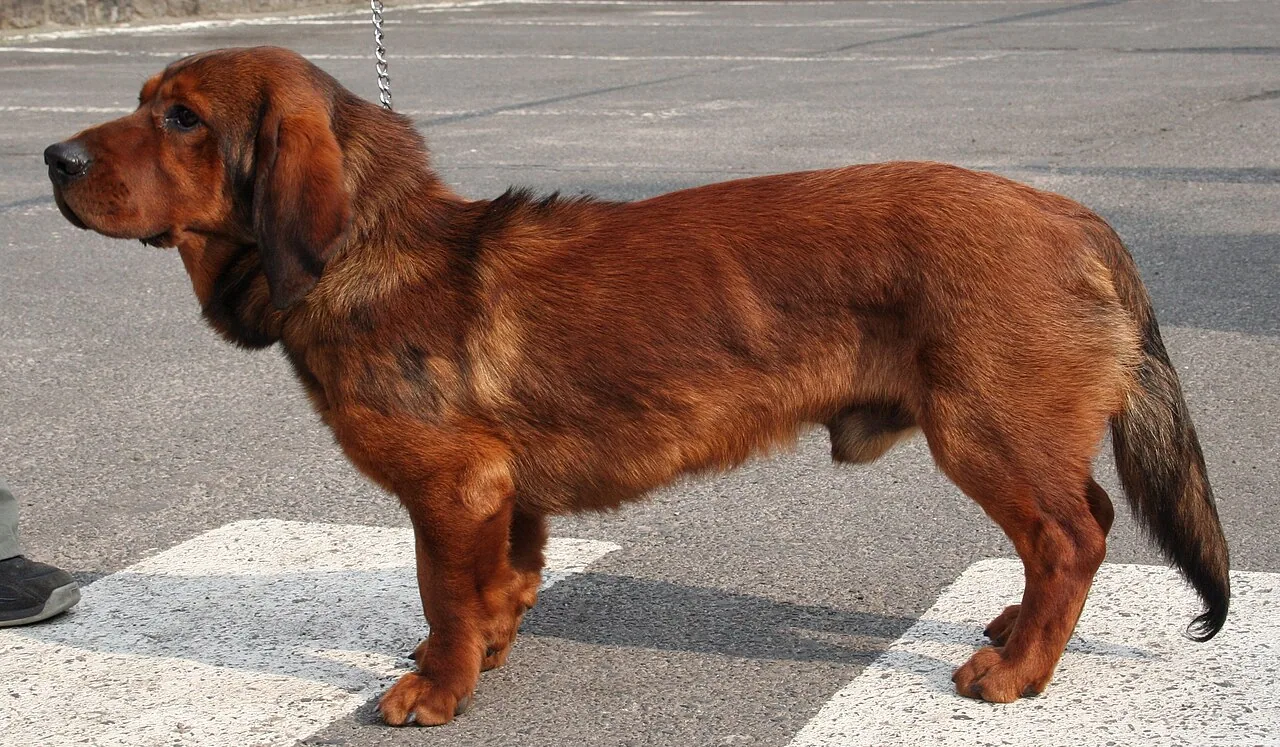
The Alpine Dachsbracke is a compact, heavily boned scenthound from Austria. It looks a little like a Dachshund but is longer in the leg and more powerfully built.
Bred to track wounded deer and other game, it can stay on a trail long after it has gone cold. It is friendly at home, but it remains first of all a working hunting dog.
History
The breed goes back to the middle of the 19th century, when larger Bracke hounds were bred down in size by crossing with Dachshunds. The result was a sturdy little tracker suited to rough, high-altitude terrain.
It was once a favourite of royalty, and Crown Prince Rudolf of Habsburg took these dogs hunting in the 1880s. The FCI lists it among the leash hounds in Group 6, alongside the Bavarian and Hanoverian scenthounds.
Appearance
This is a small to medium dog with a long body and short, strong legs, though the legs are longer than a Dachshund's. The build is robust and big-boned, with round, lively eyes and a trotting gait.
The coat is short, dense and close-fitting, with a thick undercoat. Dogs stand roughly 34 to 42 cm tall and weigh about 15 to 18 kg.
Temperament
The Alpine Dachsbracke is fearless, friendly and intelligent. Most are excellent with children and good with other dogs and pets, though the strong scenthound prey drive is always there.
It is a determined worker that makes a good companion, but it is happiest when it has a job that uses its nose.
Care and exercise
This dog needs regular, purposeful exercise and plenty of chances to follow scent. Long walks on a lead or in secure areas suit it well, since a nose-led hound may wander off after a trail.
Grooming is simple: a weekly brush and a check of the ears and nails. Early training and recall work help channel its independent streak.
Health
The breed is generally robust. As a long-backed, short-legged dog it should be kept lean to protect its back and joints, and its ears should be checked regularly.